
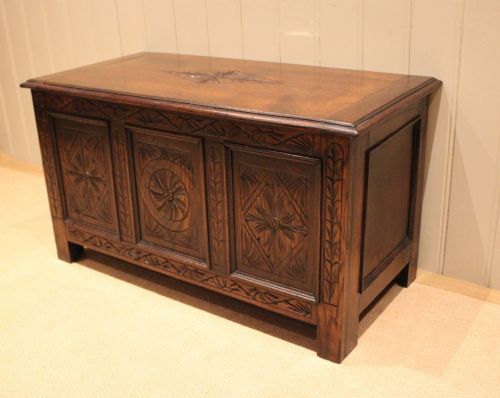

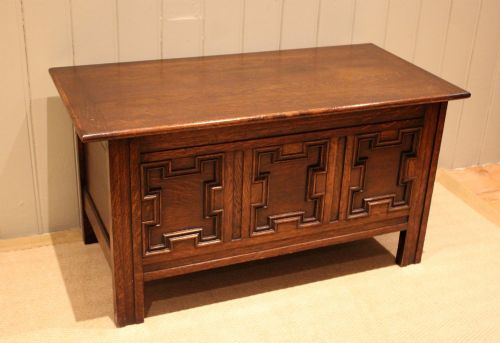
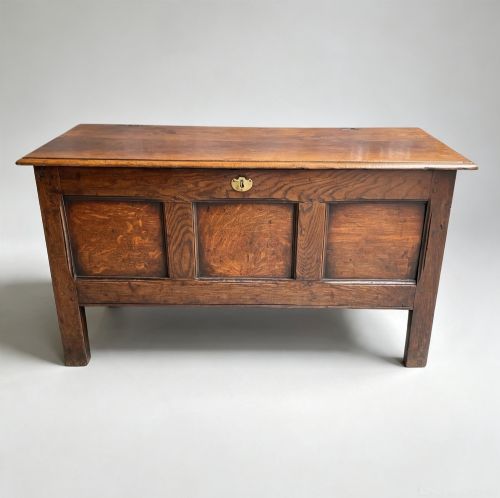


Carved Oak Dowry Trunk
These carved oak dowry trunks are sturdy storage chests built to hold a household's linens and valuables.
Carved Oak Dowry Trunk
A carved oak dowry trunk is a heavy timber chest designed for domestic storage and family heirlooms. When you search for a carved oak dowry trunk, you encounter substantial coffers spanning the seventeenth century through to the early twentieth century.
The pieces on this page appear in various regional styles, including traditional country designs and revival pieces. Many examples double as coffers, storage chests, and window seats within domestic interiors.
Most entries originate from the seventeenth and eighteenth centuries, alongside later revival interpretations from nineteen-ten and nineteen-twenty. These items reflect enduring British cabinet-making traditions utilising robust native timber.
Materials and construction
Makers constructed these chests primarily from solid oak, sometimes accented with ebonised wood details. Iron and brass hardware such as hinges and locks secure the heavy lids and panels.
Surface decoration relies on traditional techniques including scratch carving and hand-carving directly into the dense timber. Regional workshops applied distinctive geometric and floral motifs characteristic of their local period.
Listings span four distinct centuries, featuring oak as the primary material alongside brass, iron, and ebonised wood details.
Assessing quality and character
Quality rests in the crispness of the hand-carving and the integrity of the original oak timber. Earlier seventeenth-century examples display deeper tool work and patination gained through centuries of handling.
Later revival pieces from the twentieth century utilise similar materials but lack the authentic wear of working domestic pieces. Structural stability and untouched surface finishes distinguish superior examples from heavily restored counterparts.
The Carved Oak Dowry Trunk Glossary
- Coffer
- A large wooden chest used historically for storing valuables, documents, or clothing. It serves as the primary alternate term for a trunk.
- Scratch carving
- A simple decorative technique where lines are gouged or scratched into the wood surface. This method appears frequently on early regional furniture.
- Ebonised wood
- Timber treated with a chemical stain or finish to imitate ebony. Makers used this contrast material to highlight mouldings and details.
- Jacobean style
- A British design period spanning the early to mid seventeenth century, characterised by rigid symmetry and dark oak. Revival versions of this style appear in later pieces.
Carved Oak Dowry Trunk: Frequently Asked Questions
What was a dowry trunk used for?
These chests held household linens, garments, and valuables accumulated by a bride before marriage. Families passed them down through generations as practical storage and family heirlooms.
Over time, they transitioned from bedroom storage into general household furniture used for seating and displaying objects in hallways or living spaces.
How do I date an oak coffer?
Dating relies on examining the construction methods, tool marks, and carving styles visible on the timber. Seventeenth-century pieces typically feature hand-riven boards and pegged joints.
Later nineteenth and twentieth-century revival pieces often display machine-sawn timber and standardised fixings that reveal their more recent manufacture.
Can I use a trunk as a window seat?
Their flat, sturdy lids make these chests suitable for use as window seats or hallway benches. Adding a loose cushion provides comfortable seating without damaging the historic wood.
Ensure the hinges and internal structure remain stable before placing heavy weight on the top panel for extended periods.
How should I care for antique oak?
Maintain the timber by keeping it away from direct heat sources and sudden humidity changes that cause wood to split. Regular dusting with a dry, soft cloth preserves the natural wax finish.
Avoid modern liquid polishes containing silicones, which can penetrate the pores and alter the historic surface patination permanently.