



Carved Oak Bin
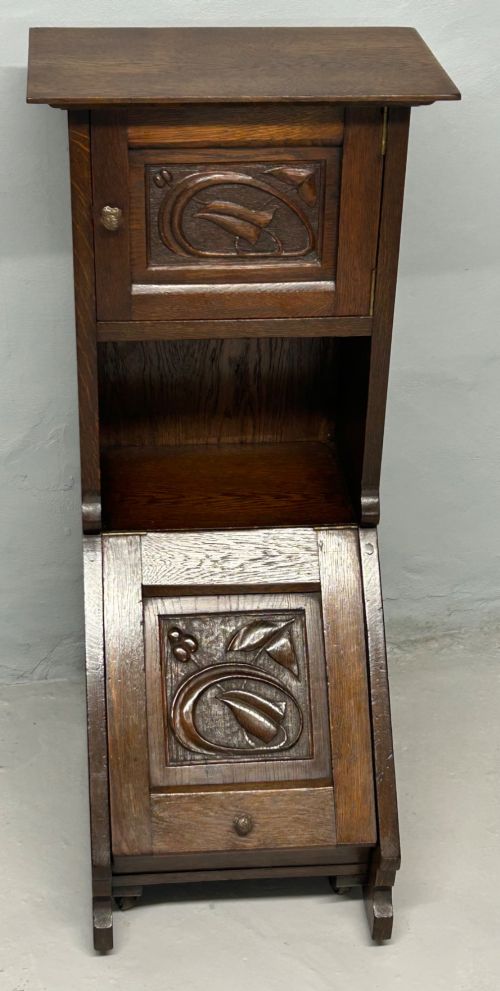
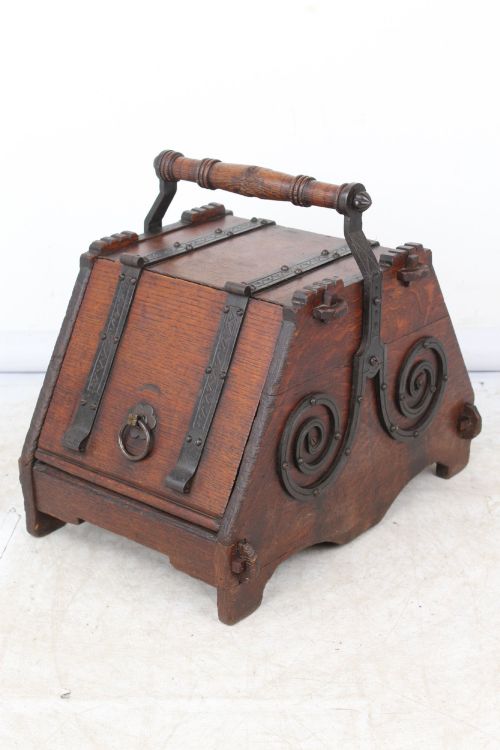
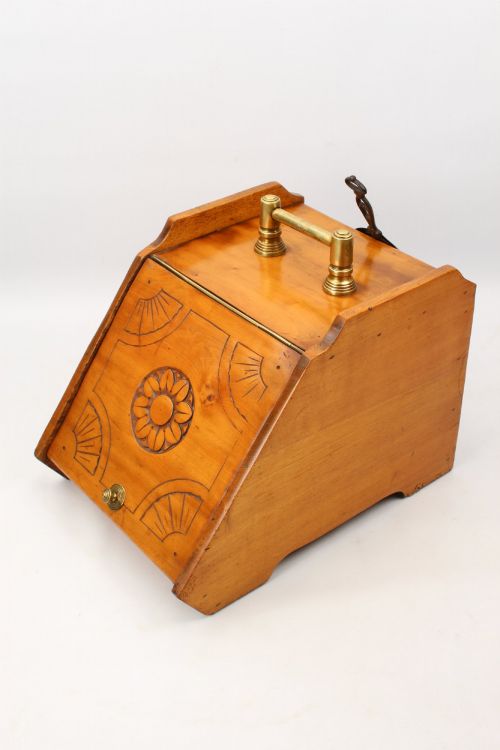
A carved oak bin brings robust texture to a room, offering practical fireside storage crafted from heavy timber.
Carved Oak Bin
A carved oak bin serves as a sturdy container for coal, logs, or general fireside storage, drawing on utilitarian forms from the Georgian, Victorian, and Edwardian eras. Buyers searching for a carved oak bin will encounter various functional forms including purdoniums, coal boxes, log bins, and waste bins.
The versions most commonly met on this page date from the Victorian and Edwardian periods, alongside a small number of Georgian and nineteenth-century examples. These pieces typically combine carved oak bodies with metal fittings such as brass handles, iron accents, and interior liners.
Stylistically, the selection spans rustic farmhouse designs, Gothic Revival details, and Arts and Crafts workmanship. Makers frequently utilised pollard oak, fruitwood, and standard oak to construct these robust domestic accessories.
How they were made
Construction relies primarily on solid oak, occasionally incorporating pollard oak or fruitwood highlights to add visual depth to the carved panels. Cabinet makers shaped these domestic containers using traditional joinery methods suited to heavy daily use.
Metal components play a structural and decorative role, featuring brass handles, hinges, and wrought iron fixings. Many pieces include original metal liners designed to contain fuel residue or waste safely within the timber casing.
Carved Oak Bin Retail Price Guide 2026
Typical asking prices for carved oak bin among the pieces listed under this phrase on Sellingantiques today, from the lower quarter to the upper quarter. They describe what is for sale here now, not the wider market.
Several examples include their original coal shovels, surviving decades of fireside service without getting lost in the coal cellar.
What varies in quality
Quality in a carved oak bin rests largely on the depth and crispness of the timber carving and the architectural proportion of the box. Pieces featuring hand-carved fronts and figured pollard oak display a higher level of craftsmanship than plain utility versions.
The integrity of the internal metal liner and the originality of the brass handles or matching shovels influence the overall completeness of the piece. Superior examples maintain their original hardware and structural stability across the lid and drop-down front.
Christopher Dresser
The Carved Oak Bin Glossary
- Purdonium
- A specialised coal box or cabinet featuring a sloping front door that drops down to reveal an interior metal scuttle or liner. This Victorian form kept fuel neatly concealed beside the hearth.
- Coal Scuttle
- A traditional vessel designed to hold and transport coal to the fireplace, often supplied with a matching shovel. These items range from simple open buckets to lidded boxes.
- Pollard Oak
- Timber taken from a tree that has been pollarded, producing dense wood with highly decorative, clustered grain patterns. Cabinet makers prized this variant for ornamental panels.
- Gothic Revival
- A nineteenth-century design style drawing inspiration from medieval architecture and ornament, characterised by pointed arches, heavy tracery, and rich carved detail.
Carved Oak Bin: Frequently Asked Questions
What is a carved oak bin used for?
These pieces were originally manufactured to store coal, logs, or kindling near a domestic fireplace. Today, they function equally well as decorative storage boxes or waste bins in period interiors.
Their sturdy timber construction allows them to handle heavy contents while concealing utilitarian items inside a handsome wooden case.
How do I date an oak coal box?
Dating relies on identifying the prevailing style and construction methods of the period, such as Gothic Revival detailing or Arts and Crafts simplicity. Victorian and Edwardian examples often feature standardised metal liners and machine-assisted joinery.
Georgian and early nineteenth-century pieces tend to show simpler, hand-finished pegged joints and distinct timber patination accumulated over decades of use.
Are original liners important?
Original metal liners remain desirable because they complete the historical integrity of the piece and protect the internal oak from moisture and dirt. Finding a bin that retains its matching shovel or liner adds to its completeness.
However, many surviving examples have lost these internal elements over generations of active fireside service.
How do I care for antique oak?
Maintain antique oak by keeping it away from direct heat sources like radiators, which can cause the timber to dry out and split. Regular dusting and occasional application of appropriate beeswax preserve the finish.
Avoid excessive moisture on the carved exterior surfaces to protect the natural grain and historic patination.