



Carved Mahogany Sewing Table
A carved mahogany sewing table brings refined timberwork and practical compartment storage into any sitting room.
Carved Mahogany Sewing Table
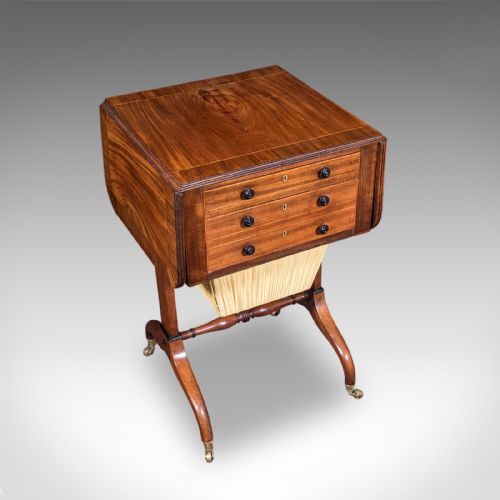
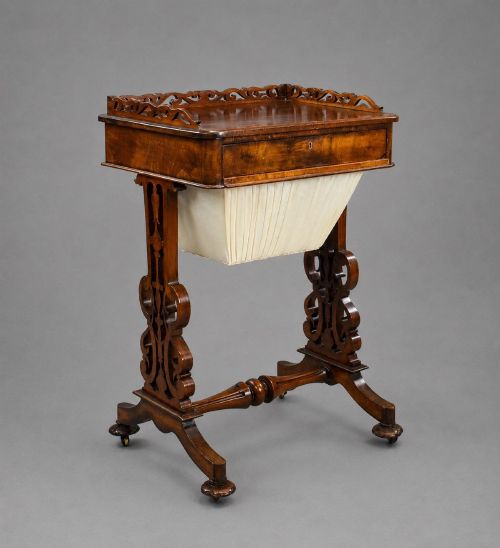
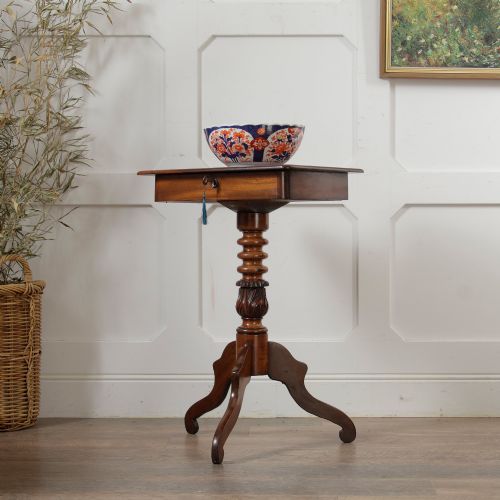
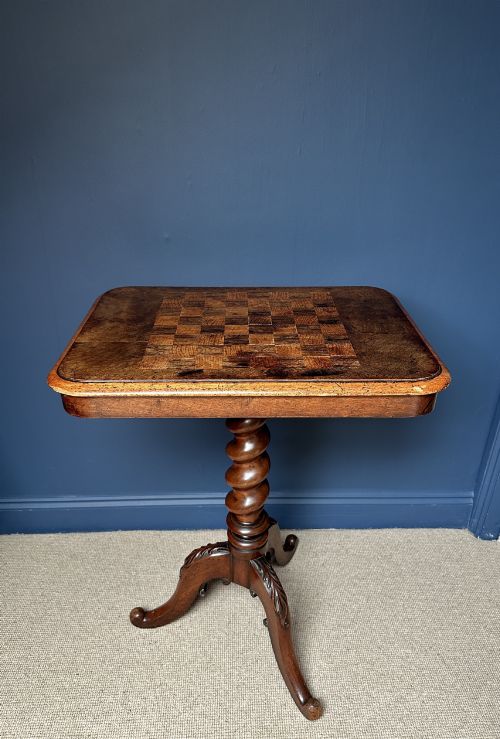
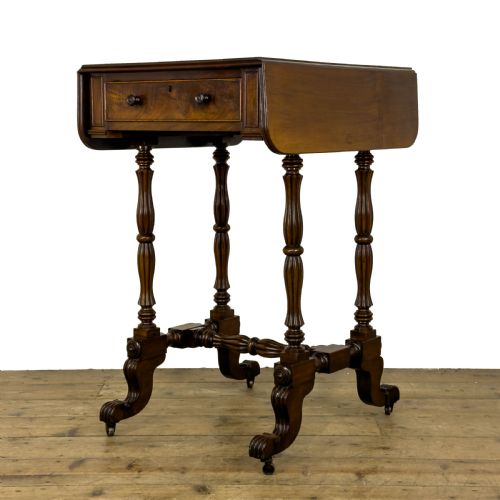
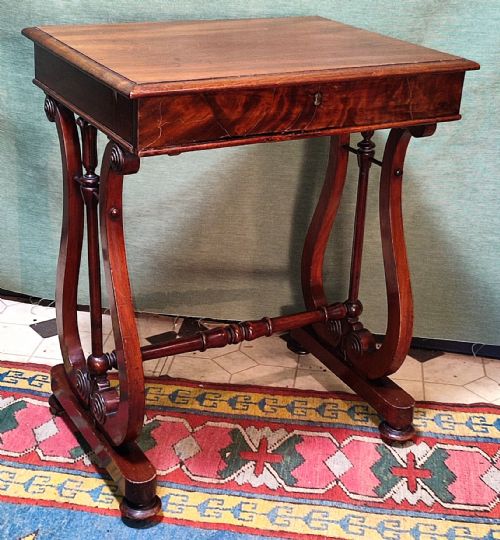
A carved mahogany sewing table combines the display surface of a side table with specialised interior storage for needlework and small crafts. These pieces primarily date from the Regency, Victorian, and William IV periods, alongside examples from the Edwardian era. You will frequently encounter drop-leaf designs, pedestal tables with drawers, and fitted work boxes intended for domestic utility.
Makers designed these items for ladies to keep threads, needles, and writing materials close at hand in the parlour. The form frequently intersects with games tables and lamp stands, demonstrating the multi-purpose nature of nineteenth-century furniture. Mahogany forms the primary structural timber, often selected in figured grains such as flame mahogany or burr walnut.
Assessing quality in construction and timber
Quality rests significantly on the selection of timber, where richly figured flame mahogany or burr walnut denotes superior cabinetmaking over plain stock. The crispness of the carved details on the pedestal or legs distinguishes workshop output, separating sharp hand-carved motifs from softer execution.
Internal fitting complexity also dictates standard, with elaborate compartmentalised trays for sewing implements and intact fabric work bags showing greater original investment. Structural integrity in drop-leaf mechanisms and drawer movement indicates the original joiner's skill.
Listings feature mahogany, flame mahogany, burr walnut, and inlaid timber across Regency, Victorian, and Edwardian periods.
Gillows
The Carved Mahogany Sewing Table Glossary
- Drop leaf
- A table top with hinged flaps on either side that can be raised to extend the surface area or lowered when space is restricted.
- Flame mahogany
- A highly figured veneer cut from where branches join the main trunk, creating a distinct flickering flame pattern.
- Work table
- A multi-purpose piece of furniture designed with drawers and compartments specifically intended to hold sewing and needlework supplies.
- Pedestal table
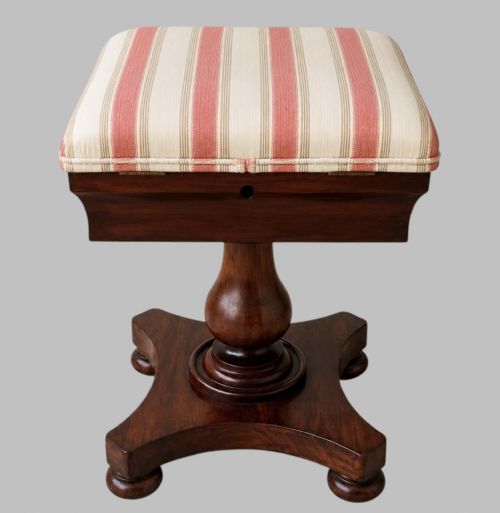
- A standalone table supported by a central pillar rising from a shaped base or foot platform.
- William IV
- A British design period spanning the 1830s characterised by robust classical proportions and bold carved details.
Carved Mahogany Sewing Table: Frequently Asked Questions
What is a sewing table used for?
A sewing table serves as a compact desk and storage unit designed to hold threads, needles, and fabric scraps during needlework. The top surface provides space for sewing tasks or reading.
Beneath the top, built-in drawers and hanging fabric bags keep domestic craft materials organised and hidden away when not in use.
How do I date a mahogany sewing table?
Dating relies on observing stylistic details such as pedestal turns, leg shapes, and the presence of Regency or William IV classical motifs. Regency pieces often show delicate reeding and brass paw feet, while William IV examples feature heavier scrolled supports.
Timber selection and construction methods inside the drawers also offer clues, as solid mahogany framing generally points to earlier nineteenth-century production.
Are drop leaf sewing tables stable?
Drop leaf sewing tables remain stable when the hinged wooden supports swing out firmly underneath the side flaps. The weight of the solid mahogany top helps keep the leaves level during normal use.
Uneven floors can affect the stability of pedestal bases, so proper placement on flat ground ensures the drop leaves function without strain.
Can I use a sewing table as a side table?
You can easily use a sewing table as a side table or lamp stand in a modern living room. The compact dimensions and surface space fit well beside a sofa or armchair.
The internal drawers also provide convenient hidden storage for small household items remote controls or stationery.