




Carved Gilt Cabinet
A carved gilt cabinet brings a distinct sense of gilded theatre to a room, catching the light across elaborate woodwork and metallic leaf.
Carved Gilt Cabinet
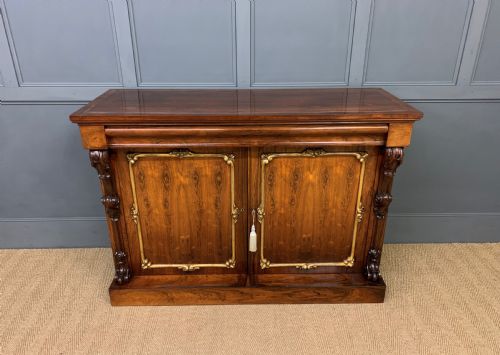
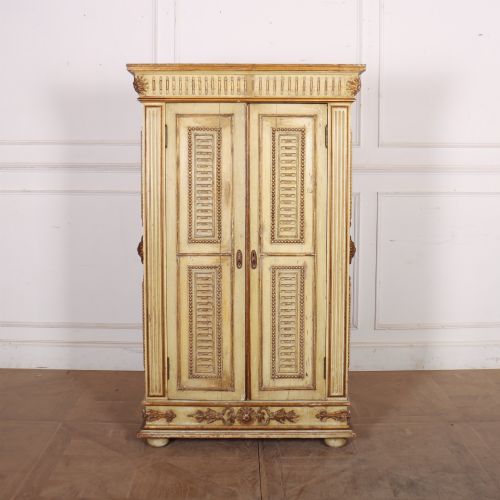
A carved gilt cabinet unites architectural timber forms with shimmering surface enrichment, ranging from compact bedside cupboards to grand display pieces. You will most frequently encounter nineteenth-century examples drawing on French Rococo revival and Italian neoclassical tastes.
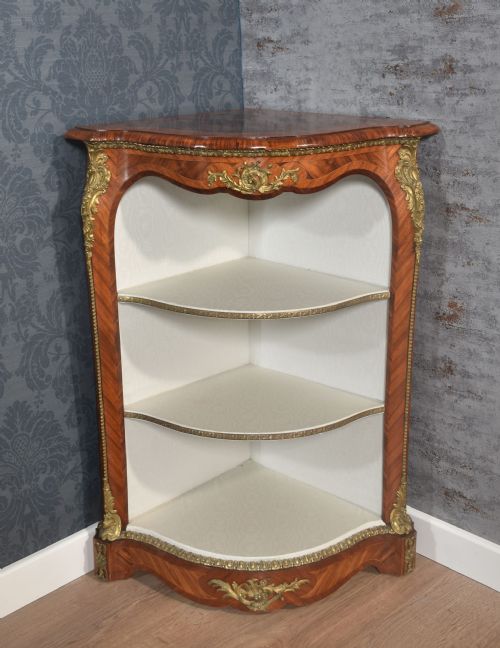
The category encompasses side cabinets, display cases with glazed sides, and ornate pieces raised upon stands. Makers utilised mahogany, burr walnut, and rosewood as sturdy foundations before applying rich layers of gold leaf or ormolu mounts.
Materials and construction
Craftsmen shaped dense woods like mahogany and walnut to form the structural carcasses, often pairing them with decorative veneers such as burr walnut. These timber frames provided the necessary stability to support heavy glass panels and substantial internal shelving.
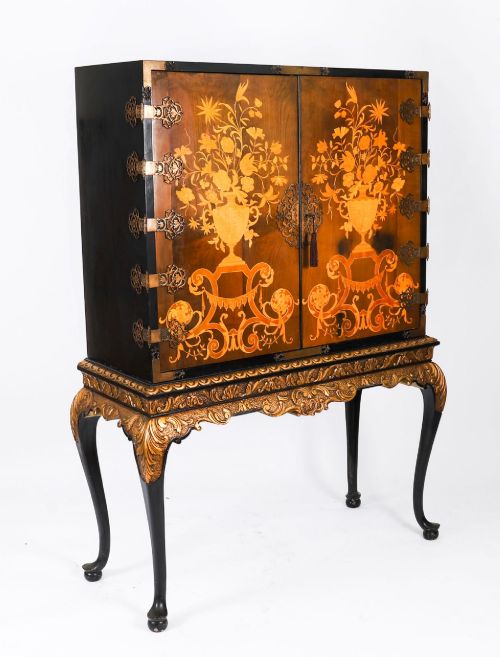
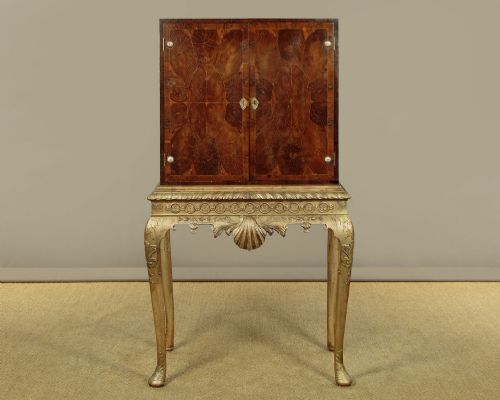
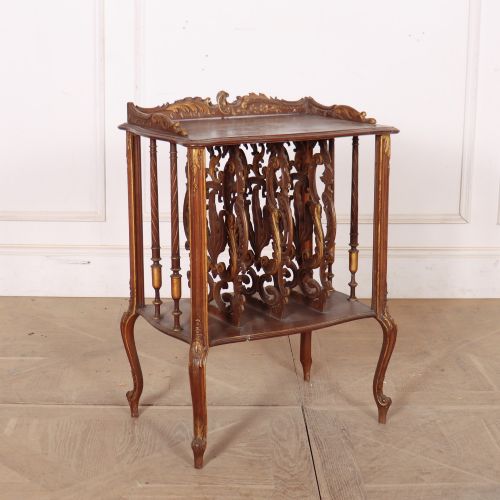
Surface ornamentation relied heavily on applied ormolu mounts, brass details, and delicate gold leaf laid over gesso. Carved giltwood elements required patient hand-carving followed by meticulous gilding to achieve an opulent, light-reflecting finish.
Carved Gilt Cabinet Retail Price Guide 2026
Typical asking prices for carved gilt cabinet among the pieces listed under this phrase on Sellingantiques today, from the lower quarter to the upper quarter. They describe what is for sale here now, not the wider market.
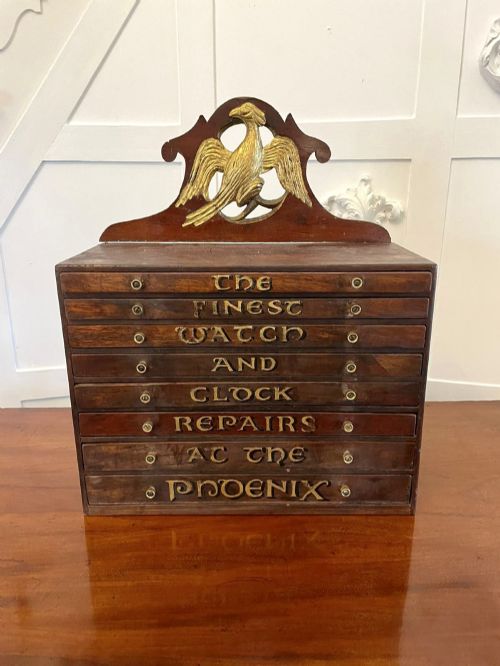
A tiny repairer's chest waits quietly alongside grand armoires, proving that intricate joinery comes in all sizes.
Distinctions in quality
Quality reveals itself in the crispness of the wood carving and the depth of the gilding, where hand-tooled details remain sharp rather than softened by excessive layers. Superior pieces integrate their ormolu mounts seamlessly into the timber design rather than relying on heavy, unrefined fastenings.
The structural integrity of the doors, drawers, and glazed panels demonstrates the maker's original skill, ensuring smooth operation over decades of use. Finer examples display harmonious proportions and careful timber selection across unseen interior surfaces as well as the polished exterior.
The Carved Gilt Cabinet Glossary
- Giltwood
- Wood that has been coated with thin sheets of gold leaf over a prepared gesso ground. This technique creates a luminous, warm metallic surface popular in ornate nineteenth-century furniture.
- Ormolu
- Finely chased and gilt bronze mounts used as decorative enrichment on furniture. It adds contrasting metallic highlights to timber and glass cabinets.
- Chinoiserie
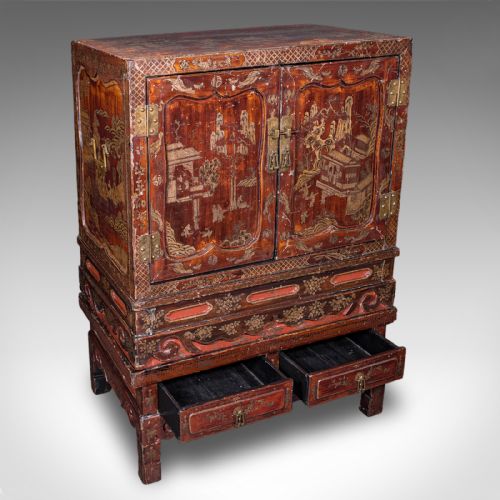
- European artistic style reflecting Chinese motifs and lacquerwork techniques. It frequently appears on decorative cabinets featuring painted figures and landscapes.
- Vitrine
- A glass-fronted cabinet designed specifically for the display of porcelain, curiosities, and small collectibles. These pieces often feature glazed sides to maximise internal illumination.
Carved Gilt Cabinet: Frequently Asked Questions
How do I clean a gilt cabinet?
Dust these delicate surfaces gently using a dry, soft feather duster or a clean, dry microfiber cloth. Avoid all commercial polishes, water, and chemical cleaning agents, as moisture and solvents easily damage delicate gold leaf and historical gesso.
Take particular care around raised carvings and ormolu mounts where abrasive scrubbing might lift the metallic finish. Professional conservation is recommended for any deeper cleaning or restoration work.
Where should I place a gilt cabinet?
Position your cabinet away from direct sunlight and strong heat sources like radiators to prevent the wood from drying, warping, or cracking. Stable indoor humidity helps preserve both the timber carcass and the fragile gilded surfaces over time.
Choose a spot with ambient, indirect light where the gold leaf can catch the room's illumination without fading the underlying timber or painted details.
How do I date a carved gilt cabinet?
Examine the secondary woods inside drawers and at the back of the piece, alongside the construction techniques used for joints and fixings. Machine-cut screws and modern adhesives point towards later reproductions, while hand-cut dovetails suggest earlier craftsmanship.
Stylistic cues such as Rococo revival motifs or neoclassical symmetry offer further clues, though revivals often borrow historic forms decades after their initial popularity.
Are these cabinets sturdy enough for daily use?
Most antique cabinets remain structurally robust for everyday placement, provided they are treated with appropriate care and not overloaded. Display cabinets and side cupboards were built to hold collections, books, or tableware securely within their frames.
Ensure the piece rests evenly on level flooring to prevent doors from binding and hinges from straining under uneven weight distribution.