




Carved Elephant Accent Table
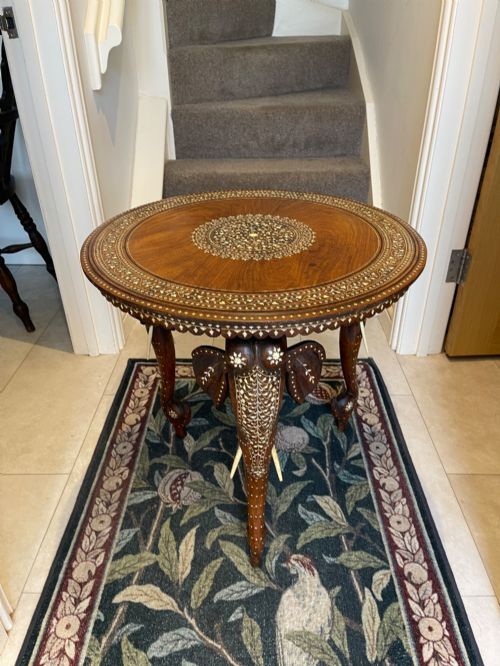
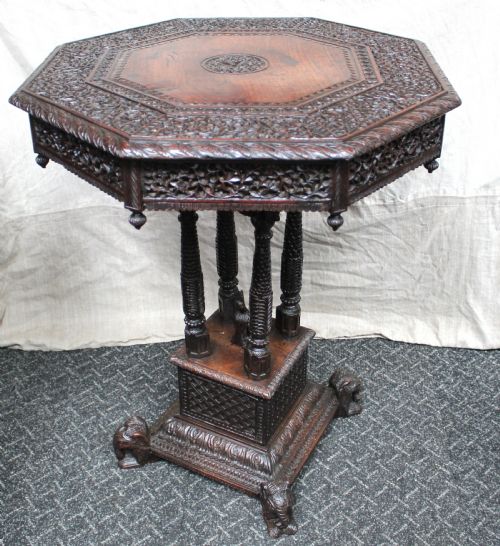
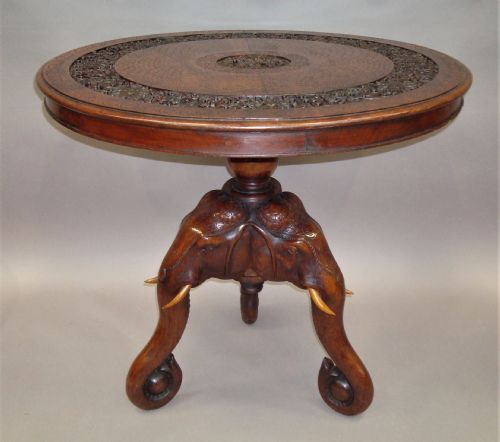
A carved elephant accent table brings singular character to a room through intricate craftsmanship and distinctive zoomorphic support structures.
Carved Elephant Accent Table
A carved elephant accent table functions primarily as a small surface or plant stand, drawing the eye with animal supports derived from Anglo-Indian and Anglo-Burmese traditions. You will most frequently encounter side tables and occasional tables originating between 1870 and 1920, reflecting colonial tastes for exotic flora and fauna motifs.
The regional origins span Bombay Presidency, Hoshiarpur, and Burma, each bringing local carving specialisms to the form. These pieces incorporate octagonal or rectangular tops supported by three or four carved elephant figures, merging European furniture utility with South Asian woodcarving mastery.
Makers utilised dense timbers suited to intricate chiselling, producing compact accent furniture that easily integrates into modern interiors. The overarching style embraces maximalist detail, where every surface tells a visual story through botanical and animal relief work.
How they were made
Teak, rosewood, and general hardwood form the structural core of these tables, providing the necessary weight and stability for detailed carving. Artisans selected these timbers for their tight grain, which allows for deep undercutting without splintering.
Bone and ebony inlay frequently decorate the timber surfaces, creating striking geometric contrasts against the dark wood. Carvers employed hand chisels to render the elephant heads, tusks, and feet with varied degrees of anatomical realism.
Carved Elephant Accent Table Retail Price Guide 2026
Typical asking prices for carved elephant accent table among the pieces listed under this phrase on Sellingantiques today, from the lower quarter to the upper quarter. They describe what is for sale here now, not the wider market.
Regional styles represented include Anglo-Indian, Anglo-Indian Colonial, and Anglo-Burmese, manifesting as side tables, plant stands, and occasional tables.
What varies in quality
The integration of bone inlay and the condition of the timber joints dictate the overall integrity of the piece. Tables featuring intricate geometric micro-mosaic inlay demand higher levels of joinery skill than plain carved surfaces.
The Carved Elephant Accent Table Glossary
- Anglo-Indian
- A descriptive term for furniture made in India during the British colonial period, combining British forms with local decorative motifs. These pieces often utilise native hardwoods and traditional carving techniques.
- Hoshiarpur
- A town in Punjab renowned for intricate woodwork and inlay traditions. Craftsmen from this region specialised in intricate bone and shisham wood patterns.
- Bone Inlay
- A decorative technique involving small pieces of animal bone fitted into recessed channels in the wood. It creates pale, luminous geometric patterns against dark timber.
- Ebonised Hardwood
- Timber treated with a chemical stain or pigment to imitate ebony. This dark finish highlights pale inlay work and intricate relief carving.
- Occasional Table
- A small, movable table designed for specific, intermittent use rather than central daily functions. These items serve as functional accents within larger room layouts.
Carved Elephant Accent Table: Frequently Asked Questions
How were carved elephant tables used?
These pieces served as decorative plant stands, small side tables for tea, or prominent accent surfaces in Victorian and Edwardian drawing rooms. Their sturdy hardwood construction supported heavy objects despite their relatively compact footprints.
Today, they function well as bedside surfaces or display pedestals for lamps and ceramics, adding tactile warmth to minimalist interiors.
Where do these tables originate?
The pieces originate primarily from workshops in India and Burma during the nineteenth and early twentieth centuries. Specific regional centres like Hoshiarpur and Bombay developed distinct styles involving intricate surface patterns and figural supports.
British officers and merchants commissioned or purchased these works as souvenirs of the colonial empire, leading to their widespread presence in British homes.
How do I date a table?
Dating relies on timber selection, carving depth, and the presence of regional inlay techniques recorded across the late nineteenth and early twentieth centuries. Earlier examples from the mid-nineteenth century often display heavier proportions and deeper hand-chisel work.
Later pieces from the 1900s to 1920s frequently incorporate standardised bone inlay patterns and slightly more stylized animal figures.
How do I care for inlaid wood?
Maintain stable indoor humidity levels to prevent the dense hardwoods from shrinking and loosening the delicate bone inlay components. Avoid placing these tables in direct sunlight, which can dry out the timber and bleach polished surfaces.
Dust gently with a dry, soft cloth and apply a minimal amount of appropriate furniture wax only when the wood appears dry.