




Carved Ebonised Stool
A carved ebonised stool brings dark, striking timber and tactile form to a room, offering a seat or stand steeped in nineteenth-century character.
Carved Ebonised Stool
A carved ebonised stool is typically encountered on this page as a nineteenth-century piece, often bearing Victorian, Aesthetic Movement, or Anglo-Indian influences.
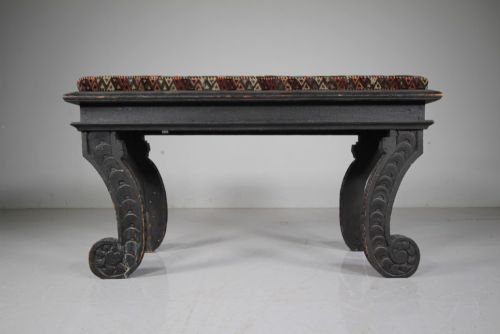
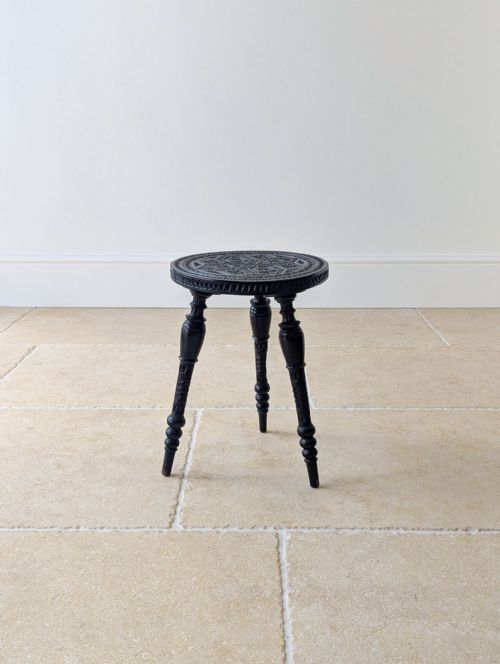
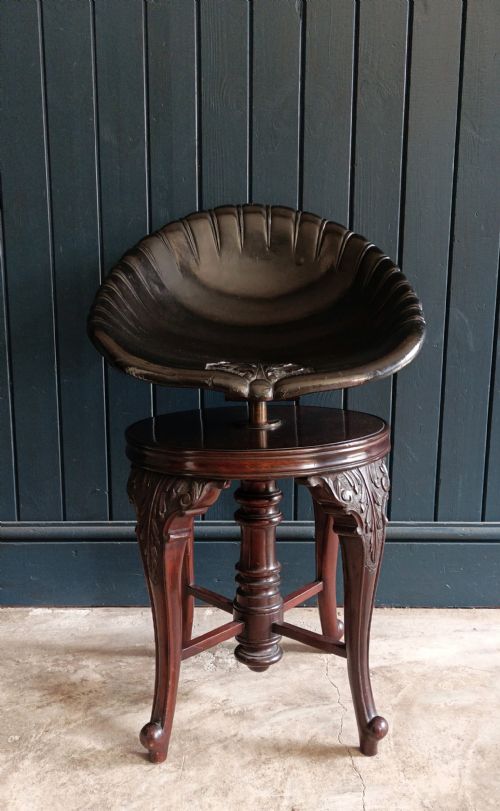
These items manifest as seating or small stands, sometimes incorporating turned or chip-carved surfaces alongside upholstered tops, leather, or inset marble panels.
Originating across diverse workshops, these pieces range from simple domestic forms to intricately carved imported furniture designed to anchor a period interior.
How they were made
Hardwoods such as mahogany, beech, walnut, and pine form the structural core of these items, shaped by hand using traditional carpentry and joinery techniques.
The dark finish is achieved by staining or ebonising the timber to mimic expensive ebony, frequently paired with surface carving, paint, or inlaid materials like marble and textile.
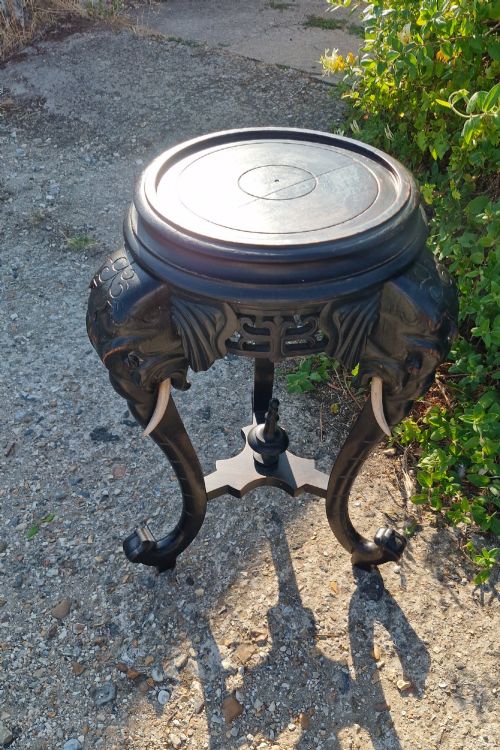
Some nineteenth-century tables come equipped with painted wooden tusks, proving that historical cabinetmakers possessed a wonderfully literal sense of humour.
What varies in quality
The depth and crispness of the carving dictate much of the piece's success, separating sharp, deliberate handwork from softer, more perfunctory decoration.
Material selection and structural integrity define the upper tier, where dense hardwoods, stable joints, and well-preserved secondary elements like marble or leather remain intact.
The Carved Ebonised Stool Glossary
- Ebonised
- Wood treated with stain, dye, or paint to achieve the deep black lustre of ebony. This finish was widely favoured in the nineteenth century to create dramatic contrast in domestic interiors.
- Aesthetic Movement
- A late nineteenth-century design style emphasising visual beauty over narrative content. Pieces from this movement often incorporate clean lines alongside Japanese or classical motifs.
- Chip-carved
- A method of ornamentation where small chips are removed from a flat wooden surface with gouges and chisels to create geometric patterns. It provides a tactile, light-catching texture.
- Anglo-Indian
- Furniture made in the Indian subcontinent by local artisans for British colonial residents, or imported to Britain. These works combine traditional eastern motifs with European furniture forms.
Carved Ebonised Stool: Frequently Asked Questions
What is an ebonised finish?
An ebonised finish is a black treatment applied to lighter timbers such as beech, pine, or mahogany to imitate solid ebony. This technique gained immense popularity during the Victorian era for its striking, formal appearance.
Craftsmen achieved this effect using chemical stains, black dyes, or pigmented polishes. It allowed makers to produce high-contrast furniture without relying on scarce tropical hardwoods.
How do I date a carved stool?
Dating a carved stool relies on examining the timber species, joinery methods, and decorative motifs present on the frame. Nineteenth-century examples often display specific stylistic traits associated with the Victorian or Aesthetic periods.
Tool marks left by hand saws and chisels help distinguish older pieces from later reproductions. Secondary woods hidden underneath also provide clues regarding the period of manufacture.
Where should I place an occasional stool?
An occasional stool functions well as a flexible seat in a hallway, bedroom, or living room where space is limited. Its compact footprint allows it to be easily moved wherever extra seating is required.
These pieces also serve effectively as small display stands for lamps, plants, or decorative objects. Their dark timber frames help anchor lighter colour schemes within a room.
How do I care for antique ebonised wood?
Antique ebonised wood requires gentle maintenance to preserve the dark finish and underlying timber. Dusting with a soft, dry cloth prevents the buildup of particles that can dull the surface over time.
Avoiding direct sunlight and excessive moisture protects the black stain and any applied polish from fading or lifting. Occasional application of appropriate wax helps nourish the wood.