



Carved Desk Organizer
A carved desk organizer keeps your papers, pens and books in order while bringing period craftsmanship straight to the desktop.
Carved Desk Organizer
A carved desk organizer encompasses practical tabletop items designed to keep writing materials, correspondence and books tidy. When you search for a carved desk organizer, you encounter desk stands, inkwells, stationery boxes, and extending book slides.
The pieces on this page span the Victorian and Edwardian eras, alongside nineteenth-century works and later twentieth-century examples. Common regional and stylistic variants include Black Forest animal carvings, Anglo-Indian woodwork, Chinese scholars studio brush pots, and Gothic Revival oak pieces.
Forms range from compact letter racks and miniature chests of drawers to revolving bookcases and multi-compartment inkstands. Each functional object relies on carved detail to transform everyday stationery storage into a decorative desktop centrepiece.
What varies in quality
Quality rests primarily in the depth, crispness and ambition of the carving itself. Work featuring lifelike animal anatomy, sharp foliage undercut from the background or finely rendered geometric panels sits distinctly apart from mechanical or shallow surface work.
Material selection and structural integrity further define the hierarchy. Items combining solid native hardwoods with original fitted glass inserts, working locks, clean brass mounts and integrated drawers represent the higher tier of desk furniture production.
Carved Desk Organizer Retail Price Guide 2026
Typical asking prices for carved desk organizer among the pieces listed under this phrase on Sellingantiques today, from the lower quarter to the upper quarter. They describe what is for sale here now, not the wider market.
Listings feature items from the Victorian, Edwardian, and Regency periods, constructed in oak, mahogany, brass, and carved wood.
Amberg
The Carved Desk Organizer Glossary
- Book slide
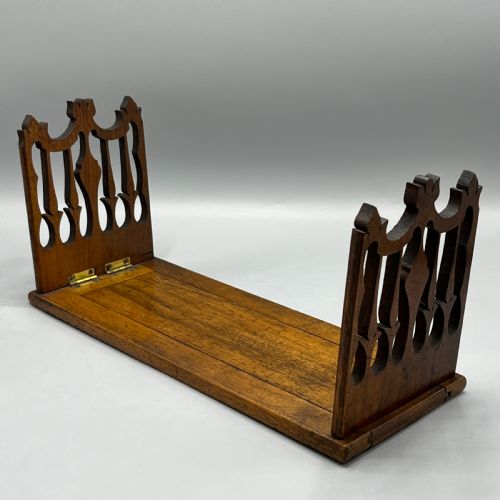
- An extending desktop rack designed to hold a row of books upright between two sliding ends. These often feature carved wooden bookends or decorative hinged mechanisms.
- Inkstand
- A fitted tray or stand holding one or more inkwells, often with built-in channels for pens and a compartment for sand or wafers. They form the central apparatus of a nineteenth-century writing desk.
- Stationery box
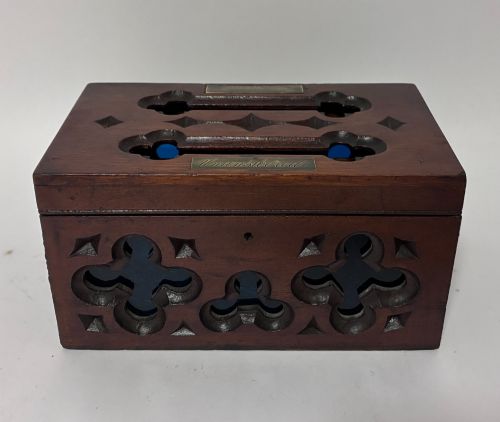
- A tabletop cabinet with a sloping or folding front designed to store writing paper and envelopes. Interiors frequently include partitioned slots for different sizes of correspondence.
- Brush pot
- A cylindrical vessel traditionally used in Chinese scholars studios to hold calligraphy brushes. They are carved from materials such as bamboo or dense hardwood.
- Desk tidy
- A multi-functional desktop accessory incorporating compartments for letters, pens, and small office supplies. Many examples include a concealed or open drawer beneath the main tier.
Carved Desk Organizer: Frequently Asked Questions
What is a desk tidy?
A desk tidy is a compartmentalised tabletop accessory designed to hold letters, pens, and small stationery items. Many period examples incorporate small drawers or letter slots to keep workspaces orderly.
These pieces were standard fixtures on nineteenth and early twentieth-century desks, combining utility with decorative carving suited to the study or library.
How do I date a carved desk stand?
Dating relies on identifying the prevailing stylistic movement, such as Victorian Gothic Revival, Arts and Crafts, or Art Nouveau, combined with material clues. Wood choices like rosewood or massive oak often align with specific decades.
Hardware types, such as brass hinges, fitted glass inkwells, and construction methods, also provide reliable indicators of age.
Where should I place a desk organizer?
These pieces sit comfortably on a writing desk, library table, or mantelpiece where their carved details can be appreciated up close. Extending book slides work well holding a small selection of favourite volumes on a shelf or tabletop.
Care should be taken to keep wooden and horn items away from direct heat sources to prevent timber shrinkage.