



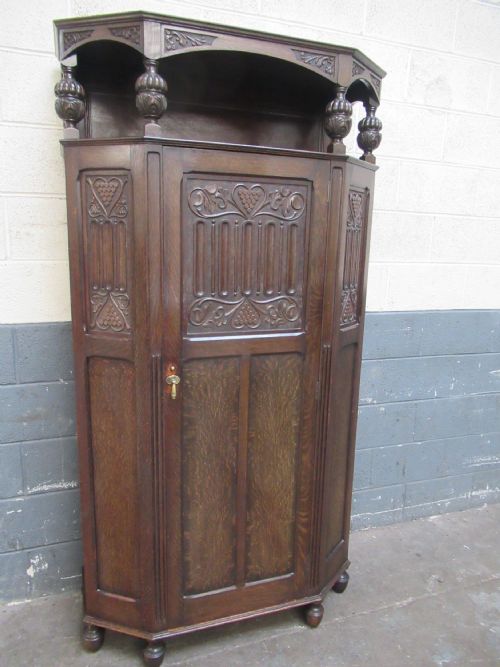


Carved Corner Cupboard
A carved corner cupboard brings utility to an awkward junction in a room, turning unused dead space into a display or storage point.
Carved Corner Cupboard
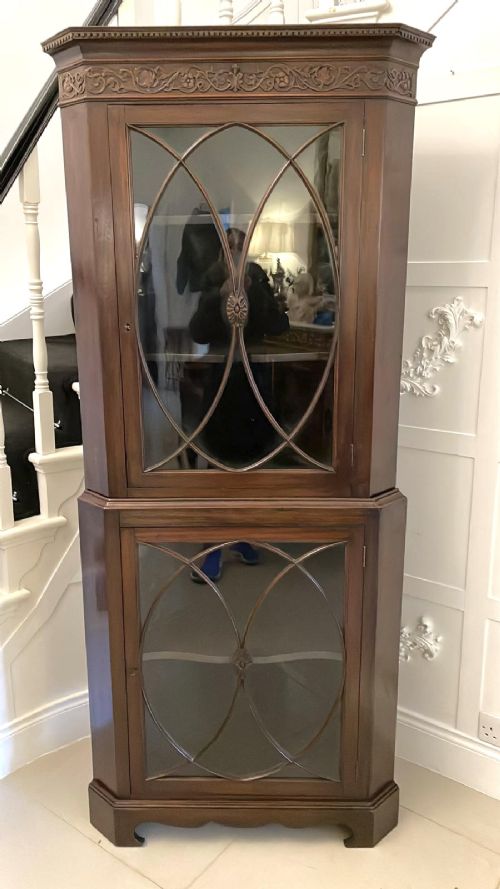
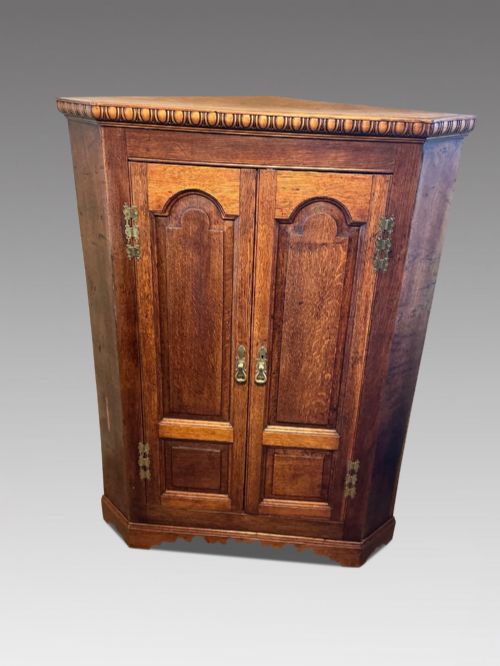
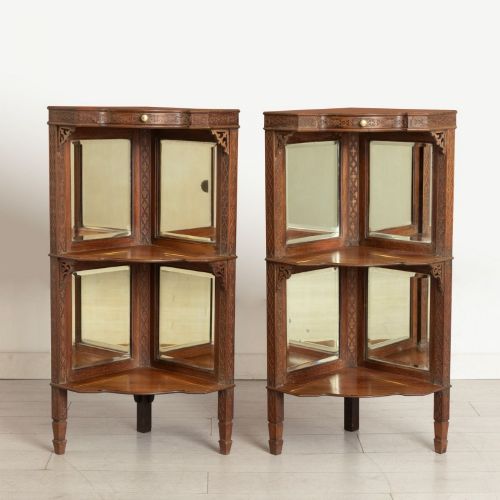
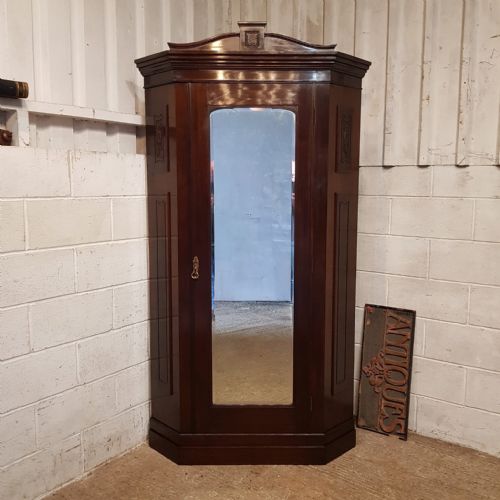
A carved corner cupboard is a fitted or freestanding storage unit designed specifically to sit within a ninety-degree room junction. These pieces emerge predominantly in oak or mahogany across the eighteenth and nineteenth centuries, taking the form of hanging wall units or tall floor-standing cabinets.
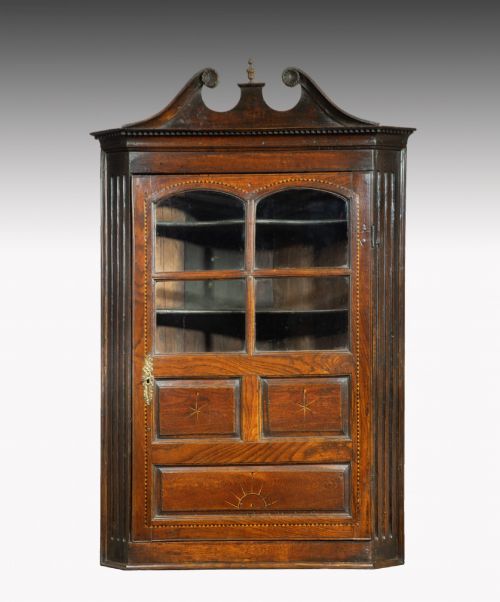
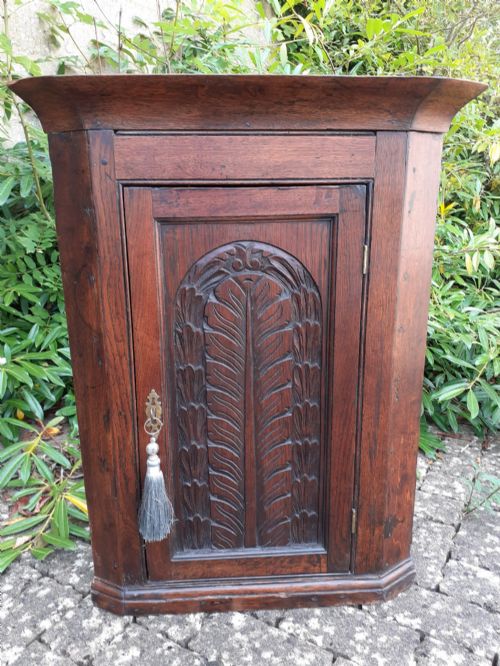
The version most commonly encountered in these listings is the oak hanging wall cupboard dating from the Georgian or Victorian eras. Such pieces often display relief carving along the frieze or door panel, reflecting period revivals including Gothic and Jacobean styles.
How they were made
Cabinet makers utilised solid timbers such as oak, mahogany, walnut and pine, often framing panels with hand-cut joints to accommodate the seasonal movement of wood. Cupboards intended for display frequently incorporated glass panels or astragal bars to showcase contents.
Carving was executed by hand using gouges and chisels directly into the structural timber or applied as separate carved mouldings. Brass or copper hardware, including hinges and escutcheons, secured the doors and added functional detail.
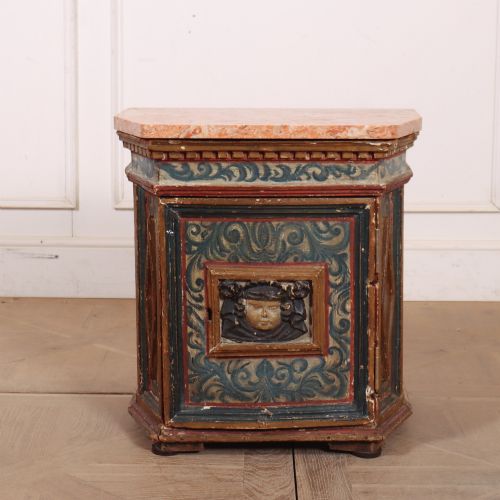
A green man lurks within the timber relief, watching over the parlour from his leafy corner.
What varies in quality
Quality rests in the crispness of the timber carving and the selection of figured wood, such as burr walnut or dense grain oak. Pieces displaying deeply undercut foliage or figurative details demonstrate superior workshop skill compared to shallow, mechanically stamped enrichment.
Construction methods also dictate standard, where dovetailed internal shelving, original brass fixings, and well-fitted doors that maintain proper alignment indicate a higher grade of cabinet making.
Edwards and Roberts·Goodhall Lamb and Heighway·Arthur Simpson·Liberty and Co
The Carved Corner Cupboard Glossary
- Astragal
- A small moulding profile, often used to divide panes of glass in a display door. These bars create a grid pattern across the cabinet front.
- Frieze
- The wide horizontal section situated just beneath the top cornice of the cabinet. Carved corner cupboards frequently feature relief decoration in this upper band.
- Bowfront
- A convex curved cabinet front that projects outward from the corner walls. This curved profile requires specialised bending or shaping of the timber and doors.
- Escutcheon
- A protective plate surrounding the keyhole opening on a cupboard door. They are frequently cast in brass or wrought iron to match the period hardware.
Carved Corner Cupboard: Frequently Asked Questions
How were carved corner cupboards used?
These cabinets served primarily to store porcelain, glassware, or household provisions while utilising spare angles in dining rooms or parlours. Hanging versions kept items off damp floors, whereas floor-standing variants offered heavier timber capacity.
Display variations positioned prestige items behind glazed doors to signal household standing to visiting guests. Utility and ornamentation met seamlessly in these angular domestic furnishings.
Are these cupboards difficult to hang?
Hanging models require secure fixing directly into wall studs or masonry because solid oak and mahogany assemblies carry substantial weight. Original brass hanging brackets or internal screw holes dictate the mounting points used by the maker.
Professional installation ensures the heavy corner door swings freely without dropping out of square. Wall preparation remains essential before mounting antique timber furniture of this scale.
How do I distinguish Georgian from Victorian examples?
Georgian pieces typically employ simpler architectural proportions with finely figured mahogany or native oak timbers. Their carving tends towards classical motifs like dentil moulding, fretwork, or subtle shell accents.
Victorian iterations often display heavier relief carving, including botanical or grotesque motifs associated with Gothic and Jacobean revivals. Darker finishes and more robust hardware also point toward nineteenth-century production.
Can these cabinets fit modern rooms?
Their precise geometric footprint allows these units to occupy dead corners that standard rectangular furniture cannot reach. They anchor empty wall junctions in hallways, kitchens, or living spaces effectively.
Internal shaped shelving accommodates modern books, glassware, or decorative objects while preserving floor area. Careful measurement of the room angle ensures proper flush placement against both adjoining walls.