





Carved Cameo Jewellery
Carved cameo jewellery brings classical portraits, mythological figures and delicate flora into wearable ornaments shaped from shell, stone and precious metal.
Carved Cameo Jewellery
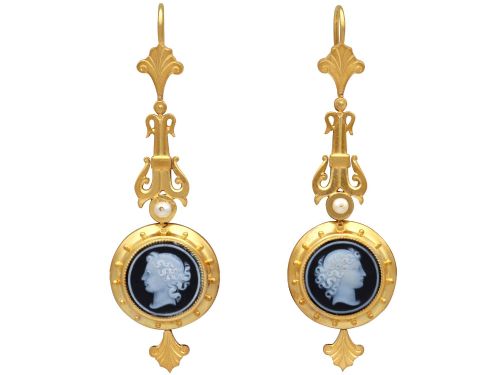
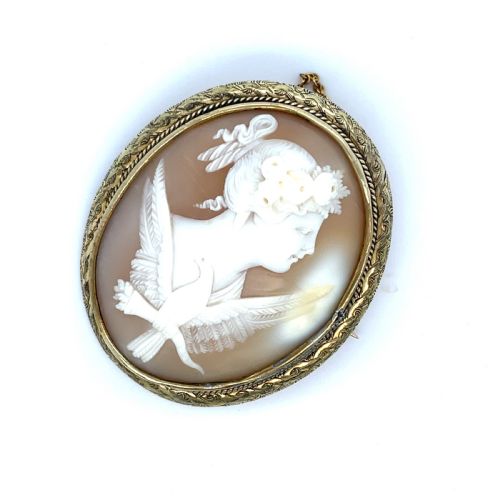
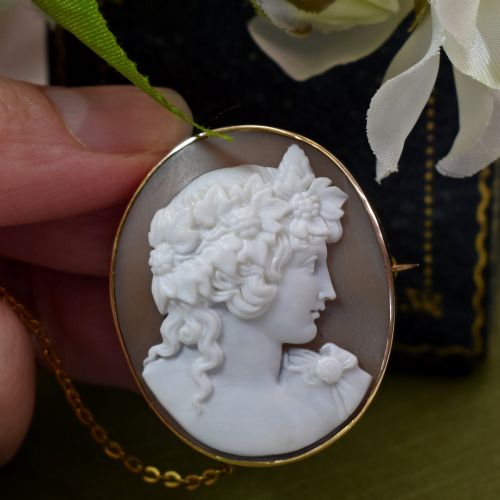
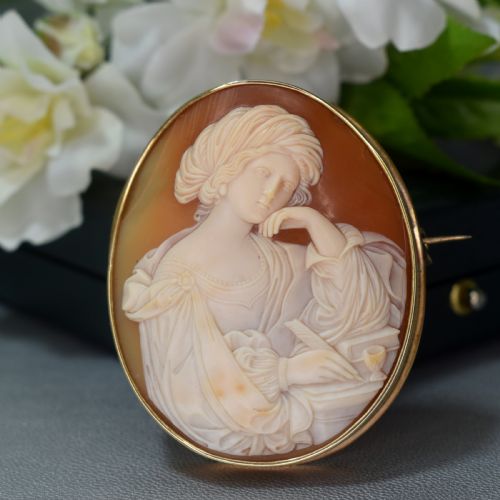
Carved cameo jewellery comprises brooches, rings, pendants, earrings, bracelets and necklaces that display a raised relief figure against a contrasting background layer. The form spans centuries of design, with Victorian pieces representing a significant portion of what is available.
Makers utilised various natural materials to achieve this layered effect, carving profiles of goddesses, cherubs and historical subjects directly into the medium. These ornaments served as personal tokens, fashionable dress accessories and souvenirs of continental travel.
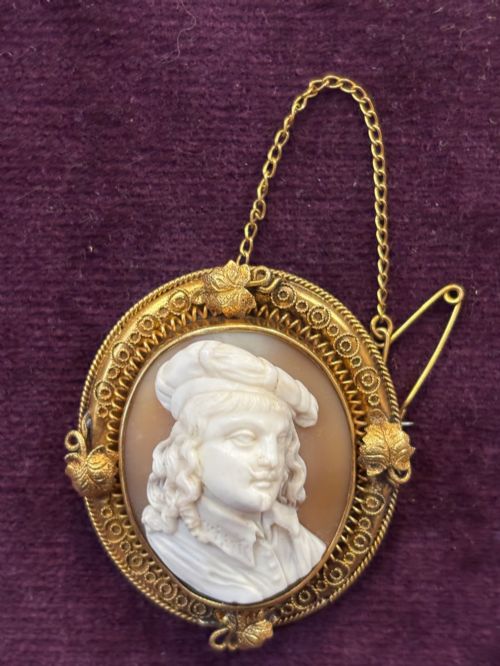
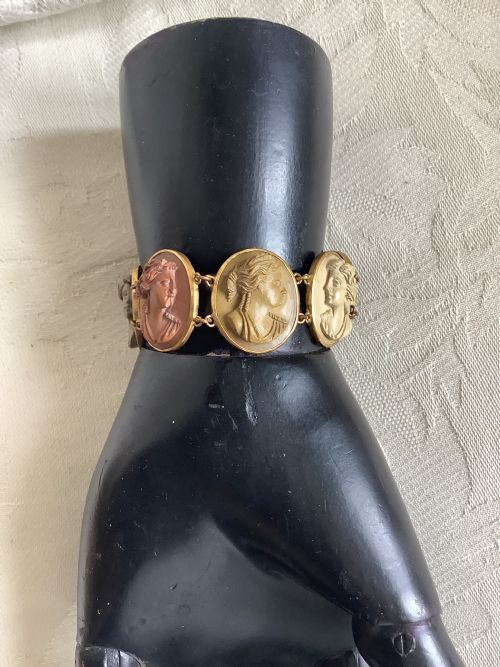
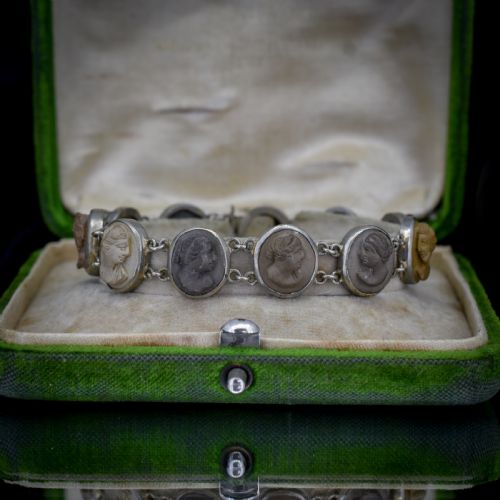
The assortment includes heavy gold frames set with shell carvings, silver mounts holding volcanic lava stone, and delicate hardstone agates paired with diamonds. Buyers encounter everything from simple mounted dress rings to substantial multi-link bracelets adorned with numerous carved elements.
How they were made
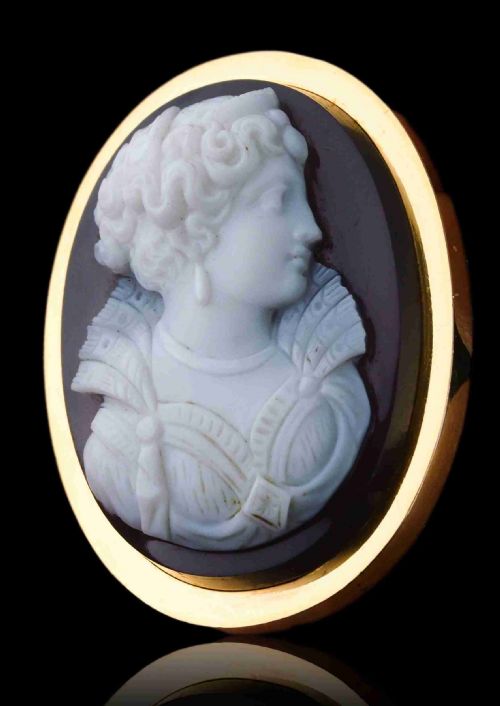
Craftsmen carved these pieces by hand, cutting away the upper strata of shell, hardstone, coral or lava stone to leave a crisp, elevated motif against a darker backing. Shell layers provided a warm, translucent contrast, whilst banded agate and hardstone required precise abrasive techniques to expose the distinct colour zones.
Metalworkers housed these miniatures in secure settings constructed from 9ct gold, 18ct gold, silver, pinchbeck or gilt brass. Frames often featured elaborate wirework, filigree details, pearl borders or integrated pendant loops designed to complement the subject within.
Carved Cameo Jewellery Retail Price Guide 2026
Typical asking prices for carved cameo jewellery among the pieces listed under this phrase on Sellingantiques today, from the lower quarter to the upper quarter. They describe what is for sale here now, not the wider market.
Materials represented across the current selection include shell, hardstone, lava stone, coral, silver and gold.
What varies in quality
The standard of carving distinguishes superior examples, where facial expressions, hair strands and drapery possess anatomical depth and sharp definition. Lesser pieces show softer contours, hurried tool marks and less distinct separation between the relief subject and the background plane.
Materials and mount construction also divide the range, from simple pinchbeck settings to heavy solid gold frames embellished with gemstones like diamonds, pearls or emeralds. The choice of medium dictates the overall weight and presence of the ornament, with dense hardstones and large conch shells requiring particular skill to shape without fracture.
R.Pernice·Chaumet
The Carved Cameo Jewellery Glossary
- Cameo
- A method of carving an object such that a relief image stands up from a contrasting background. This technique relies on layered materials like shell or banded stone.
- Hardstone
- A term for semi-precious stones such as agate, carnelian and onyx utilised for detailed miniature carvings. These materials offer durability and sharp colour contrast.
- Grand Tour
- A period of travel through continental Europe undertaken by wealthy individuals during the eighteenth and nineteenth centuries. Travellers frequently purchased local lava stone and shell carvings as mementos.
- Pinchbeck
- An alloy of copper and zinc developed to imitate gold. It provides a warm yellow lustre without the expense of precious metal mounts.
- Intaglio
- A design carved into the surface of a stone rather than raised in relief. It produces an impression when pressed into sealing wax.
Carved Cameo Jewellery: Frequently Asked Questions
What materials are carved cameo jewellery made from?
These ornaments are fashioned from natural shells such as queen conch, layered hardstones including agate and carnelian, volcanic lava stone, and organic red coral. Each material offers a distinct colour palette and texture for the carved relief.
Settings are typically fabricated from yellow gold, silver, pinchbeck or gilt metal, occasionally accented with pearls and diamonds to frame the central carving.
How should I care for antique cameo pieces?
Shell and coral carvings require gentle handling because they are softer than gemstones and vulnerable to harsh chemicals, cosmetics and ultrasonic cleaning. Store them separately in padded boxes to prevent surface scratches on the relief.
Hardstone and lava stone items are more resilient but still benefit from soft-cloth wiping and careful inspection of their metal claws and bezels to ensure secure retention.
How can I tell the period of a cameo?
Dating relies heavily on the style of the metal mount, the clasp mechanism, and the subject matter depicted. Victorian pieces often feature ornate gold wirework or closed-back settings, whilst Edwardian and later twentieth-century items display different proportions and fastener designs.
Subject choices also shift across eras, with classical mythological figures dominating nineteenth-century Grand Tour pieces and simpler geometric or stylized mountings appearing later.
What subjects are commonly depicted on cameos?
Portraits of classical goddesses, mythological figures such as Cupid and Psyche, and historic profiles are prevalent across these items. Makers also drew inspiration from famous paintings, sculptural works and contemporary portraiture.
Floral arrangements and animal motifs, including horse heads, appear frequently in rings, bracelets and brooches alongside human profiles.