
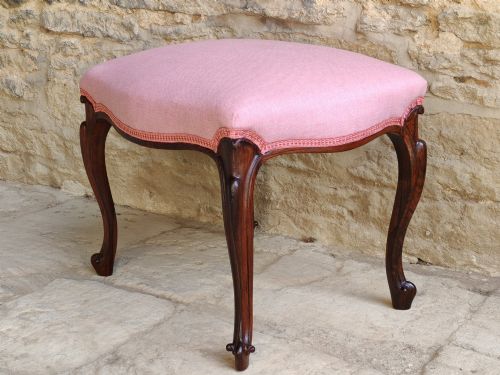
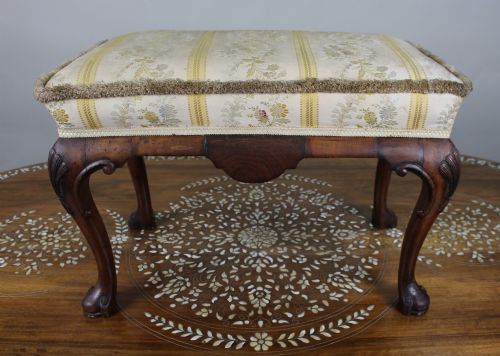
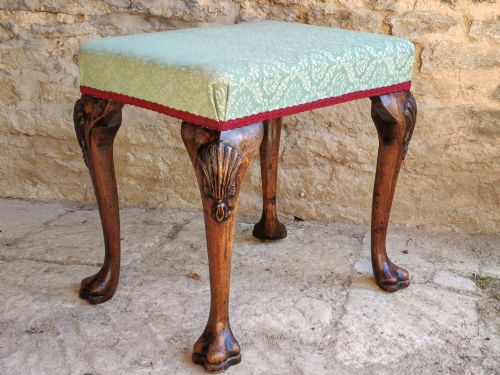
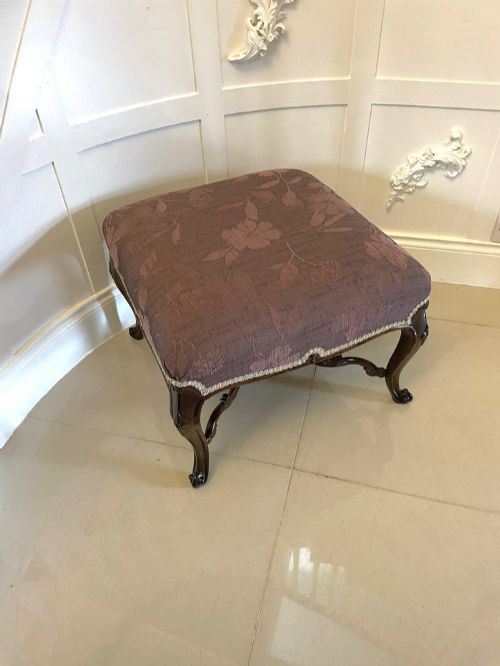
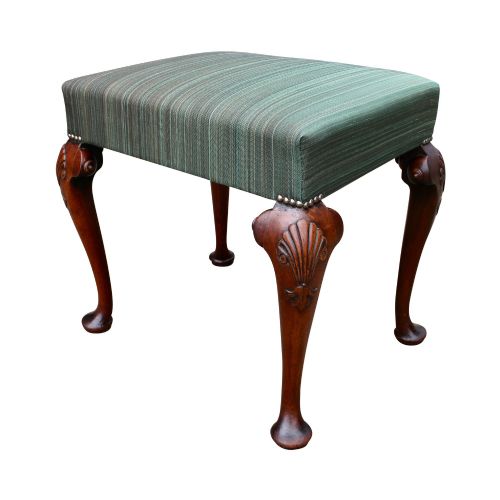
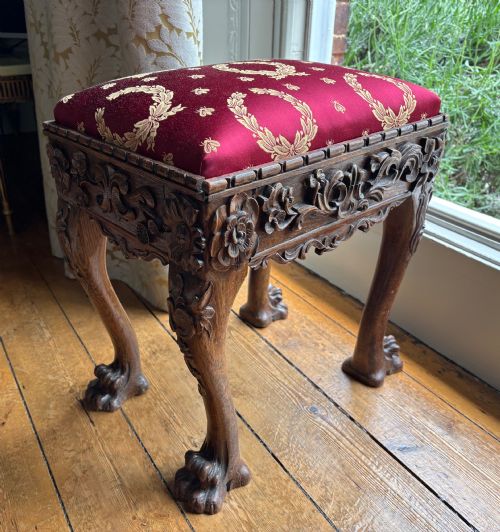
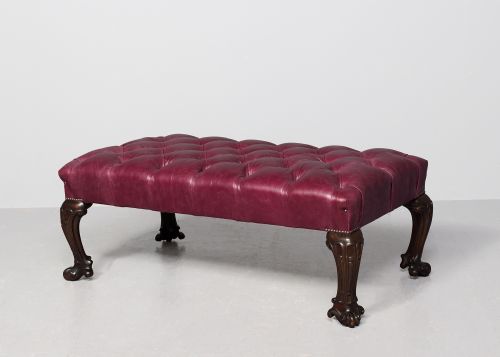
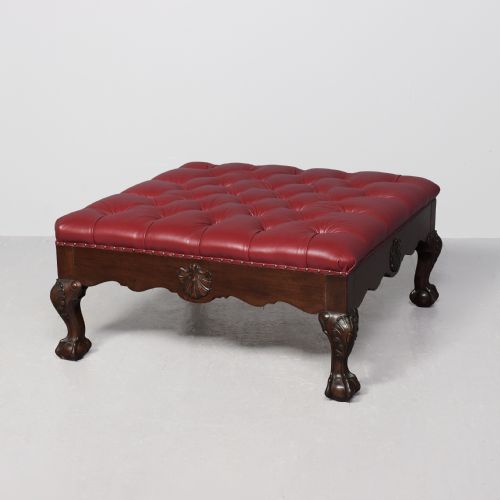
Carved Cabriole Leg Footstool
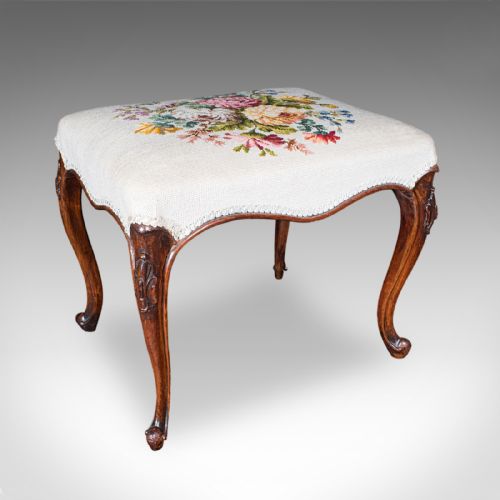
A carved cabriole leg footstool brings the graceful curves and solid timbers of past centuries directly to the fireside or dressing room.
Carved Cabriole Leg Footstool
When you search for a carved cabriole leg footstool, you encounter low seating forms designed to support the feet or serve as dressing stools. The evidence shows these pieces surface frequently in Victorian interpretations alongside revival styles referencing the George II and Queen Anne periods.
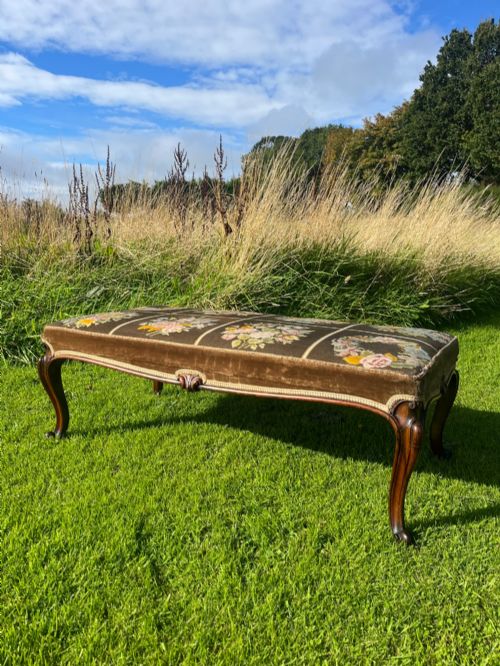
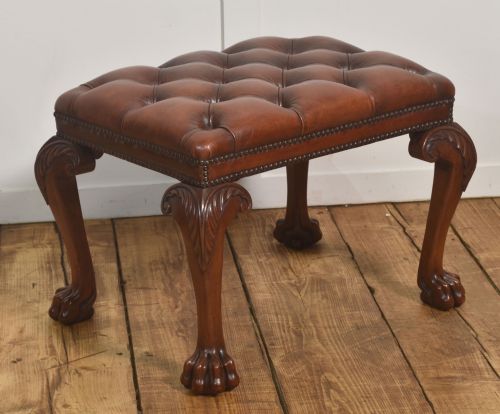
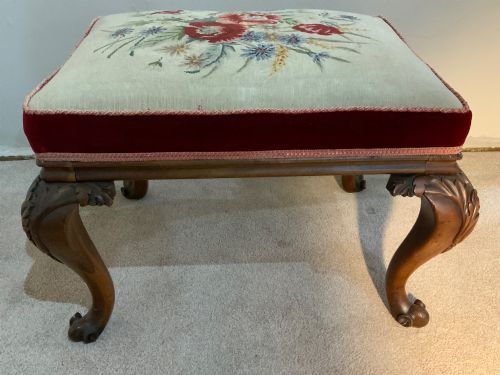
The materials span dense hardwoods paired with various textiles, needlepoints, and leathers. Walnut and mahogany dominate the timber choices, often shaped into distinct scrolling legs that terminate in pad or claw feet.
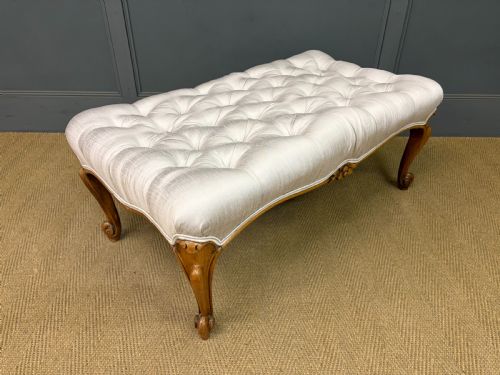
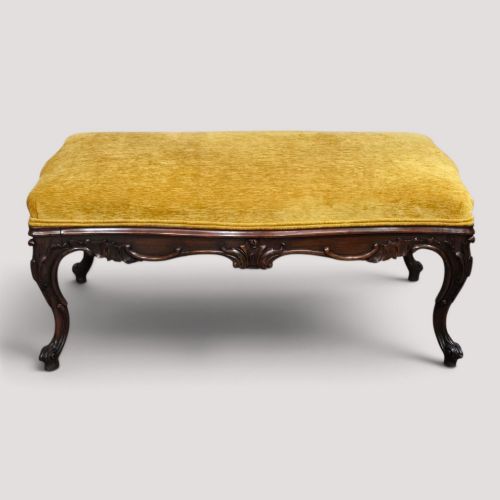
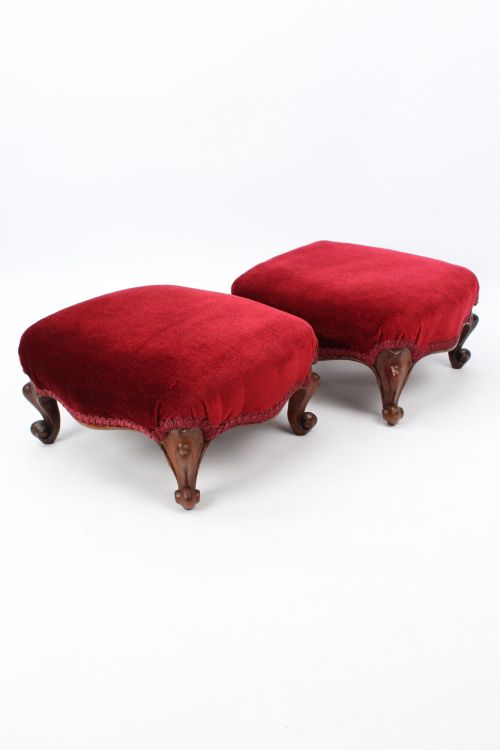
Most examples originate from the nineteenth century, though earlier eighteenth-century Irish models and later twentieth-century revivals also appear. Forms range from compact pairs to large buttoned upholstery frames.
How they were made
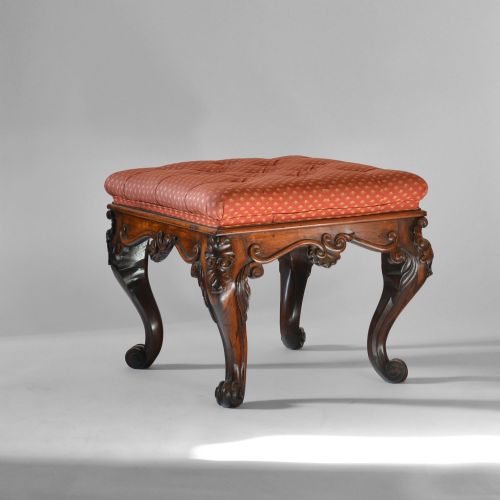
Cabinetmakers constructed the frames using solid timbers such as walnut, rosewood, and mahogany, frequently incorporating carved details directly into the knee of the leg. Goncalo Alves wood and elm also appear in specific regional examples.
Upholstery techniques applied over the wooden frames utilise textiles, needlepoint, wool, and leather, sometimes secured with brass detailing. Frames were fashioned in styles spanning Rococo Revival, Chippendale, and Queen Anne influences.
Styles recorded span Queen Anne Revival, Chippendale Style, and Victorian Rococo Revival.
What varies in quality
The refinement of the timber carving sets individual pieces apart, distinguishing deeply sculpted acanthus leaves or shell motifs from flat, mechanical shaping. Crisp execution in the knee and foot of the cabriole leg signals superior workshop standards.
The choice of primary wood and the integrity of the frame construction determine the durability of the piece. Dense grain walnut and rich mahogany support heavier proportions and finer carved detail than secondary timbers.
Loidrault Freres Paris
The Carved Cabriole Leg Footstool Glossary
- Cabriole leg
- A furniture leg that curves outward at the knee and tapers inward toward the foot, mimicking animal limbs. This form became central to Queen Anne and Chippendale furniture design.
- Needlepoint
- A type of canvas work embroidery used historically for durable furniture upholstery. It often displays floral or geometric patterns executed in wool.
- Rococo revival
- A nineteenth-century design movement drawing on exuberant eighteenth-century French ornamentation. It relies on asymmetrical scrolls, C-scrolls, and naturalistic floral carving.
- Hide
- Animal skin prepared for upholstery, providing a durable and smooth covering for large seat frames. Red and burgundy hide variations appear frequently on nineteenth-century footstools.
- Giltwood
- Timber treated with a thin layer of gold leaf or metallic gilt pigment. This finish highlights decorative carving on Continental and revival pieces.
Carved Cabriole Leg Footstool: Frequently Asked Questions
How do I date a footstool?
Dating relies on timber selection, carving styles, and construction methods visible in the frame. Nineteenth-century pieces often display machine-assisted precision alongside traditional joinery.
Revival periods frequently emulate eighteenth-century motifs, so examining the wear patterns on the timber helps clarify the true age.
Were these stools used for sitting?
Many examples served as dressing table stools or low fireside seating rather than simple footrests. Their sturdy frames accommodated daily domestic use.
Larger variants functioned as centre stools or ottomans within principal reception rooms.
What wood is best?
Walnut and mahogany remain the most durable and aesthetically valued timbers for these frames. Both woods take intricate carving well and maintain structural stability.
Rosewood offers a darker, heavily figured alternative seen across Victorian pieces.
How do I choose upholstery?
Original needlepoint, leather, or textile upholstery adds historical value if preserved in sound condition. Many pieces accommodate modern re-covering to match contemporary interiors.
Buttoned hide finishes suit heavier mahogany frames, while needlepoint pairs naturally with walnut.