

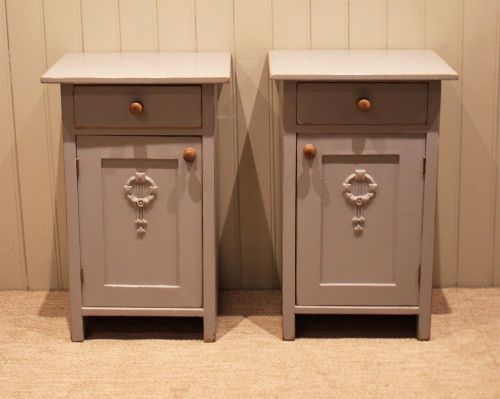
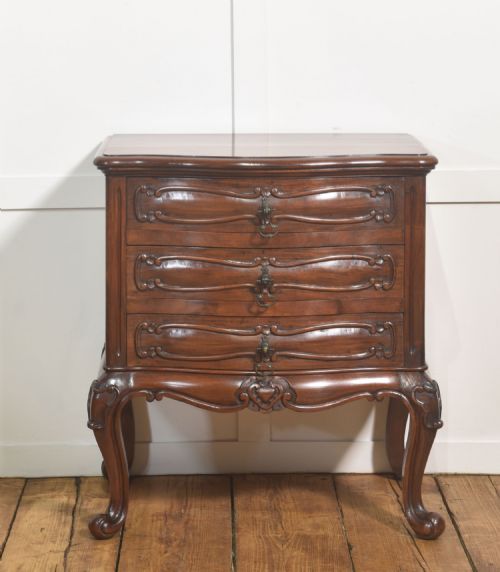
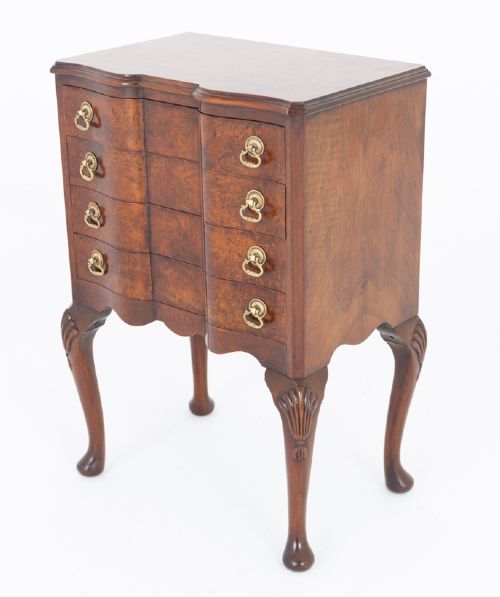
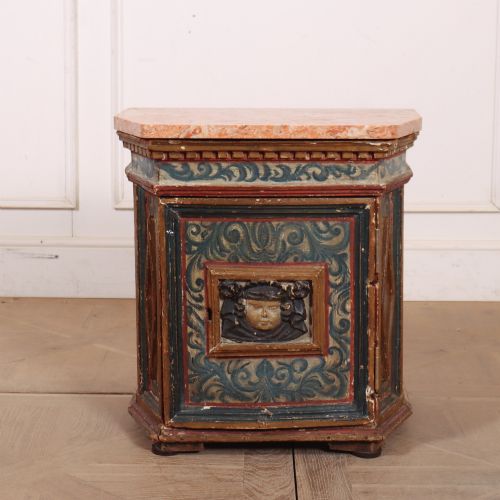

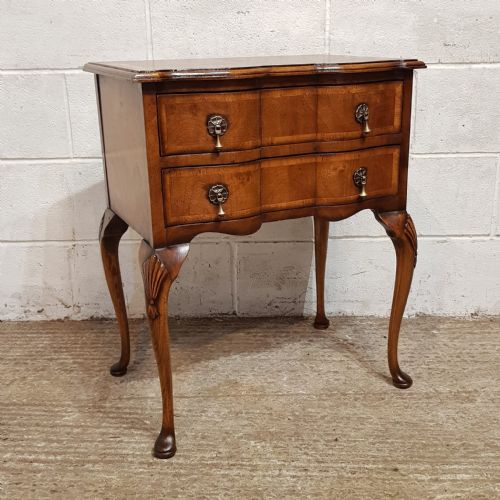


Carved Bedside Chest
A carved bedside chest brings practical surface space and enclosed storage to the bedroom, grounding the bedside with period character.
Carved Bedside Chest
A carved bedside chest functions as a compact storage unit beside the bed, emerging in forms from the eighteenth century through the 1930s. When searching for a carved bedside chest, a buyer encounters pieces originating from Victorian, Edwardian, and earlier periods, alongside revival styles.
The inventory on this page shows bedside chests and cabinets constructed in varied regional aesthetics, including French provincial, Gothic revival, and Queen Anne style. These objects appear as single items or matching pairs designed to sit neatly alongside a bed or lamp table.
Makers and workshops across Europe utilised timber to produce small chests, commodes, and pedestals equipped with drawers or cupboards. The forms range from serpentine fronts to plain rectangular bodies, reflecting the domestic habits of their respective periods.
Materials and construction methods
Cabinet makers built these pieces using primary timbers such as mahogany, walnut, burr walnut, oak, elm, fruitwood, and satin walnut, often pairing them with brass hardware and marble tops. Timber selection dictated the weight and grain pattern of each chest, with burr walnut and mahogany offering distinct visual depth.
Joinery techniques combined traditional drawer construction with decorative carving, turning, and marquetry inlay. Surviving pieces demonstrate the handling of solid woods and veneers across centuries ranging from the 1750 Italian apothecary work to 1930s oak cabinets.
Carved Bedside Chest Retail Price Guide 2026
Typical asking prices for carved bedside chest among the pieces listed under this phrase on Sellingantiques today, from the lower quarter to the upper quarter. They describe what is for sale here now, not the wider market.
Current listings span periods from the 1750s through the 1930s, featuring walnut, mahogany, oak, and marble.
Measures of quality and condition
Quality in a carved bedside chest rests upon the crispness of the timber carving, the integrity of the veneer, and the fidelity of the period style. Pieces retaining original surface patina and unblemished marble tops sit at the higher end of the range.
Construction details such as dovetailed drawer joints and matched timber grains separate refined cabinet work from simpler utilitarian builds. Alterations or later adaptations, such as those noted in certain Victorian pieces, influence how a chest is assessed by collectors.
James Shoolbred
The Carved Bedside Chest Glossary
- Serpentine front
- A furniture front curving outward in the centre and inward at the sides. This contour requires precise woodworking skills to shape the timber and fit the drawers.
- Commode
- A low cabinet or chest of drawers, often of French origin. These pieces frequently feature marble tops and decorative veneer work.
- Marquetry
- Inlaid patterns applied to furniture surfaces using different coloured woods and veneers. Artisans cut these pieces to form floral or geometric motifs.
- Biedermeier
- A Central European style from the first half of the nineteenth century emphasising utilitarian comfort and clean lines. Pieces from this period rely on plain wood grains rather than heavy ornamentation.
Carved Bedside Chest: Frequently Asked Questions
What is a carved bedside chest used for?
A carved bedside chest provides a stable surface for lamps and books while offering enclosed storage within drawers or cupboards.
Placed beside a bed, these compact units keep personal items close at hand while adding decorative presence to a bedroom scheme.
How do I identify a Victorian bedside chest?
Victorian examples often utilise dense timbers like mahogany and display heavier proportions or Gothic revival detailing.
Comparing the hardware, drawer construction, and joinery helps distinguish mid-nineteenth-century work from later twentieth-century revival pieces.
Are bedside chests usually found in pairs?
Many listings feature matching pairs of bedside chests, which suit symmetrical bedroom layouts on either side of a bed.
Single cabinets also appear frequently, originating from smaller bedroom suites or apothecary and commode forms.
What is burr walnut furniture?
Burr walnut incorporates timber harvested from the growths or burls of walnut trees, creating swirling, highly decorative grain patterns.
Cabinet makers used these veneers on high-status pieces during the Edwardian period and earlier revivals to catch the light.