
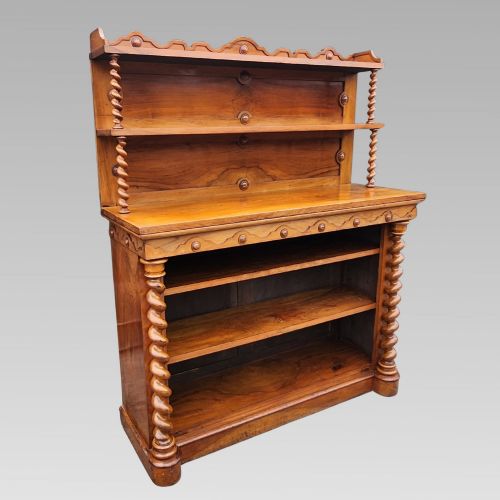


Carved Barley Twist Cabinet
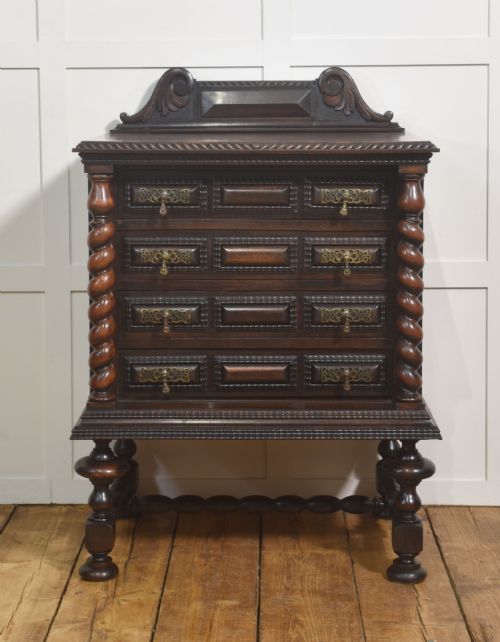
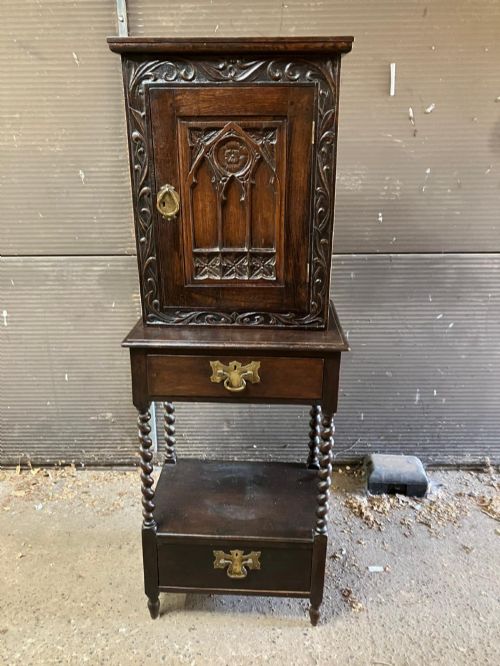
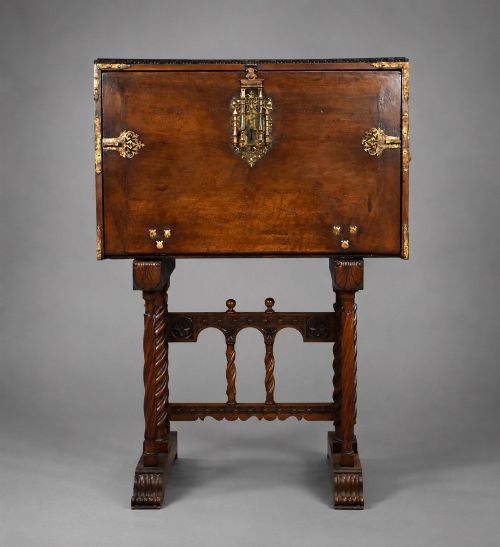
A carved barley twist cabinet brings tactile depth to a room through spiralled wooden columns and solid timber construction.
Carved Barley Twist Cabinet
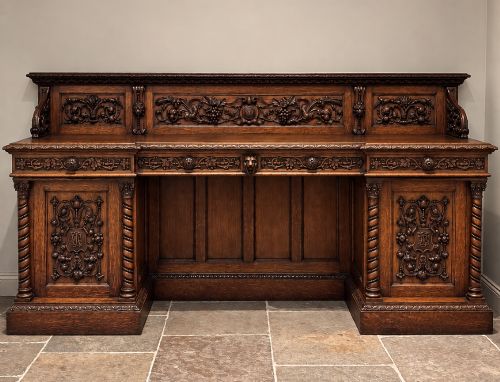
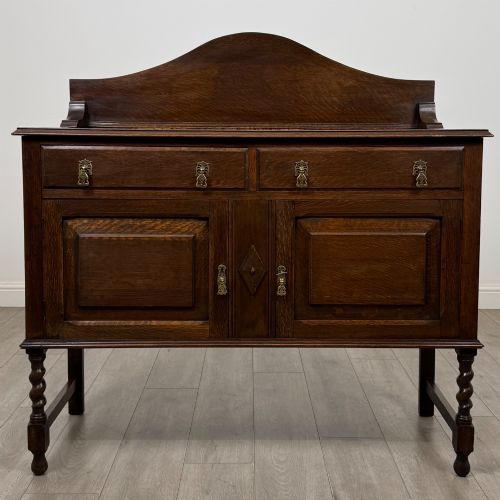
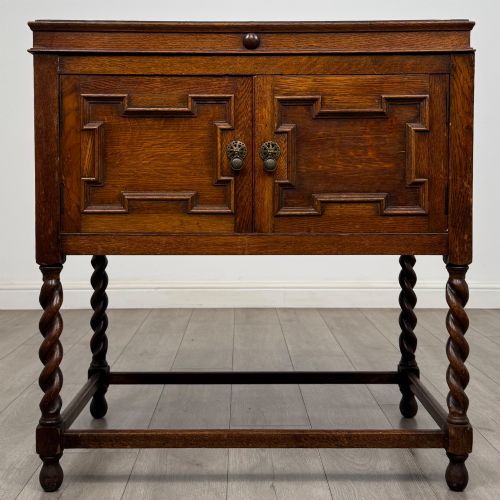
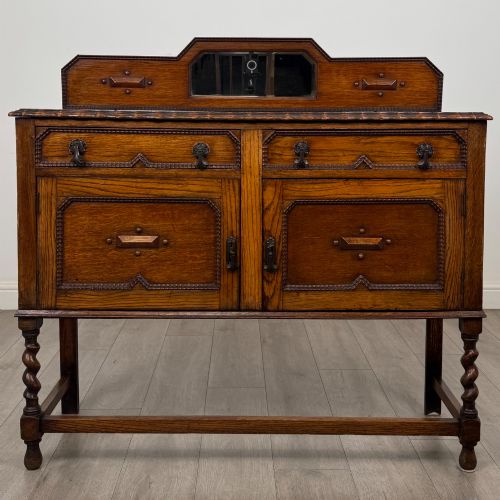
A carved barley twist cabinet unites substantial timber storage forms with deeply turned structural columns. When searching for a carved barley twist cabinet, a buyer encounters domestic utility pieces spanning several centuries, primarily executed in sturdy woods.
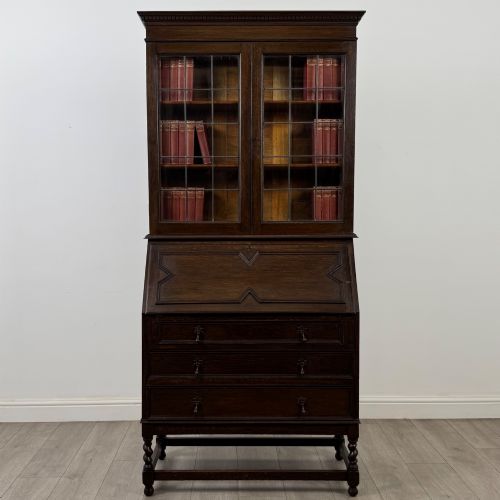
The prevailing examples on this page date from the nineteenth century and the Edwardian era, taking the form of sideboards, side cabinets, bookcases, and hall cupboards. These domestic furnishings provide enclosed shelving or drawers alongside prominent spiral turning.
Stylistic influences range widely across the selections, incorporating Jacobean Revival, Flemish Renaissance Revival, and French regional designs. Such pieces function practically as storage furniture while introducing distinct sculptural detail to an interior.
Factors influencing quality
The calibre of a piece rests upon the crispness of the hand-carving and the precision of the spiral turning on the upright columns. Tighter, more deeply sculpted twists require greater joinery skill than shallow, machine-cut variants.
Timber selection and figure density dictate upper tiers of craftsmanship, particularly in figured walnut or quarter-sawn oak surfaces. Original hardware, stable door alignment, and well-executed relief work further separate standard utility pieces from exceptional examples.
Several pieces conceal grumpy Green Man faces peering out from dense oak foliage.
Holland and Sons
The Carved Barley Twist Cabinet Glossary
- Barley twist
- A spiral column or leg turned on a lathe to resemble a twisted rope or stalk of barley. This decorative turning became popular during the seventeenth century and saw substantial revivals in nineteenth-century furniture.
- Jacobean style
- A heavy, geometric furniture aesthetic originating in the early seventeenth century and revived during the Victorian and Edwardian periods. It relies heavily on dark oak, panelled doors, and prominent straight lines.
- Sideboard
- A long dining room or hall storage unit designed for holding tableware, linens, or food service items. These items frequently incorporate drawers above cupboards and stand on legs or plinth bases.
- Bookcase
- An upright piece of furniture featuring horizontal shelves for storing books, often enclosed by glass or wooden doors. Many period examples combine lower cupboards with upper open shelving or glazed compartments.
- Frieze
- A broad horizontal band of sculpted or painted decoration situated beneath the cornice of a cabinet. On these pieces, the frieze often displays linear relief carving or applied moulding.
Carved Barley Twist Cabinet: Frequently Asked Questions
What rooms suit a carved barley twist cabinet?
These cabinets suit dining rooms, hallways, or living spaces where substantial wooden storage is required. Their decorated columns provide a focal point against plain walls.
Because they appear in various heights and widths, from wall-hanging displays to large sideboards, placement depends entirely on the available floor space and ceiling height.
How do I care for antique oak furniture?
Maintain antique oak and walnut surfaces by keeping them away from direct heat sources and sudden humidity changes. Regular dusting with a dry, soft cloth prevents particulate accumulation.
Apply a quality beeswax polish sparingly when the timber appears dry, buffing it gently to preserve the natural grain and sheen of the wood.
How do I distinguish Victorian revivals from earlier pieces?
Victorian revival furniture often exhibits machine-assisted precision in its turning alongside denser secondary woods inside the carcass. Construction methods, saw marks, and fixing types offer clear clues regarding age.
Earlier seventeenth-century originals display hand-riven timber characteristics and irregular tool marks that differ from nineteenth-century workshop standards.
How were these cabinets originally used?
Households utilised these storage units for keeping linens, books, glassware, or dry goods protected from dust and light. Cupboards with drawers served dining rooms for cutlery storage.
Glass-fronted display variants allowed owners to exhibit porcelain and decorative objects while keeping them secure behind locked doors.