



Carved Baluster Table
These carved baluster table examples range from rustic farmhouse dining boards to delicate lamp bases, offering solid oak and walnut craftsmanship for traditional interiors.
Carved Baluster Table
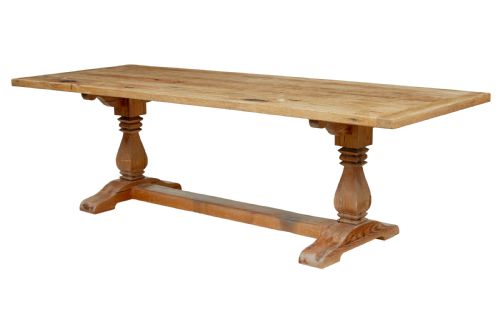
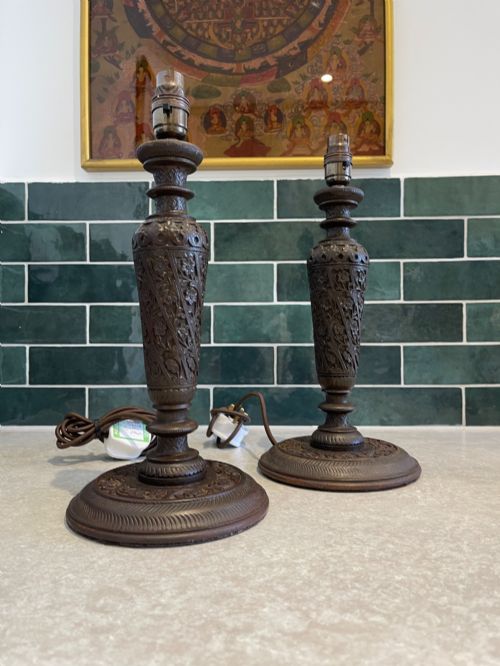
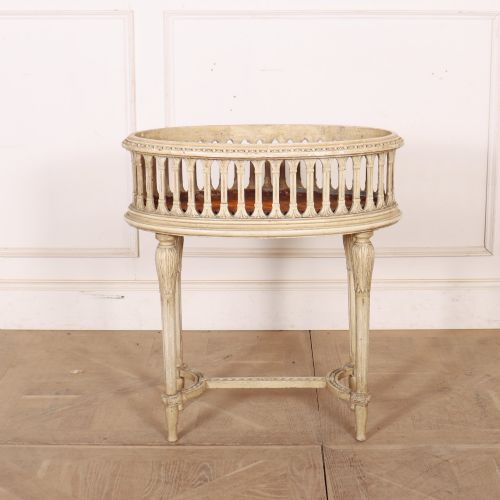
A carved baluster table combines sturdy timber construction with distinctive turned pedestal supports, spanning formats from large dining boards to compact side tables. You will encounter dining tables, table lamps, side tables, plant stands, console tables, and centre tables across this selection.
The materials vary from heavy oak and elm to walnut and rosewood, reflecting centuries of domestic utility and decorative refinement. Styles stretch from seventeenth-century Jacobean and rustic farmhouse to Chinoiserie and Arts and Crafts.
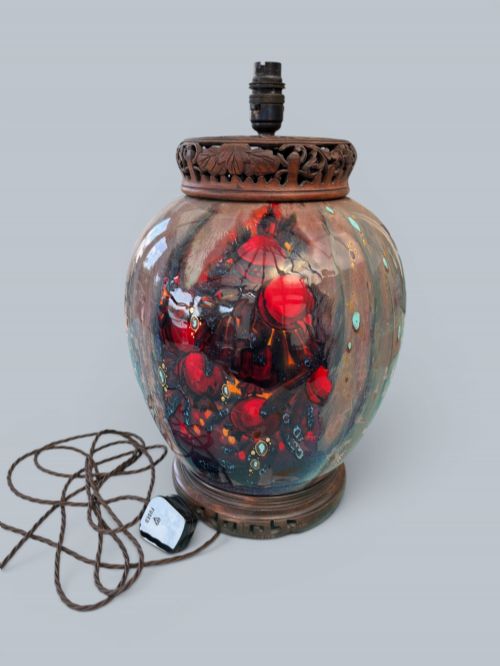
Origins span English country houses, French workshops, and as far afield as India and China, particularly in ceramic lamp adaptations. This diversity means buyers select pieces based on specific spatial requirements, whether for a central dining space or an ambient corner lamp.
Materials and Construction
Makers relied primarily on native timbers like oak, elm, walnut, and pine for structural integrity, shaping pedestals with lathe work and hand carving. Joinery methods included pegged mortise and tenon joints on refectory and trestle tables to ensure long-term stability under heavy daily use.
Secondary materials introduce contrasting textures, such as brass fittings, painted surfaces, and glazed porcelain incorporated into table lamps. Single plank tops, notably in elm and oak, demonstrate the utilisation of wide timber boards seasoned over lengthy periods.
Carved Baluster Table Retail Price Guide 2026
Typical asking prices for carved baluster table among the pieces listed under this phrase on Sellingantiques today, from the lower quarter to the upper quarter. They describe what is for sale here now, not the wider market.
Listings incorporate oak, elm, walnut, and rosewood alongside porcelain, brass, and fabric elements across multiple centuries.
Assessing Quality and Execution
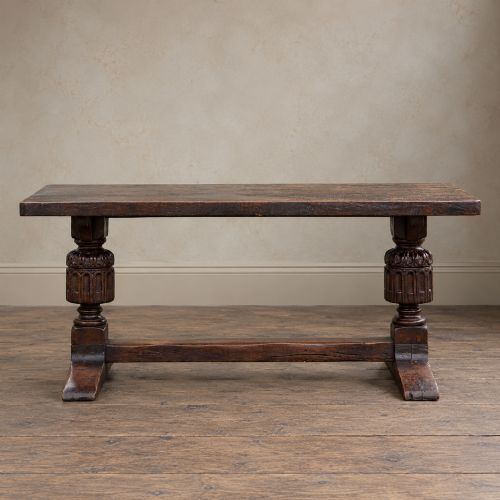
Quality rests upon the proportion of the turned baluster support and the integration of the carved decoration with the main structure. Superior examples display crisp, deep relief carving on the timber rather than shallow surface scoring.
The selection of timber grain, particularly matched walnut or single plank elm tops, separates standard utilitarian furniture from exceptional cabinet work. Furthermore, the integrity of the original finish, whether bleached oak or historic paint, dictates the visual coherence of the piece.
Moorcroft Art Pottery
The Carved Baluster Table Glossary
- Baluster
- A moulded shaft or pillar, square or circular in form, supporting a rail or table top. These elements provide both structural load-bearing capacity and architectural ornamentation.
- Refectory table
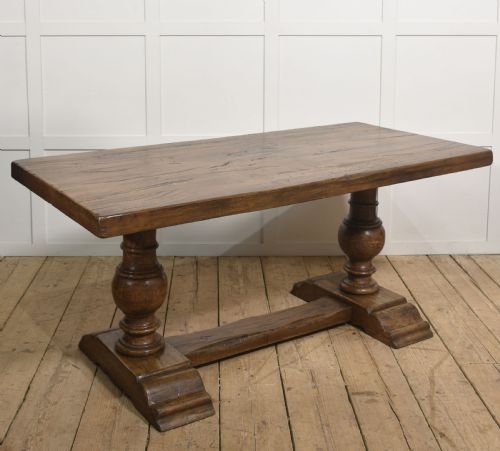
- A long dining table historically used in monasteries and large halls. They typically feature heavy timber legs joined by floor-level stretchers.
- Gateleg table
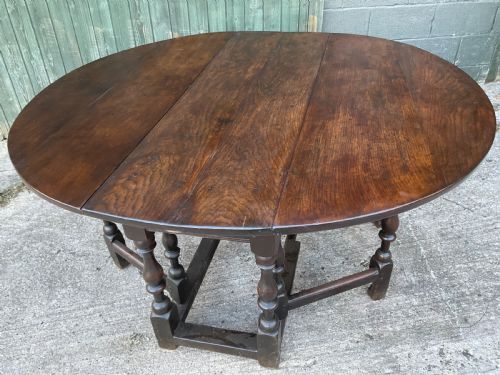
- A drop-leaf table with hinged flaps supported by swing-out legs that resemble a gate. This design allowed furniture to fold down when floor space was required.
- Celadon
- A term for ceramics denoting a pale green glaze originating in China. It frequently appears on porcelain bodies converted into table lamps during the early twentieth century.
- Jardiniere
- An ornamental pot or stand for holding plants or flowers. Painted versions appear in nineteenth-century domestic interiors.
Carved Baluster Table: Frequently Asked Questions
What is a baluster table?
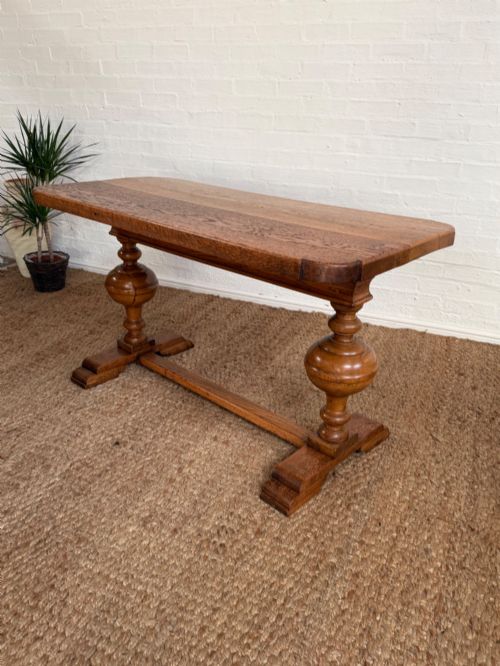
A baluster table is defined by its turned, vase-shaped pedestal supports, which elevate the top surface. These forms appear across dining formats, console tables, and occasional stands.
The design draws on architectural pillars, translating stone forms into turned timber components that anchor heavy oak or walnut planks.
How do I date an oak table?
Dating relies upon examining construction marks, timber shrinkage, joint types, and the style of the carving. Hand-adzed boards and pegged joints often indicate earlier periods.
Secondary woods and hardware fastenings provide further clues to whether a piece originates in the seventeenth century or later revival periods.
Where were porcelain lamp bases made?
Porcelain lamp bases in this selection incorporate Chinese celadon and baluster vases alongside Paris porcelain bodies. Many of these ceramic vessels were mounted with electrical fittings in the early twentieth century.
This practice repurposed decorative vases into functional lighting for Edwardian and later interiors.
Are these tables suitable for daily dining?
Solid oak and elm refectory and farmhouse tables are constructed for heavy daily use, offering robust seating capacities. Their durable timber tops withstand regular domestic activity.
Buyers should measure clearance heights beneath the aprons to ensure standard dining chairs fit comfortably underneath.