


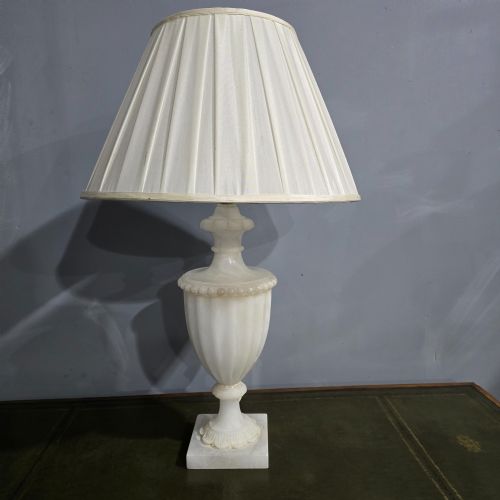


Carved Alabaster Desk Light
These carved alabaster desk light examples bring gentle illumination and classical presence to a workspace, combining translucent stone with period metalwork.
Carved Alabaster Desk Light
When you search for a carved alabaster desk light, you are looking at table lamps that harness translucent mineral stone to diffuse light across a surface. These pieces emerge primarily from the nineteenth century and the early decades of the twentieth century, capturing Victorian, Edwardian, and Art Deco sensibilities.
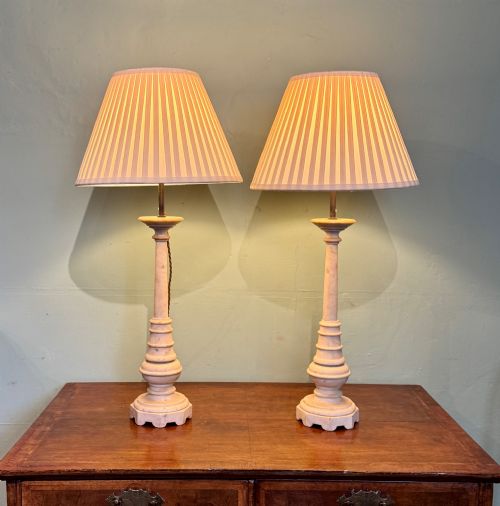
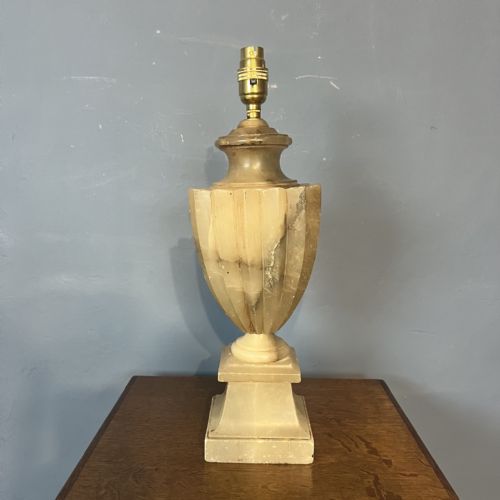
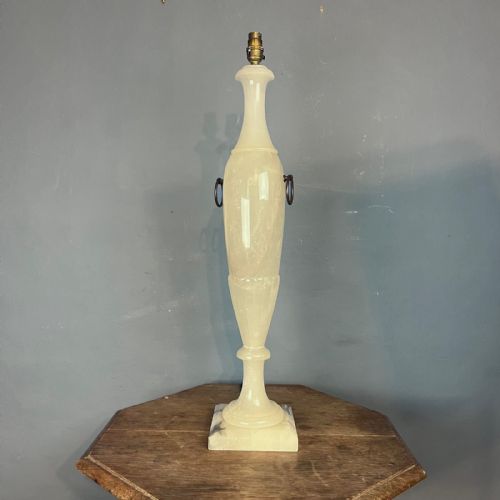
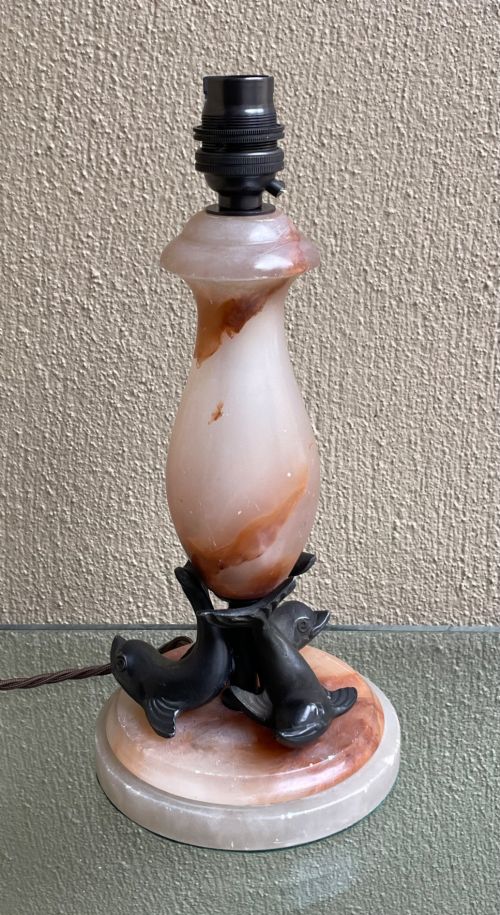
You are most likely to meet single table lamps and symmetrical pairs fashioned from alabaster, white marble, and onyx. The forms range from classical revival designs to spirited novelty motifs like dolphins, shaped to sit upon a desk or side table.
The origins span country house examples alongside Italian workshop production from the nineteen-tens, twenties, and thirties. Each item utilises the natural veining of the stone to create a soft, ambient glow when lit.
How they were made
Makers shaped solid blocks of alabaster, marble, and onyx on lathes or by hand to achieve the slender columns and urn forms of the period. This stone work was then paired with mounts, bases, and fittings cast from brass and patinated metal.
Wiring and hardware were integrated into the stone cores, occasionally accompanied by fabric shades or glass elements to complete the desk lamp construction.
Carved Alabaster Desk Light Retail Price Guide 2026
Typical asking prices for carved alabaster desk light among the pieces listed under this phrase on Sellingantiques today, from the lower quarter to the upper quarter. They describe what is for sale here now, not the wider market.
Among the sculpted forms waiting on desks, a carved alabaster dolphin leaps through the nineteen-twenties to catch the light.
What varies in quality
The distinction between tiers rests upon the depth of the carving and the uniformity of the stone's natural translucency. Finer examples display crisp detail in sculptural elements like dolphins or classical revival mouldings without disruptive inclusions in the mineral.
The calibre of the supporting metalwork also dictates the grade, as heavy cast brass or patinated metal mounts outlast lighter stamped alternatives. Original matched pairs hold greater architectural presence than assembled substitutes.
The Carved Alabaster Desk Light Glossary
- Alabaster
- A fine-grained, translucent stone prized for lighting because light passes softly through its surface. It absorbs a warm glow when fitted with an internal bulb.
- Onyx
- A banded variety of chalcedony quartz often utilised in decorative lamp bases alongside marble. Its distinct parallel strata create natural stripes of colour.
- Art Deco
- A design style dominant in the nineteen-twenties and thirties characterised by sleek geometric forms and stylised motifs. Dolphin lamps from this period show streamline influences.
- Neoclassical Revival
- An architectural style reviving classical Greek and Roman motifs during the nineteenth and early twentieth centuries. Lamps from this tradition feature urn shapes and acanthus details.
- Patinated Metal
- Metal surfaces treated with chemical agents or age to produce a darkened, weathered tone. This finish grounds the luminous white stone of the lamp body.
Carved Alabaster Desk Light: Frequently Asked Questions
What is a carved alabaster desk light?
A carved alabaster desk light is a period table lamp featuring a body hewn from translucent stone designed to sit on a writing surface.
These pieces combine stone carving with brass or metal hardware to diffuse a soft, ambient glow.
How were these lamps used originally?
They sat upon library tables, partners' desks, and drawing-room surfaces to provide focused yet softened illumination for reading and writing.
Their substantial weight ensured they remained stable on heavy wooden furniture while adding an ornamental focal point to the room.
How do I date an alabaster lamp?
Dating relies on observing the stylistic markers of the metal mounts, the wiring housing, and the overall silhouette of the stone body.
Victorian and Edwardian pieces lean towards classical revival forms, whereas nineteen-twenties and thirties examples often adopt Art Deco or streamlined profiles.
How do I care for alabaster?
Alabaster is a soft, porous mineral that reacts poorly to moisture and harsh chemical cleaning agents.
Dust the surface gently with a dry, soft cloth and keep the stone away from damp environments to preserve its finish.