



Carolean Armchairs
Carolean armchairs combine heavy turned timber frames with elaborate scrollwork and deep upholstery, bringing seventeenth-century grandeur to a room.
Carolean Armchairs
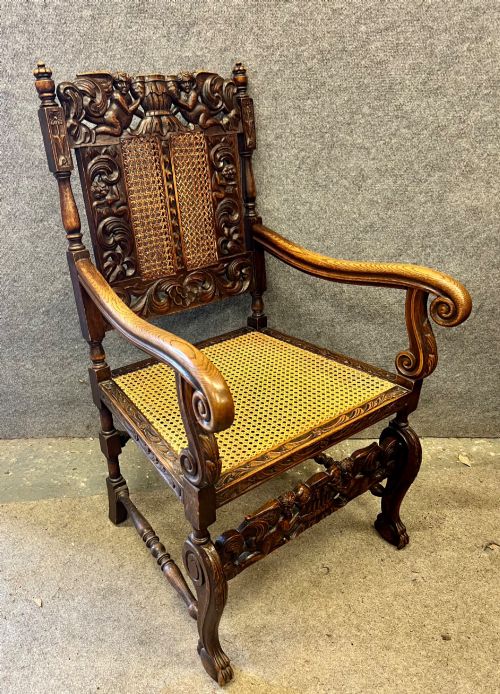
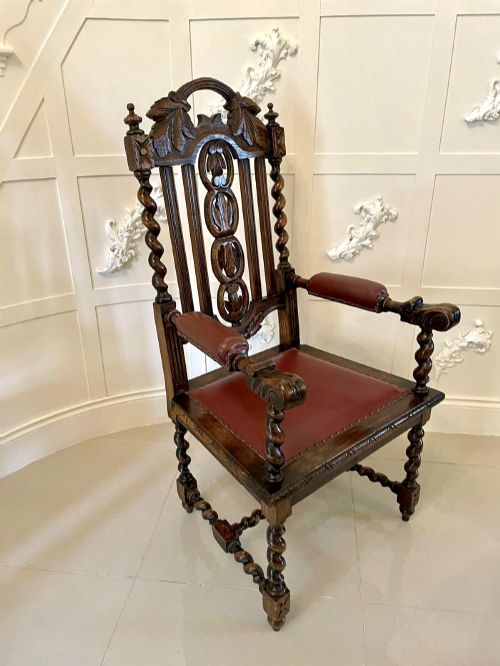
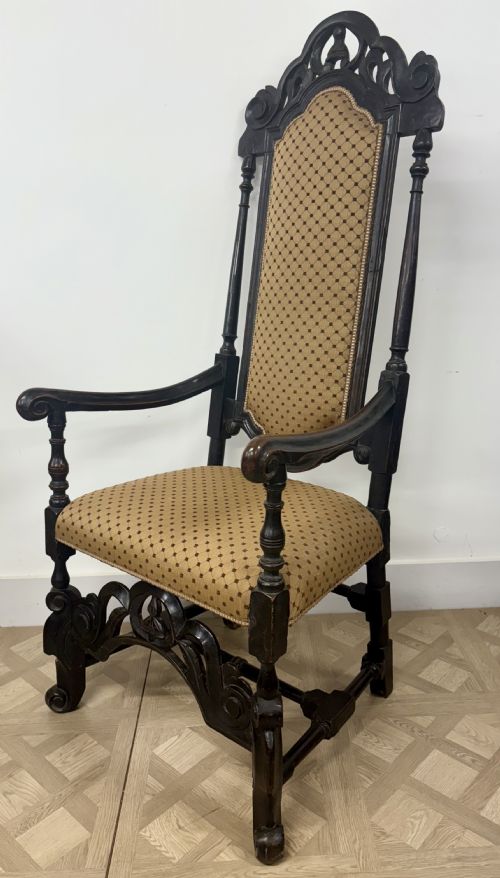
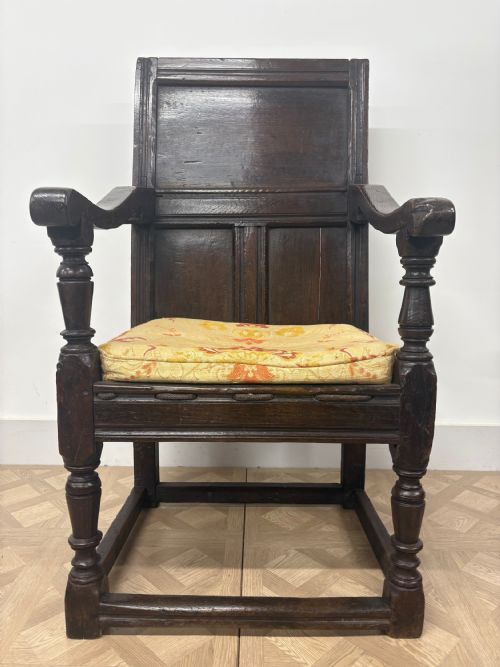
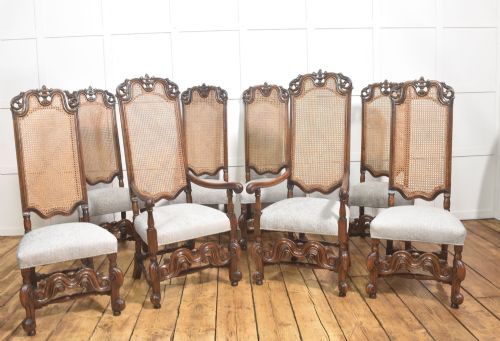
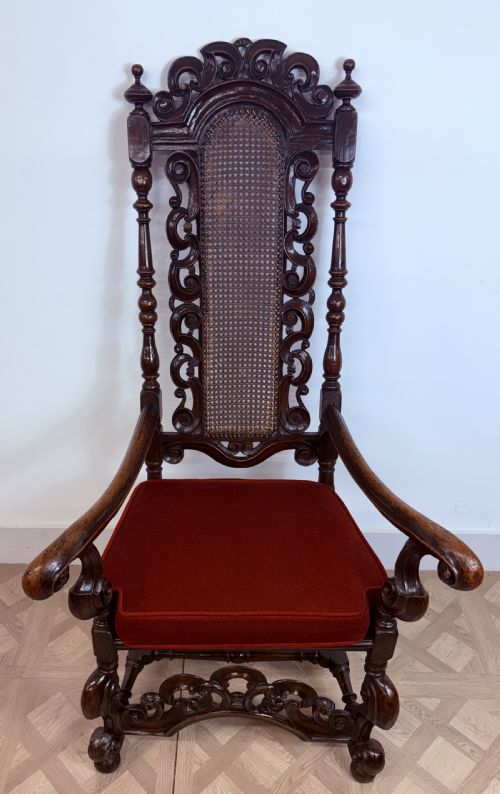
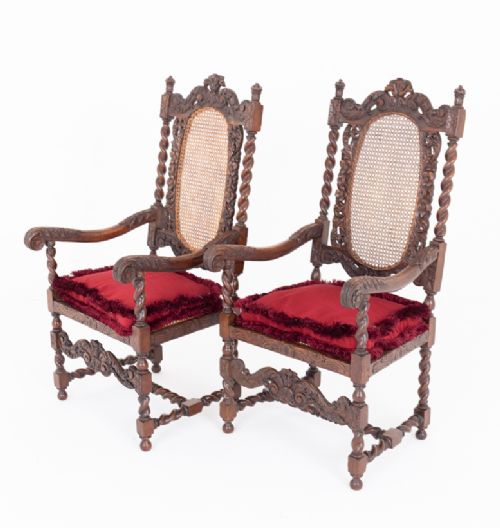
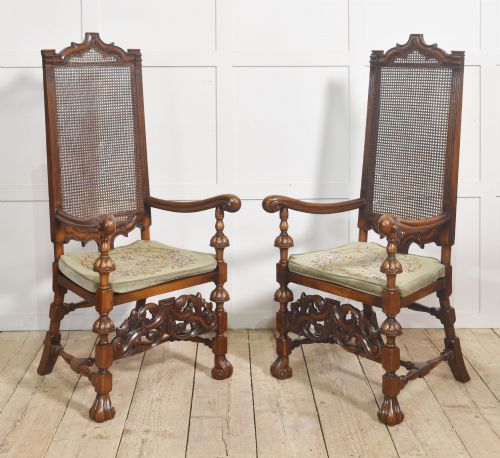
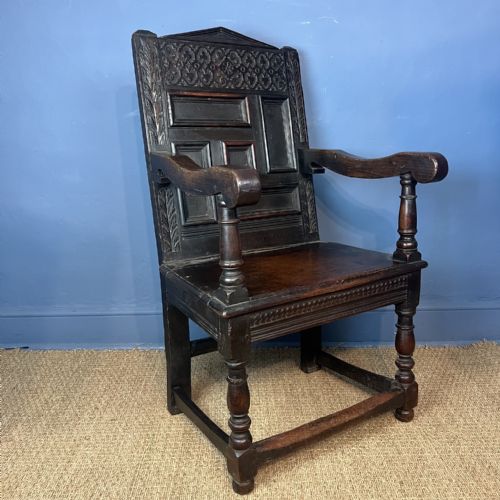
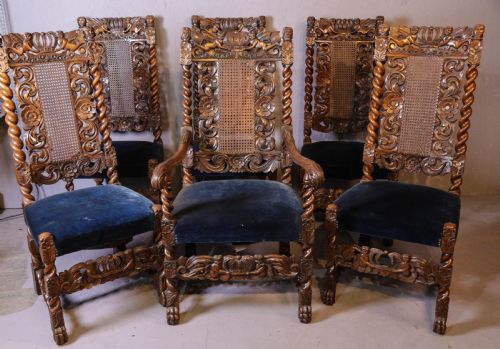
Carolean armchairs are substantial seating forms originating in the seventeenth century during the reign of Charles II, though many examples found here belong to the later nineteenth-century revival period. The surviving pieces encompass heavy wainscot constructions, high-backed walnut chairs with cane panels, and heavily carved oak throne chairs.
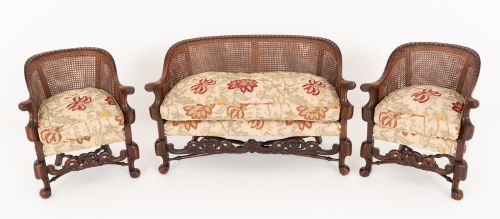
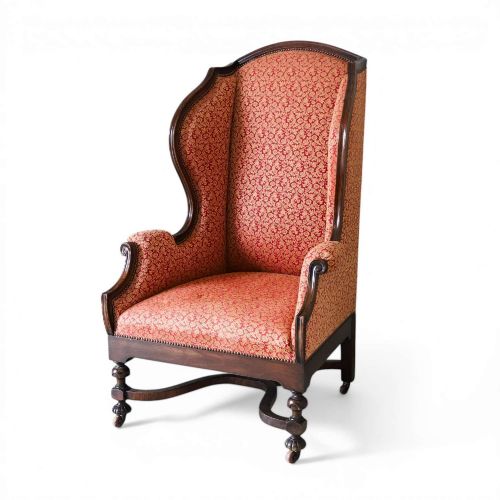
Buyers will encounter original late-seventeenth-century pieces alongside revival interpretations produced in Victorian and Edwardian workshops. Forms range from low elbow chairs to tall dining sets and imposing library armchairs upholstered in leather or velvet.
Materials and construction
Frames are constructed primarily from solid oak and walnut, occasionally utilising laburnum, joined with traditional pegged mortise and tenon joints. Carvers worked directly into the timber to create deep relief scrollwork, foliage, and cresting rails.
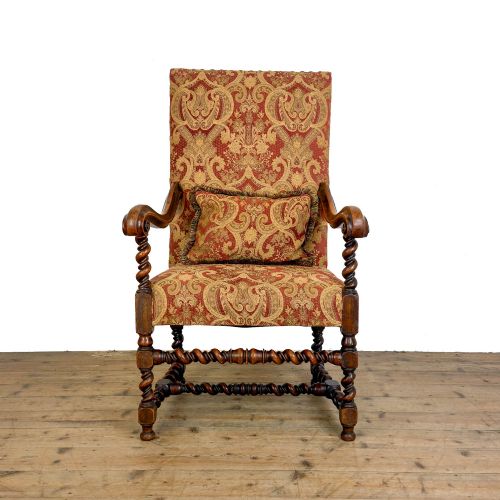
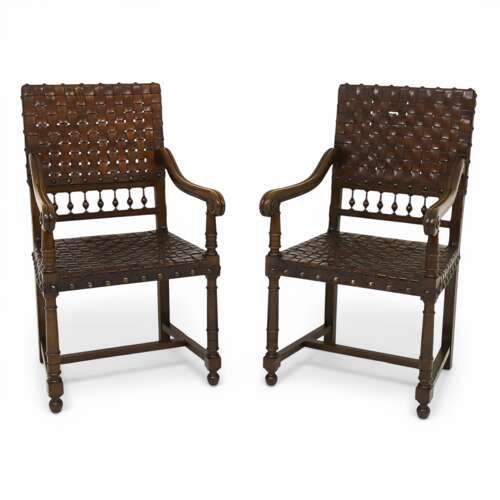
Support elements rely on hand-woven cane panels for backs and seats, or heavy textiles including velvet, woven leather, and standard upholstery fabrics secured with brass tacks.
Carolean Armchairs Retail Price Guide 2026
Typical asking prices for carolean armchairs among the pieces listed under this phrase on Sellingantiques today, from the lower quarter to the upper quarter. They describe what is for sale here now, not the wider market.
Listings span oak, walnut, and laburnum timbers, incorporating cane panels, velvet, and woven leather upholstery across multiple centuries.
Assessing quality
Quality rests in the crispness of the hand-carved decoration and the integrity of the timber frame, where original seventeenth-century pieces display authentic patina and period joinery. Revival pieces vary according to the depth of the carving and the quality of the timber selection.
The survival of original canework or period upholstery adds significant distinction, as does the presence of structural elements like high scroll arms and well-proportioned turned legs.
The Carolean Armchairs Glossary
- Wainscot chair
- A heavy wooden armchair constructed primarily from oak, featuring a panelled back and solid wooden seat. These represent some of the earliest forms found in domestic interiors.
- Cane
- Split rattan woven into tight mesh patterns to form breathable chair backs and seats. This technique gained prominence during the late seventeenth century.
- Scroll arm
- An armrest curved outward in a spiral or scroll shape. It is a defining decorative feature of Carolean and restoration seating.
- Throne chair
- An oversized, high-backed armchair designed with prominent vertical presence and heavy carving. These pieces often served ceremonial or hall functions.
- Revival
- A nineteenth-century design movement that recreated historical styles such as Carolean and Jacobean. Makers during this period utilised older motifs on heavier Victorian frames.
Carolean Armchairs: Frequently Asked Questions
How do I spot a seventeenth-century original?
Original pieces display authentic timber shrinkage, hand-cut peg joints, and surface wear consistent with centuries of use. The tool marks left by carvers differ significantly from the mechanical precision of later revival copies.
Examination of the underside and joints reveals the age of the wood and the method of construction. Revival pieces from the nineteenth century often feel heavier and show different patination patterns.
Were these chairs used at dining tables?
Most surviving armchairs were designed as principal seats for the head of a household or for formal parlours rather than around a dining table. Dining sets from this tradition typically comprised lighter side chairs accompanied by matching elbow chairs.
Their substantial frames and high backs made them statement pieces in a room. They occupied positions of status near hearths or against panelled walls.
How should I care for cane panels?
Cane requires moderate humidity to prevent the material from drying out and snapping under pressure. Regular light dusting keeps the weave clean without damaging the natural fibres.
Avoid placing these chairs directly against heat sources or in intense sunlight. Professional conservation may be needed if the historical weave begins to untie.