

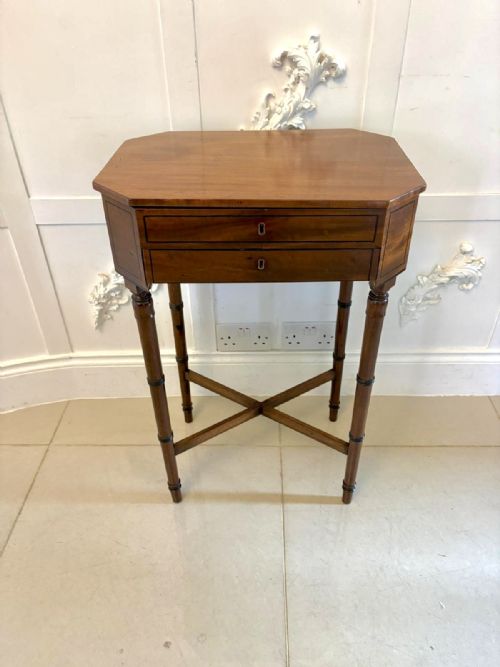


Cant Mahogany Table
These cant mahogany table examples bring solid timber and period craftsmanship straight into a room, offering practical surfaces with distinct historical character.
Cant Mahogany Table
A cant mahogany table is typically encountered as a occasional piece, work table, or tripod table dating from the eighteenth century through to the Edwardian period. These items utilise rich timber grains and traditional forms such as drop leaves, snap tops, or multi-tiered designs.
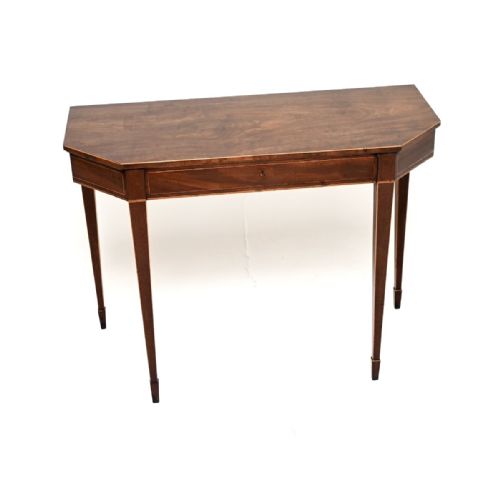
The listings show examples spanning Georgian, Regency, Victorian, and Edwardian eras, demonstrating how makers adapted the form over time. Buyers frequently encounter side tables and occasional tables featuring specific details like canted corners and crossbanding in satinwood.
Originating across these distinct stylistic periods, each piece serves a functional purpose while displaying the characteristic warmth and depth of mahogany. The selection ranges from compact lamp tables to larger dining and tea tables.
How they were made
Makers constructed these pieces primarily using solid mahogany, often enhancing surfaces with contrasting satinwood and boxwood inlay or crossbanding. Structural integrity relied on traditional joinery techniques suited to tripod bases, drop leaves, and folding actions.
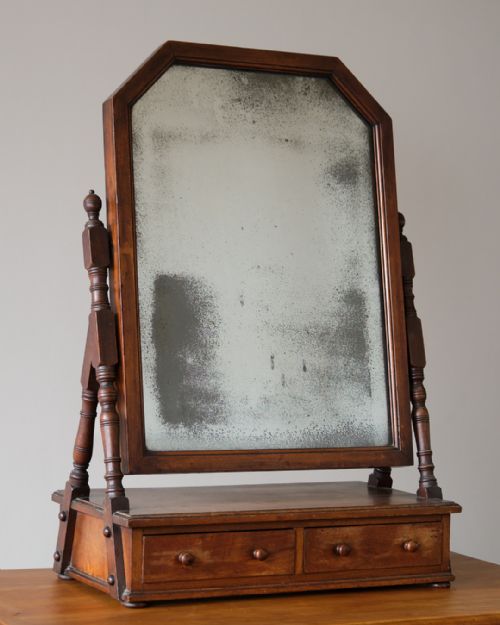
Additional materials such as brass fittings and glass appear where functional hardware or mirrors are integrated into the design. Surfaces were finished to highlight the natural figure of the timber without obscuring the grain.
Cant Mahogany Table Retail Price Guide 2026
Typical asking prices for cant mahogany table among the pieces listed under this phrase on Sellingantiques today, from the lower quarter to the upper quarter. They describe what is for sale here now, not the wider market.
Listings feature mahogany tables spanning the Georgian, Regency, Victorian, and Edwardian periods, incorporating brass and satinwood details.
What varies in quality
Quality rests in the selection of the mahogany timber and the precision of decorative elements like crossbanding and inlay work. Finer examples display harmonious grain patterns and crisp execution of details such as canted corners.
The sophistication of the mechanism, whether for a snap top, adjustable reading stand, or removable sewing basket, distinguishes standard utilitarian pieces from more refined commissions.
Heal & Sons
The Cant Mahogany Table Glossary
- Canted corners
- Beveled or angled corners that cut across the ninety-degree angle of a piece, frequently seen on tabletops and case furniture. This treatment softens the rectangular silhouette and adds a refined geometric detail.
- Crossbanding
- A strip of veneer applied to the border of a tabletop or surface running perpendicular to the main grain. This technique frames the primary timber and demonstrates careful craftsmanship.
- Tripod table
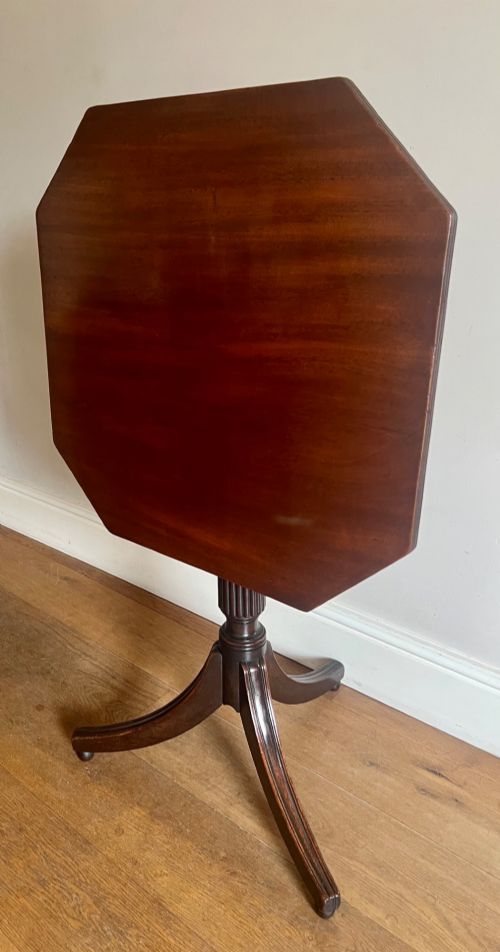
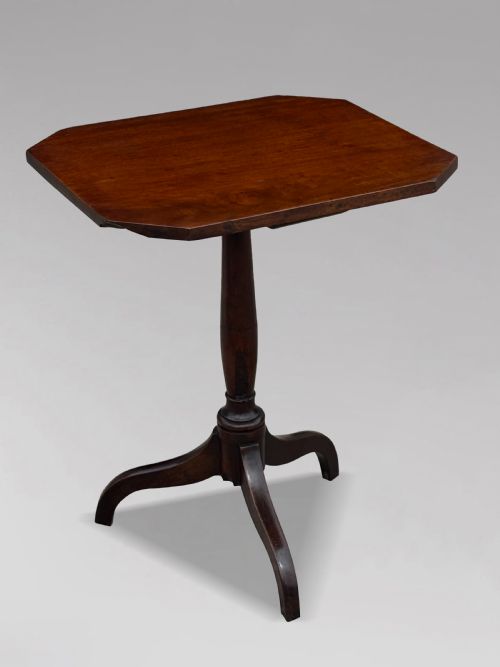
- A small freestanding table supported by a central pillar resting on three legs. They are often built with a tilting top mechanism for convenient storage.
- Snap top
- A tabletop mounted on a catch mechanism that allows the surface to tilt vertically when not in use. This clever design saves space in domestic interiors.
- Satinwood
- A durable, yellowish timber native to India and Ceylon utilised for inlay and contrasting borders. Its lustrous appearance provides a bright visual counterpoint to darker mahogany.
Cant Mahogany Table: Frequently Asked Questions
What is a canted corner?
A canted corner is an angled or beveled edge that replaces a sharp ninety-degree corner on a tabletop or cabinet. It provides a subtle architectural finish.
This detail is frequently found on classical and Edwardian tables, adding visual lightness to a solid timber form.
How do I date a mahogany table?
Dating relies on observing construction methods, timber choice, and the prevailing style of the period, such as Georgian or Regency. Secondary woods and hardware also offer clues.
Comparing the legs, edge profiles, and assembly techniques against known period examples helps narrow down the decade of manufacture.
Where should I place a work table?
Work tables function well as side tables beside seating or as lamp tables in a living space. Their original compartments make them practical for modern storage.
Keeping them away from direct heat sources and strong sunlight preserves the mahogany finish and prevents timber movement.
What makes a tripod table stable?
A tripod table achieves stability through the precise geometry of its three splayed legs beneath a central column. The weight distribution prevents rocking on even floors.
Careful fitting of the block and spider mechanism beneath the top ensures the pillar remains rigid during daily use.