



Campaign Commode
These campaign commode pieces are utilitarian travelling chests designed for military officers on the move, combining sectional mobility with fine cabinet-making.
Campaign Commode
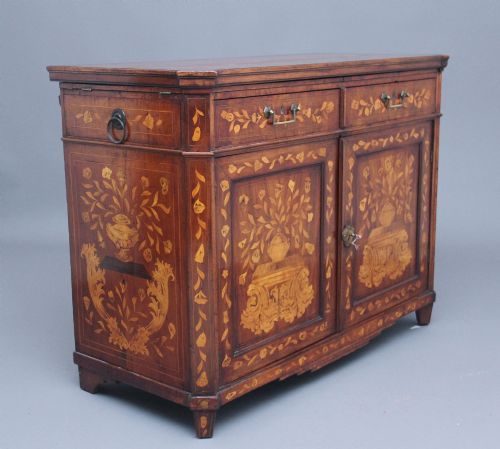
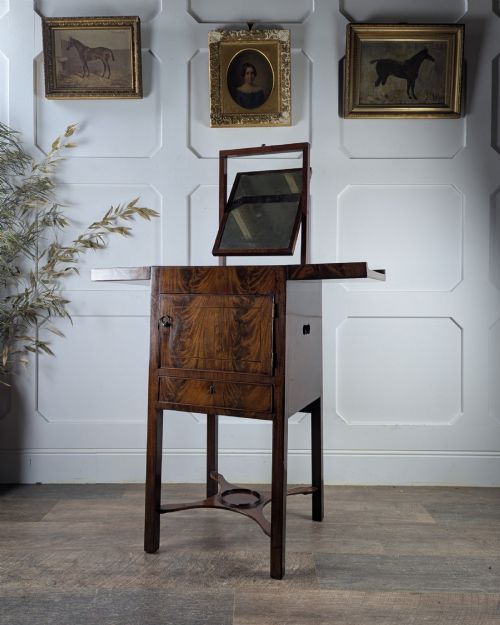
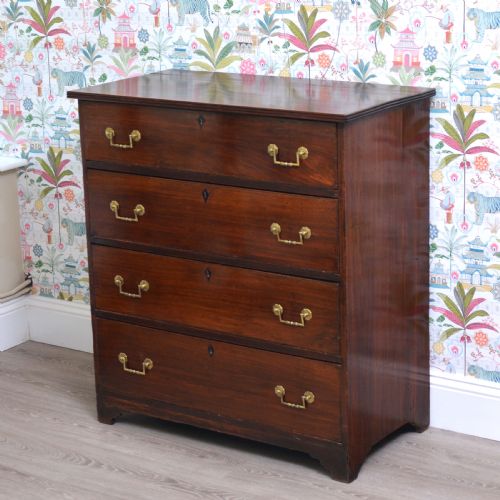
A campaign commode takes the form of sectional chests of drawers, cabinets, washstands, and dressing chests built to dismantle for transport on military campaigns. The pieces on this page span the eighteenth, nineteenth, and early twentieth centuries, reflecting changing British military and colonial administrative needs.
Most examples appear in mahogany, camphor wood, or walnut, often constructed in two distinct sections fitted with brass corner brackets and flush carrying handles. These practical design choices protect vulnerable edges from the knocks of travel while keeping the weight manageable for carriage.
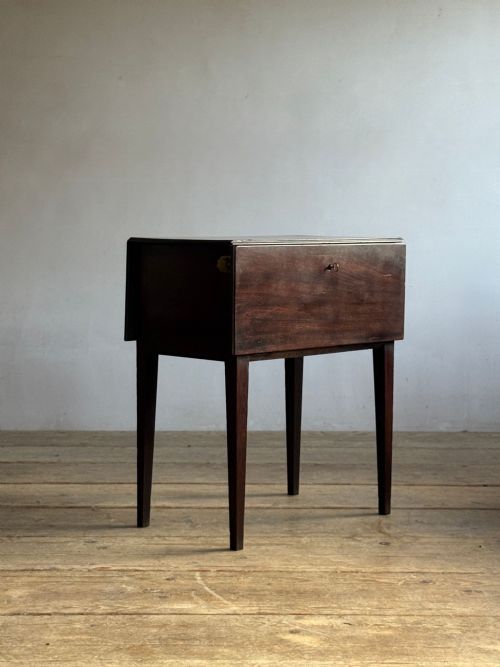
Forms range from standard chests of graduated drawers to specialised folding washstands and deception tables. This variety shows how officers customized their portable living quarters with functional furniture tailored to domestic comforts in distant stations.
How they were made
Makers utilised dense timbers such as Cuban mahogany, camphor wood, and padauk to withstand harsh climates and frequent transit without warping. These woods were selected for structural stability as much as for their rich grain and deep natural colour.
Brass hardware, including inset handles and reinforced corner plates, was cast and fitted flush into the wood surface to prevent snagging during packing. Screw-in feet and detachable sections allowed officers to assemble their quarters rapidly upon arrival at a new encampment.
Campaign Commode Retail Price Guide 2026
Typical asking prices for campaign commode among the pieces listed under this phrase on Sellingantiques today, from the lower quarter to the upper quarter. They describe what is for sale here now, not the wider market.
Materials represented across these pieces include Cuban mahogany, walnut, fruitwood, and fragrant camphor wood.
What varies in quality
Quality rests in the precision of the sectional joinery and the integrity of the internal dismantling mechanisms. Superior pieces maintain tight, seamless joints between stacked carcases even after decades of assembly and disassembly.
The choice of secondary timbers and the crispness of the brass fittings further separate standard field pieces from finer domestic commissions. Better examples display carefully figured flame mahogany or intricate inlay work that elevates military utility to high-status cabinet-making.
The Campaign Commode Glossary
- Campaign chest
- A sectional chest of drawers designed to split into two or more parts for military transport. These pieces feature recessed brass handles and corner brackets.
- Camphor wood
- An aromatic timber frequently utilised for campaign furniture due to its natural insect-repellent properties. It protected uniforms and linen in tropical climates.
- Padauk
- A heavy, durable exotic hardwood favoured in Anglo-Indian colonial furniture production. Its reddish-brown tone darkens richly with age.
- Graduated drawers
- Drawers decreasing in depth from bottom to top, creating a balanced visual proportion. This arrangement is common in better nineteenth-century case furniture.
- Deception table
- A multi-functional piece disguised as a simple table or commode to conceal interior washstands or desk fittings. It served officers who required discreet domestic amenities.
Campaign Commode: Frequently Asked Questions
Why do these chests split into two parts?
Military officers required furniture that could be packed easily onto mules, wagons, or ships during frequent relocations. Splitting a tall chest into stacked modular sections made transport through difficult terrain considerably more manageable.
This two-part design also distributed weight evenly and protected the contents from shifting violently while in transit across rough colonial roads.
How do I identify a true campaign piece?
Genuine campaign pieces feature flush brass handles, reinforced corners, and removable feet designed to prevent damage during travel. The carcase typically divides horizontally into separate modular sections secured by internal brass pins or hooks.
Look closely at the backboards and drawer linings, as military contractors often utilised secondary native timbers suited to humid overseas environments.
Where were these pieces used?
Officers utilised these portable furnishings within campaign tents, temporary garrison quarters, and colonial administrative outposts across the British Empire. They provided essential storage and washing facilities far from permanent domestic residences.
Many examples reflect Anglo-Indian or Anglo-Chinese craftsmanship created specifically for officials stationed abroad who needed familiar comforts of home.
How do I care for camphor wood furniture?
Camphor wood benefits from minimal moisture and occasional light waxing to maintain the natural oils within the timber. Avoid placing the piece near direct heat sources that might dry out the aromatic wood.
Keep the interior surfaces clean and dry, allowing the natural scent of the camphor to dissipate gently without the application of heavy chemical polishes.