

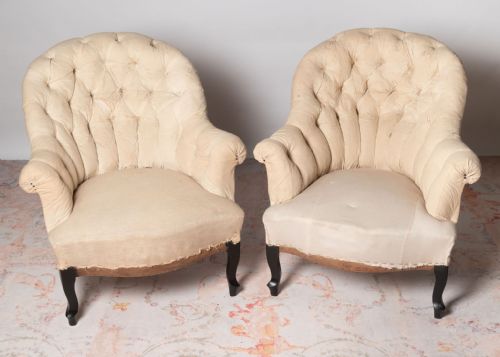
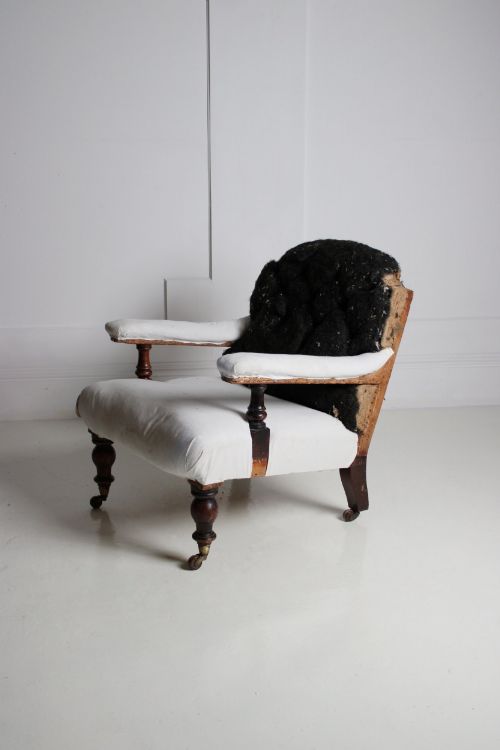
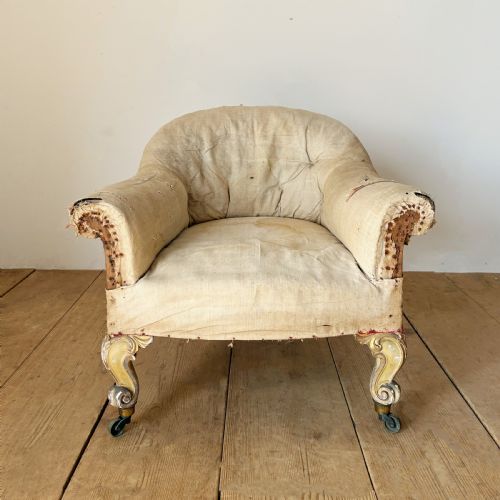
Calico Club Armchairs
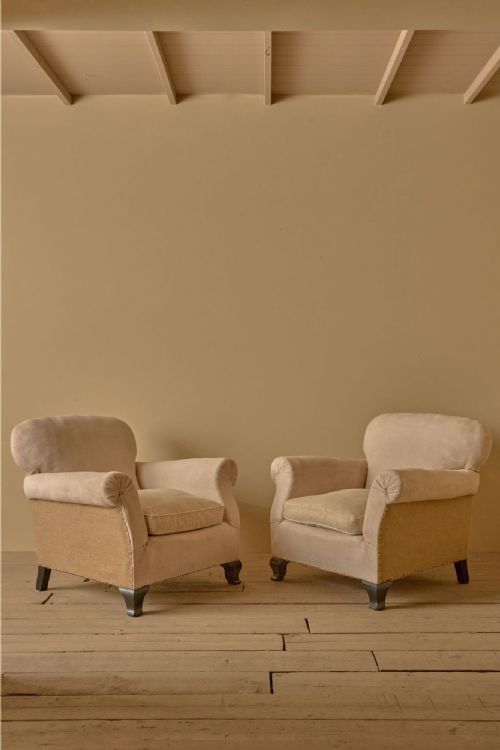
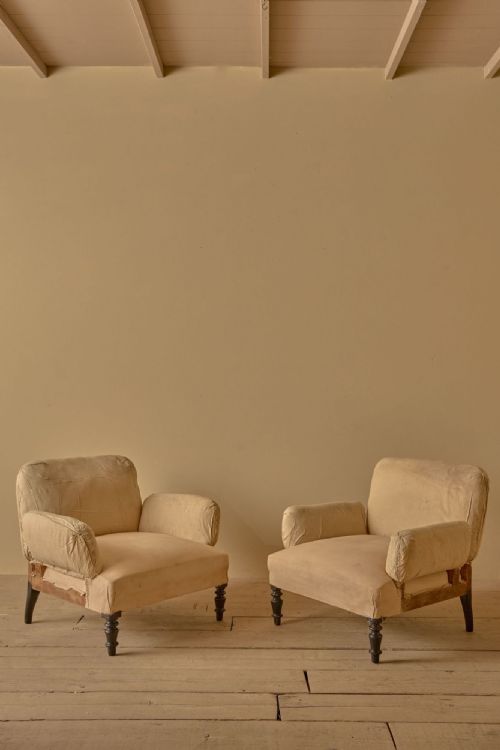
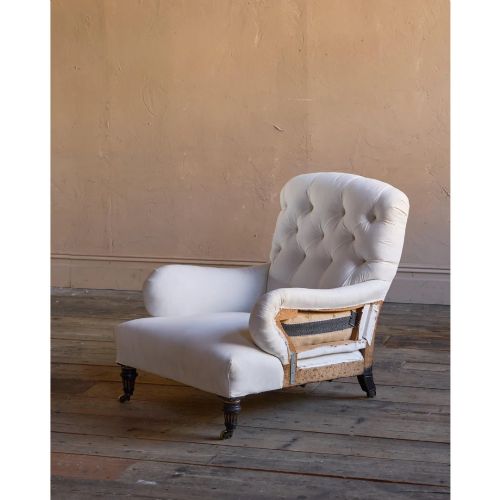
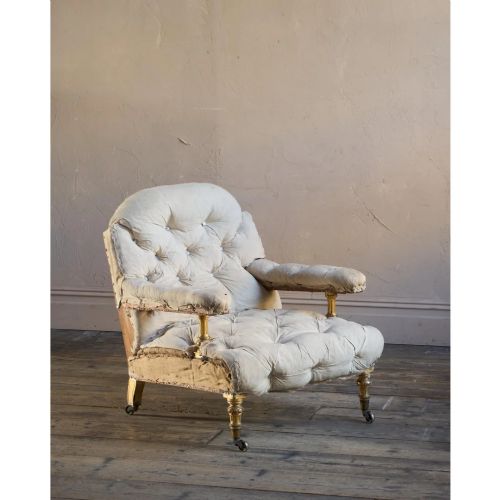
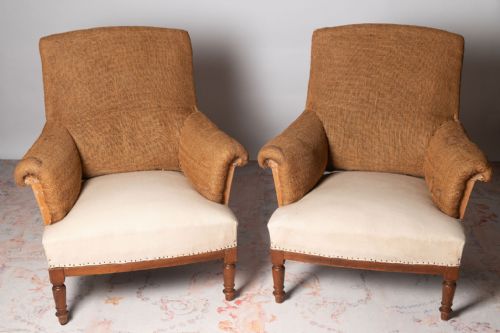
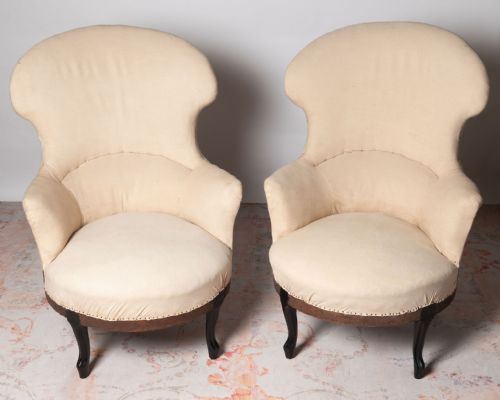
Calico club armchairs offer deep, generous seating ready for final upholstery, spanning Victorian, Edwardian and early twentieth century English and French workshops.
Calico Club Armchairs
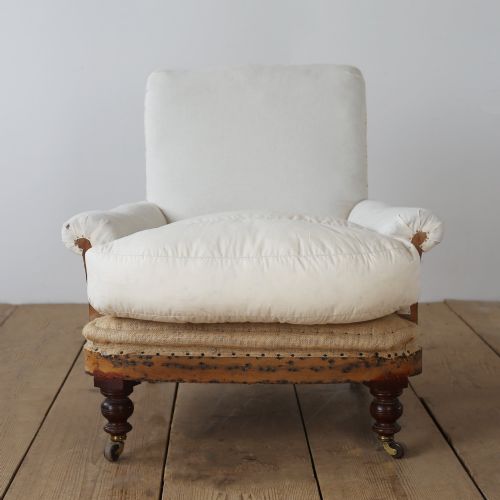
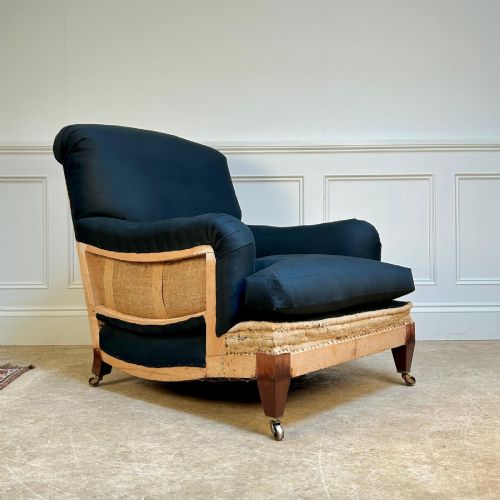
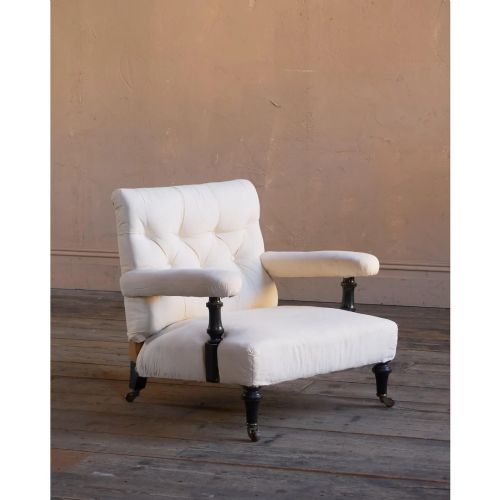
Calico club armchairs represent a specific class of upholstered seating designed primarily for comfort, typically stripped back to their original calico foundation or prepared in plain fabric awaiting a top cover. Buyers searching for calico club armchairs encounter sturdy lounge seats originating across the nineteenth century, the Edwardian era and the 1920s and 1930s.
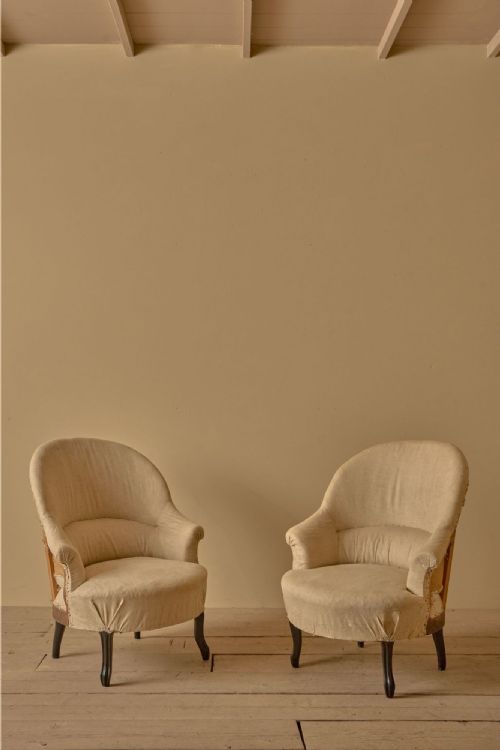
The selection here draws heavily from nineteenth century English country house styles alongside French club models and Napoleon III tub chairs. Makers like Howard and Sons dominate the larger portion of these comfortable sprung seating forms.
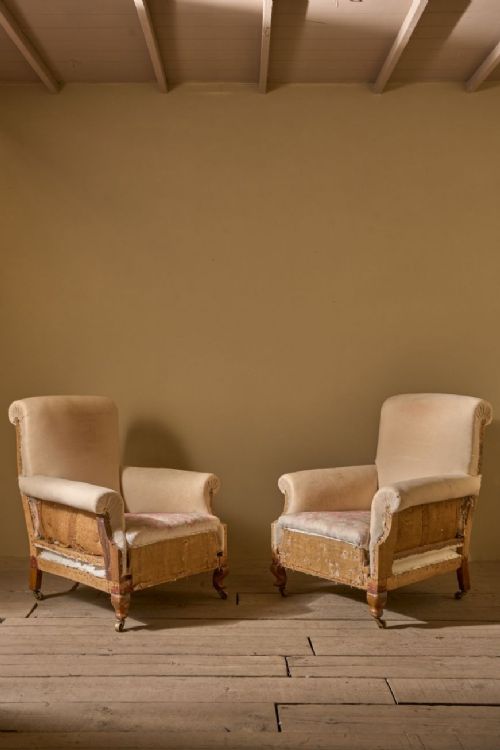
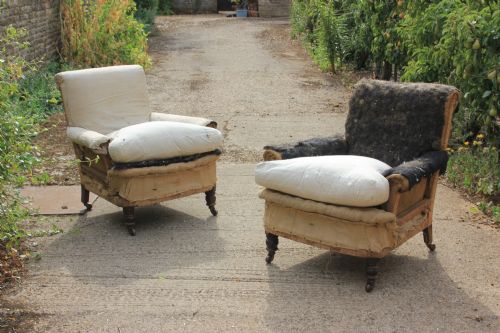
Most pieces arrive in base calico or hessian coverings, exposing the underlying shape, springs and stuffing. This intermediate state allows a buyer to visualise the proportions and finish the piece in their own fabric.
How they were made
Frames are constructed from sturdy timbers such as mahogany, walnut, beech and general hardwood framing, joined to support heavy internal springing. Traditional upholsterers built these frames to endure decades of heavy daily use.
The upholstery technique relies on hessian webbing, coiled metal springs tied by hand, and layers of stuffing held securely beneath a durable calico outer lining. Brass castors often support the wooden legs, aiding movement across heavy carpets.
Listings feature timber frames in mahogany, walnut, beech and general wood, paired with calico, hessian and brass fittings.
What varies in quality
Quality rests primarily in the integrity of the underlying timber frame and the precision of the original sprung platform. A well-balanced frame retains its original rigidity without structural looseness in the joints.
The sophistication of the silhouette and the generosity of the padding define the upper tier of these armchairs. Finer examples display subtle curves in the scroll back or arms and bear maker stamps on the castors or back legs.
Howard and Sons·Gillows·Trollope and Sons·Hamptons and Sons·Mellier and Co·William Birch
The Calico Club Armchairs Glossary
- Calico
- A plain-woven cotton fabric used as an interior upholstery cover to hold stuffing in place before applying the final decorative textile.
- Hessian
- A coarse woven fabric made from jute fibres, utilised as a strong base support beneath the interior stuffing and springs.
- Tub chair
- An armchair featuring a continuous curved back and arms forming a rounded enclosure around the sitter.
- Scroll back
- An armchair design where the top rail or arms curve outward and backward in a tight scroll shape.
Calico Club Armchairs: Frequently Asked Questions
What is a calico club armchair?
A calico club armchair is a heavily sprung lounge chair stripped back to its calico or hessian foundation fabric. This presentation allows the buyer to inspect the raw shape and internal build quality before adding custom upholstery.
These chairs range from Victorian country house models to early twentieth century French club designs. They prioritise deep seats and supportive scrolled arms.
How do I choose the right fabric?
Selecting a fabric depends on the intended room and the weight of the chair frame. Heavy velvet, tweed or patterned linen suit large Victorian and Edwardian country house proportions.
Consider the scale of the pattern against the generous dimensions of the armchair. Durable domestic weight textiles ensure the piece withstands regular daily lounging.
Are these chairs comfortable for daily use?
These armchairs were originally built specifically for long hours of relaxation in studies, libraries and drawing rooms. The deep seats and hand-tied coil springs offer substantial ergonomic support.
Restoring the internal webbing and springs during re-upholstery ensures the seating remains resilient. They easily function as primary seating in modern living spaces.
How do I identify a nineteenth century piece?
Nineteenth century examples often display turned mahogany or walnut legs fitted with brass castors. The timber frames feel heavy and utilise traditional joinery methods without modern metal brackets.
Stylistic cues such as Aesthetic Movement turned legs or Napoleon III proportions help date the piece. Maker stamps on the wooden frame or brass castors provide definitive proof of origin.