


Cabochon Turquoise Ring
A cabochon turquoise ring brings together smooth, dome-cut stones and rich gold settings that catch the eye across the Victorian and Edwardian eras.
What these cabochon turquoise rings are
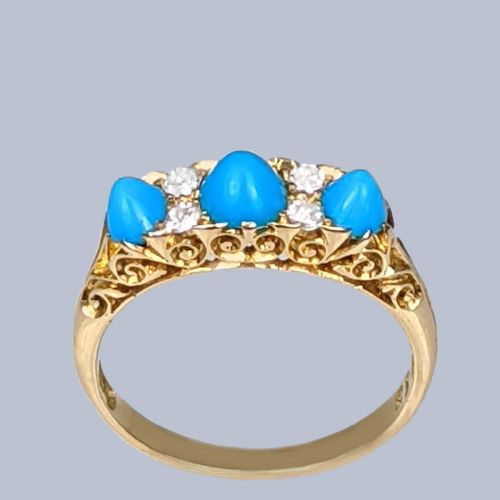
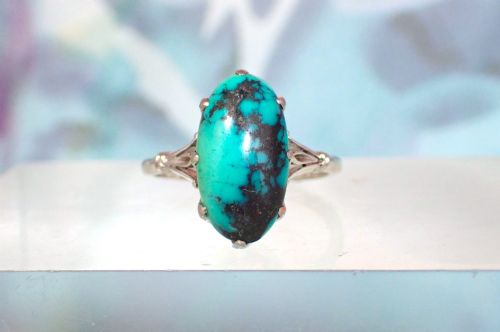
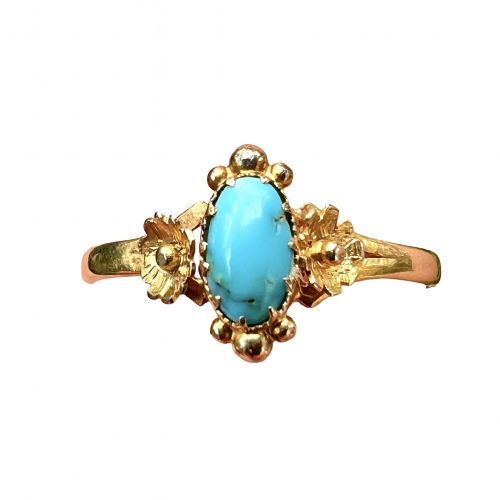
A cabochon turquoise ring is an antique piece of finger jewellery showcasing polished, unfaceted turquoise stones. These rings span periods such as the Victorian era, the year 1890, and the Edwardian period.
The pieces listed on this page appear predominantly as rings, featuring configurations like trilogy layouts, multi-stone clusters, and full eternity bands. The design centres on the natural texture of the stone rather than geometric facets.
Makers fashioned these items to be worn daily, combining blue-green turquoise with contrasting gemstones such as diamonds. The resulting jewellery reflects the distinct ornamental tastes of late nineteenth and early twentieth century workshops.
How they were made
Goldsmiths shaped the metal bands using higher-purity gold alloys, specifically 18ct yellow gold, 15ct yellow gold, and 9ct rose gold. These metals provide a warm structural base that secures the softer turquoise cabochons.
Craftsmen set old cut diamonds alongside the turquoise stones in clustered or linear arrangements to create contrast in texture and brilliance. The turquoise is shaped into smooth domes by hand, highlighting the organic variation of the mineral.
Retail Price Guide 2026
Typical UK retail prices for cabochon turquoise ring, calculated from the Sellingantiques database of over a million retail prices indexed since 2003. This retail price guide relies exclusively on Sellingantiques data; no external sources or auction records are used, so the figures do not describe the wider market.
The listings span Victorian, 1890, and Edwardian periods, utilising 18ct yellow gold, 15ct yellow gold, and 9ct rose gold.
What varies in quality
The refinement of a cabochon turquoise ring depends upon the purity of the gold alloy and the integration of supporting diamonds. Heavier 18ct gold mounts distinguish the upper tier of pieces from lighter 9ct alternatives.
Quality also rests on the colour consistency and polish of the turquoise cabochons themselves. Even mounting work and the retention of original old cut diamonds elevate the piece above simpler configurations.
The Cabochon Turquoise Ring Glossary
- Cabochon
- A gemstone shaped into a smooth, rounded dome rather than faceted with flat planes. This cut preserves the natural opacity and colour of turquoise.
- Trilogy ring
- A ring set with three principal stones, often symbolising past, present, and future. In these listings, the grouping combines turquoise with old cut diamonds.
- Full eternity ring
- A band featuring an unbroken circle of gemstones channelled or set all the way around the finger. The Edwardian example utilises this continuous layout.
- Old cut diamond
- A hand-cut diamond shape typical of the nineteenth century, featuring a smaller table and a higher crown than modern brilliant cuts. These stones accompany turquoise in several antique rings.
Frequently Asked Questions
How do I care for a turquoise ring?
Turquoise is a relatively soft stone that absorbs oils and moisture easily. Avoid exposing the ring to harsh chemicals, cosmetics, or prolonged water immersion.
Clean the metal and stones gently with a soft, dry cloth rather than ultrasonic jewellery cleaners. Store the ring separately from harder gemstones to prevent surface scratches.
How can I tell a Victorian ring from an Edwardian one?
Victorian rings often employ heavier 18ct or 15ct yellow gold alongside rich, deep turquoise stones and old cut diamonds. The designs tend to be robust and sentimentally themed.
Edwardian pieces frequently utilise 9ct rose gold and lighter, more delicate stone arrangements like full eternity bands. The shift in gold colour and band weight points towards twentieth-century manufacturing preferences.
Are these rings suitable for daily wear?
Antique rings require thoughtful handling due to their age and the softer nature of turquoise. While they were built for regular use, precautions prevent premature wear.
Remove the ring during manual labour, gardening, or swimming to protect the gold settings and the dome-shaped stones. Checking the claws or channels periodically ensures the gems remain secure.
What is an old cut diamond?
An old cut diamond is a historical diamond facet style shaped by hand before modern machinery standardised cutting. These stones display a smaller table and a charming, irregular sparkle under candlelight.
They appear frequently alongside turquoise in late nineteenth-century jewellery. Their presence adds subtle brilliance without overpowering the smooth blue surface of the cabochons.