

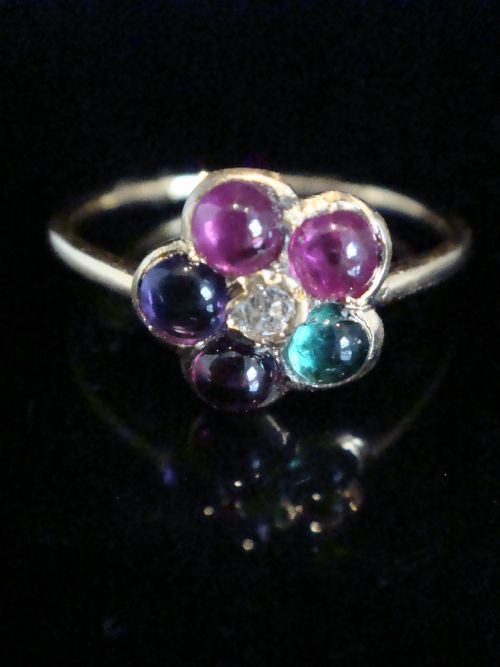


Cabochon Ruby Jewellery
Cabochon ruby jewellery combines smooth, polished stones with yellow gold, platinum, and diamonds across Victorian, Edwardian, Art Deco, and mid-century forms.
Cabochon Ruby Jewellery
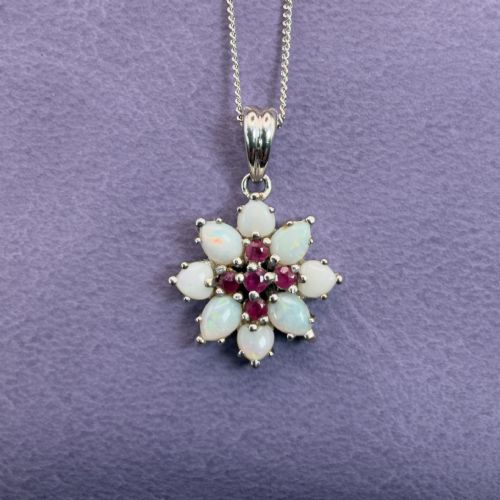
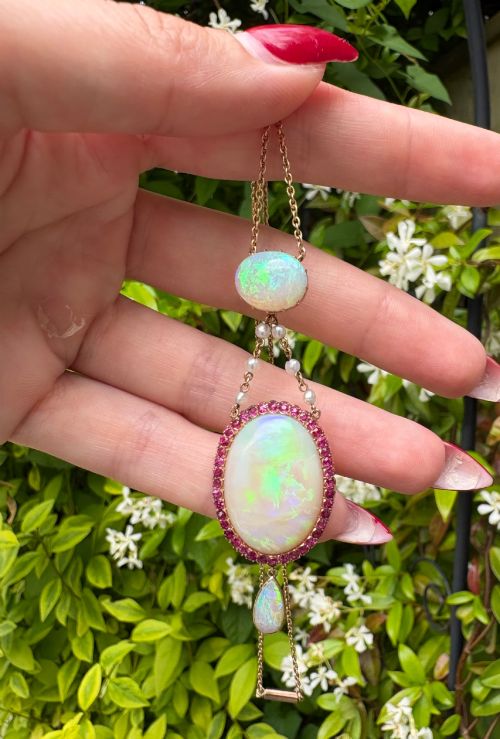
Cabochon ruby jewellery comprises rings, necklaces, pendants, bracelets, and pendant brooches set with rounded, unfaceted rubies. These pieces span Victorian, Edwardian, Art Deco, and mid-century periods, often incorporating diamonds, sapphires, emeralds, opal, and seed pearls.
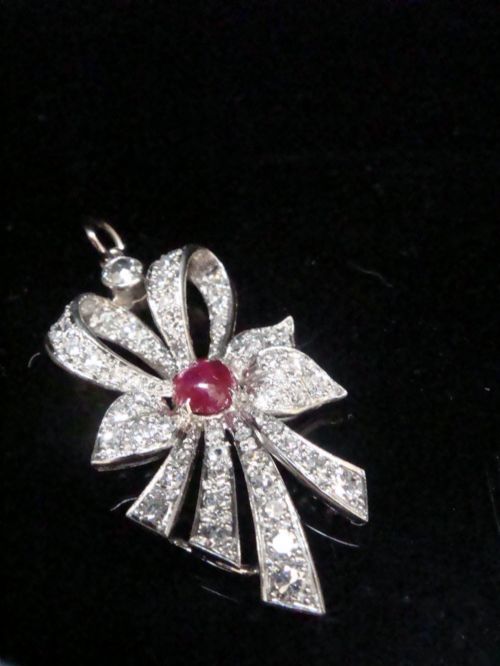
Victorian examples frequently pair rubies with opals and seed pearls in 15ct or 18ct gold settings, alongside multi-stone regard clusters. Edwardian and Art Deco pieces lean towards platinum mountings with bow motifs or cluster formations centring on Burmese stones.
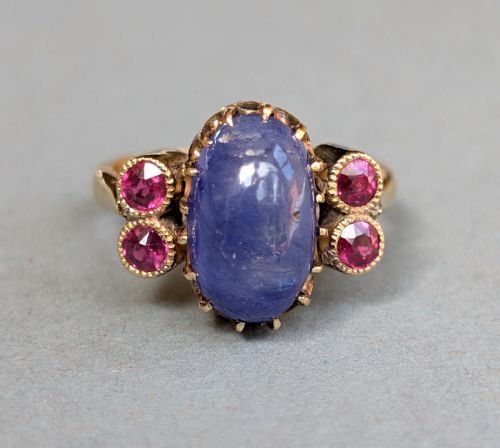
Mid-century designs utilise substantial yellow gold rings featuring prominent Burmese rubies accompanied by diamonds. The selection relies heavily on antique rings and pendants originating from diverse stylistic eras.
How they were made
Craftsmen shaped rubies into smooth cabochons rather than faceting them, setting the polished stones into 15ct gold, 18ct yellow gold, or platinum mountings. These metals provided the structural integrity needed to support clusters alongside diamonds, sapphires, and pearls.
Techniques varied from traditional Victorian claw and collet settings in gold to intricate Edwardian platinum bow wirework. Art Deco and mid-century workshops focused on robust cluster arrangements that framed the central Burmese cabochon rubies with concentric rings of diamonds.
Cabochon Ruby Jewellery Retail Price Guide 2026
Typical asking prices for cabochon ruby jewellery among the pieces listed under this phrase on Sellingantiques today, from the lower quarter to the upper quarter. They describe what is for sale here now, not the wider market.
Object forms span rings, necklaces, pendants, bracelets, and convertible pendant brooches originating from Portuguese and British makers.
What varies in quality
Quality rests in the origin and visual depth of the stones, particularly when Burmese rubies are present alongside matched diamonds. The integration of secondary gems like sapphires, emeralds, and natural opals alters the overall richness of the piece.
Construction standards differ between eras, visible in the transition from hollowed Victorian 15ct gold work to substantial 18ct yellow gold rings and fine platinum Edwardian piercing. The precision of the stone polishing and the security of the metalwork define the upper tier.
The Cabochon Ruby Jewellery Glossary
- Cabochon
- A gemstone shaped and polished with a smooth, rounded surface rather than faceted. This cutting style highlights the internal colour and soft lustre of the ruby.
- Cluster
- An arrangement of smaller gemstones surrounding a larger central stone. In these pieces, diamonds typically encircle a central ruby.
- Regard
- A Victorian sentimental jewellery convention where the first letters of set stones spell out the word regard. Rubies often form part of these multi-gemstone sequences.
- Collet
- A band or collar of metal that holds a gemstone in place. It represents a traditional setting method seen across Victorian designs.
- Mogok
- A region in Myanmar historically known for producing significant rubies. Stones originating from this area frequently appear in Art Deco pieces.
Cabochon Ruby Jewellery: Frequently Asked Questions
What periods do these pieces span?
The selections cover Victorian, Edwardian, Art Deco, and mid-century eras, reflecting changing aesthetic preferences across several decades.
Craftsmanship shifts noticeably from 15ct gold and opal combinations in the nineteenth century to platinum bow work and substantial yellow gold rings later on.
Which materials appear most often?
Rubies form the primary focus, frequently accompanied by diamonds, sapphires, emeralds, and natural opals. Settings utilise 15ct gold, 18ct gold, and platinum.
Seed pearls also feature alongside gold in Victorian necklaces, adding texture to the multi-gemstone clusters.
How do I identify a Victorian piece?
Victorian examples often employ 15ct gold settings combined with opals, seed pearls, or multi-gemstone arrangements like regard clusters. The metalwork tends to reflect traditional nineteenth-century manufacturing techniques.
Pendant brooches and necklaces from this era showcase distinct floral or sentimental motifs distinct from later geometric styles.
What distinguishes Art Deco designs?
Art Deco pieces utilise platinum mountings and geometric cluster formations that highlight Burmese stones. The aesthetic favours clean lines and precise stone placement.
These designs often contrast the deep red of the cabochon ruby with bright white diamond borders.
How were these items worn?
Jewellery items served multiple purposes, functioning as rings, necklaces, bracelets, and versatile pendant brooches. Convertible pieces allowed owners to pin an ornament to clothing or suspend it from a chain.
Everyday wear suited sturdy gold rings, while delicate platinum bow pendants accompanied formal attire.