

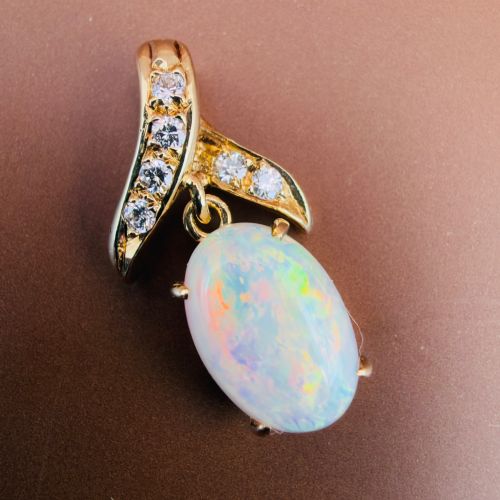


Cabochon Opal Solitaire
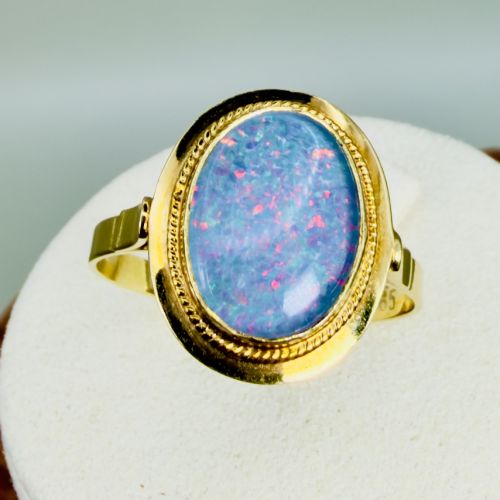
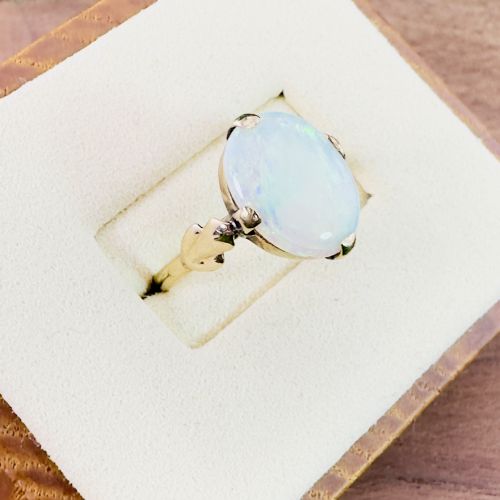
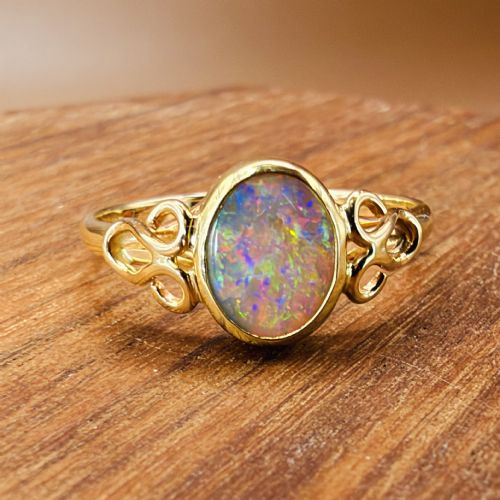
A cabochon opal solitaire places a single polished stone at the centre of the hand, bringing forth deep plays of colour from an uncluttered surface.
Cabochon Opal Solitaire
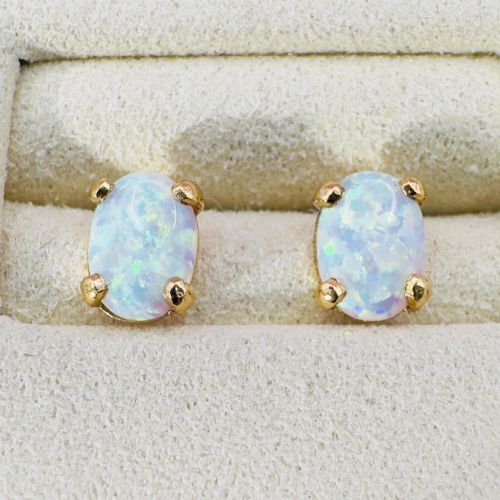
A cabochon opal solitaire focuses entirely upon an uncut, rounded gemstone rather than a faceted one, presenting a smooth dome that catches the light differently than traditional stones. These pieces appear primarily as rings and pendants, constructed to showcase the singular play of colour inherent in the opal.
The selections span from Victorian and Edwardian eras through to Art Deco, mid-century modern and vintage periods, demonstrating how jewellers across different decades chose to mount the stone. White opals, black opals and boulder opals each bring distinct geological tones to the design.
Metal choices shift across the periods, moving from yellow gold and white gold to standard gold alloys in nine-carat and eighteen-carat weights. Simpler solitaire settings occasionally incorporate small diamond accents to frame the central cabochon without drawing the eye away from the primary stone.
What varies in quality
The intensity and distribution of the internal fire within the stone govern the visual impact of the piece, separating vibrant specimens from muted examples. Play of colour that shifts across the entire surface under moving light denotes superior optical quality.
The weight and purity of the gold mount, alongside the precision of the bezel or claw work, distinguish everyday production from finer workshop output. Heavier gauge metal and balanced proportions ensure the setting complements the geological formation of the opal.
Cabochon Opal Solitaire Retail Price Guide 2026
Typical asking prices for cabochon opal solitaire among the pieces listed under this phrase on Sellingantiques today, from the lower quarter to the upper quarter. They describe what is for sale here now, not the wider market.
Materials appearing across the current inventory include white opal, black boulder opal, diamond accents and solid yellow or white gold.
The Cabochon Opal Solitaire Glossary
- Cabochon
- A gemstone shaped to a smooth, rounded dome with a flat or slightly curved base rather than faceted planes. This historical method highlights optical phenomena in stones like opals and star sapphires.
- Solitaire
- A piece of jewellery featuring a single principal gemstone mounted alone. This setting style concentrates attention entirely upon the central material.
- Bezel setting
- A collar of metal that encircles the stone, holding it in place with a continuous rim. This technique offers robust protection for softer gems.
- Boulder opal
- An opal found attached to its natural ironstone host rock, leaving part of the matrix intact beneath the gem layer. This backing often provides natural contrast that deepens the visible colour.
- Play of colour
- The optical effect where flashes of spectral colours shift across the stone as the angle of light changes. The phenomenon arises from the internal diffraction of light through microscopic silica spheres.
Cabochon Opal Solitaire: Frequently Asked Questions
How should I care for an opal ring?
Opals contain natural water content and possess a moderate hardness, meaning they require gentle handling during everyday wear. Avoid harsh chemical cleaners and ultrasonic baths, using only a soft cloth and warm water.
Storing the piece away from extreme temperature shifts and direct sunlight prevents the stone from drying out or developing surface fractures over time.
What is the difference between white and black opals?
White opals display their shifting colours against a pale body colour, producing a bright and reflective appearance. They offer a traditional aesthetic found widely across Victorian and mid-century designs.
Black opals and boulder opals feature a dark body tone or natural ironstone backing, which intensifies the play of colour and makes the spectral flashes appear more vivid and saturated.
How do I date an antique opal setting?
Stylistic clues within the metalwork, such as the heavy claw mounts typical of the Victorian era or the geometric lines of Art Deco pieces, provide initial chronological markers. Hallmarks stamped into the gold band offer precise assay office symbols and date letters.
Comparing the stone cut and bezel thickness to known period manufacturing methods confirms whether the piece originates from the nineteenth century or the mid-twentieth century.
Are these pieces suitable for daily wear?
Solitaire rings and pendants from past eras bring distinct character to modern wardrobes, though their age requires mindful treatment. Selecting a sturdy bezel setting helps protect the opal from accidental knocks during routine daily activities.
Removing the jewellery before heavy manual work or swimming preserves both the gold mount and the polished surface of the stone for future enjoyment.