

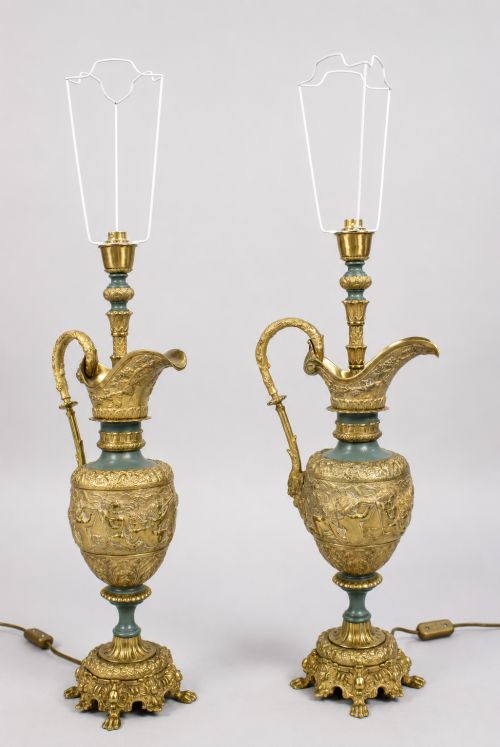


C 1890 Lighting
These c 1890 lighting pieces bring late Victorian and turn-of-the-century craftsmanship into a room through decorative lamps, chandeliers, and candelabras.
C 1890 Lighting
When searching for c 1890 lighting, collectors encounter a diverse array of domestic illumination spanning the late Victorian era and the closing years of the nineteenth century. These objects bridge the gap between traditional oil burning and the widespread adoption of domestic electricity, often utilising adapted vessels for modern use.
Table lamps dominate the selection, frequently formed from imported porcelain, cloisonné enamel, or gilt metal bodies paired with fabric shades. Alongside these sit substantial floor lamps, multi-armed chandeliers, and wall sconces designed to project warmth and architectural presence into a reception room.
The aesthetic vocabulary draws heavily on French revivals, including Rococo and Louis XVI styles, alongside English Victorian classicism and occasional exotic influences such as Japanese blue and white ceramics. This variety reflects a period of eclectic taste where historical motifs were reinterpreted for contemporary bourgeois interiors.
Materials and Construction
Makers of c 1890 lighting relied on a combination of cast metals, fired ceramics, and hand-worked glass to achieve their decorative effects. Brass, ormolu, and gilt bronze formed the structural mounts and bases, often cast with intricate scrollwork or figural elements before undergoing gilding or silver-plating.
Ceramic bodies incorporate factory-produced porcelain from European houses like Meissen and Sitzendorf, alongside Asian export wares such as Cantonese porcelain and Japanese vases. These ceramic elements were frequently drilled or mounted with metal collars to transform decorative vases into functional lighting fixtures.
Surface decoration ranges from hand-painted floral designs and pate-sur-pate detailing to crackle glazes and leaded glass construction. The integration of fabric elements and specialised mechanical components, such as specific oil lamp burners, completes the technical execution typical of the period.
C 1890 Lighting Retail Price Guide 2026
Typical asking prices for c 1890 lighting among the pieces listed under this phrase on Sellingantiques today, from the lower quarter to the upper quarter. They describe what is for sale here now, not the wider market.
The listings demonstrate a strong presence of French and German porcelain, alongside English brass and Victorian glasswork.
Judging Quality and Execution
The hierarchy of quality in c 1890 lighting rests primarily on the crispness of the metal casting and the artistic merit of the ceramic or glass components. Superior examples display sharply defined chased or gilt bronze mounts that fit snugly against porcelain bodies without clumsy gaps or excessive solder.
Factory origin and hand-painting detail also dictate the standing of a piece, with recognised European porcelain works commanding attention for their finely rendered figures and botanical motifs. Furthermore, original matched pairs demonstrate a level of factory coordination and preservation that elevates them above assembled or mismatched configurations.
WMF·Sitzendorf·Meissen·Gien·Wild and Wessel·Foster and Pullen
The C 1890 Lighting Glossary
- Ormolu
- Gilded bronze, commonly utilised for mounts and decorative accents on French and English pieces of this era. The technique involves applying a mercury and gold amalgam to a bronze base.
- Cloisonné
- An ancient technique for decorating metalwork objects with coloured glass fastened to the metal body using wire partitions. In late nineteenth-century items, this appears on decorative vases adapted for illumination.
- Pate-sur-pate
- A ceramic decoration method where successive layers of liquid clay slip are applied to a background body to create a low-relief cameo effect. This technique appears on fine French porcelain lamp bases from the period.
- Candelabra
- A branched candlestick holder designed to support multiple candles simultaneously. Examples from this era frequently employ figural or classical revival motifs in cast metal.
- Sconces
- Wall-mounted lighting fixtures designed to hold candles or electric bulbs. They project light outward from vertical architectural surfaces.
C 1890 Lighting: Frequently Asked Questions
Can these old lamps be used safely today?
Most pieces designed as oil lamps or early electric fixtures require professional rewiring to meet modern electrical safety standards before daily use in a home.
A qualified electrician can usually adapt the internal wiring without altering the exterior antique metalwork or ceramic bodies.
How do I clean gilt bronze mounts?
Dusting gently with a soft, dry cloth is the safest method for preserving delicate gilt surfaces and original patination on metal mounts.
Harsh chemical polishes must be avoided entirely, as they will strip away the thin layer of gold leaf or ormolu finish.
Are these ceramic lamp bases converted vases?
Many lighting fixtures from this era utilise imported Asian or European ceramic vases that were fitted with metal mounts for domestic illumination.
This practice of conversion was common among Victorian retailers who sought to satisfy the demand for exotic decorative objects.
How do I identify French revival styles?
French revival pieces from this period typically feature elaborate scrollwork, asymmetrical cartouches, or classical garlands borrowed from earlier Louis XIV, XV, and XVI designs.
Examining the weight and chasing of the bronze or ormolu mounts usually reveals the stylistic allegiance of the workshop.