



Buttoned Fainting Couch
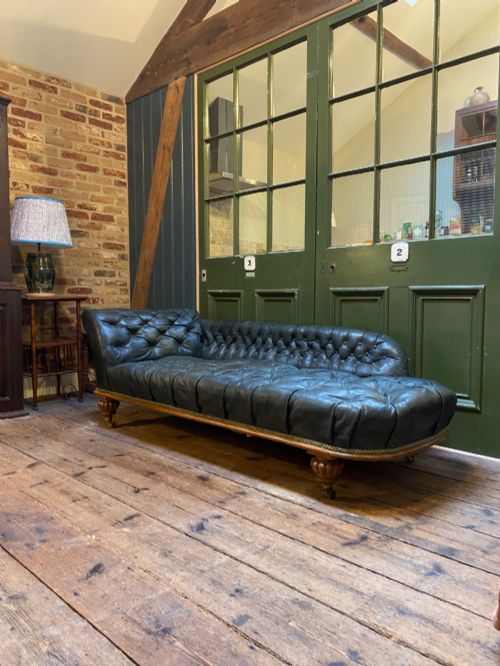
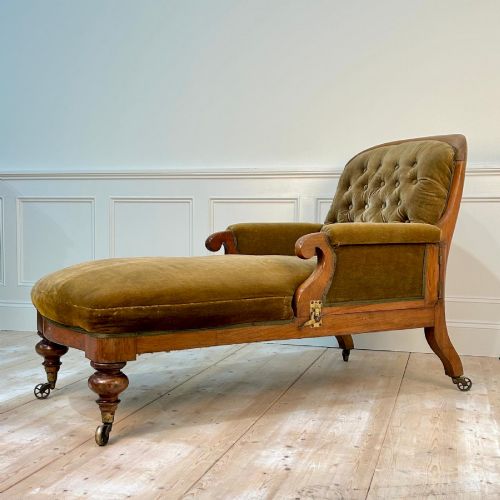
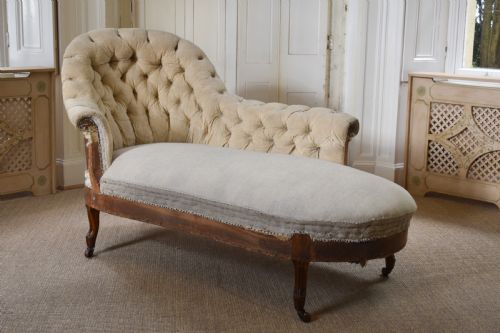
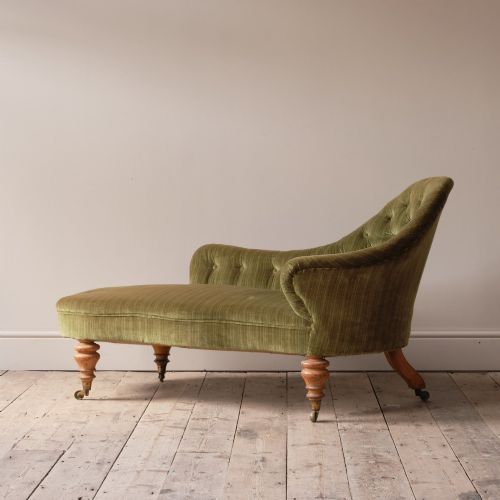
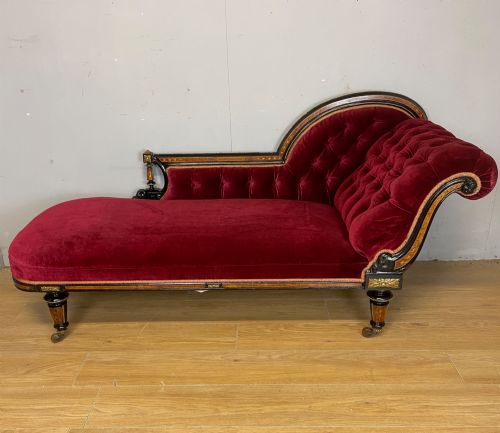
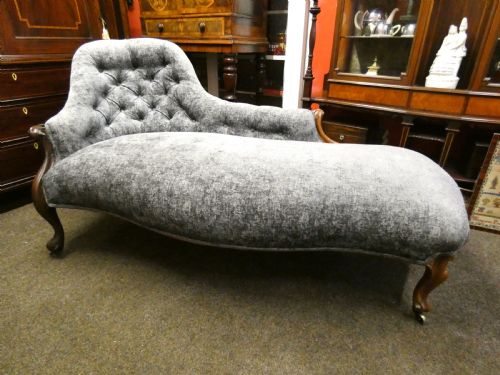
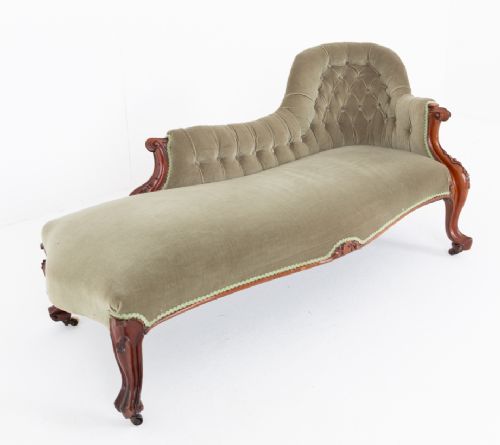
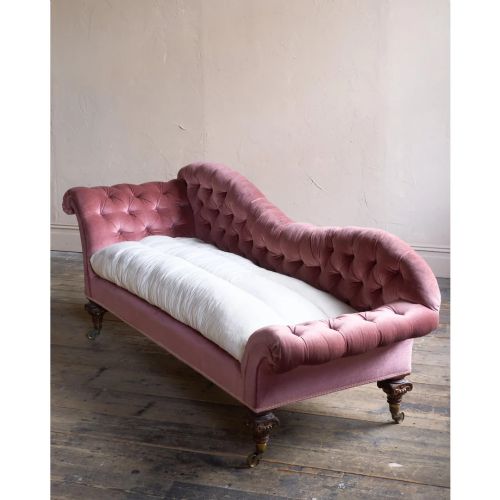
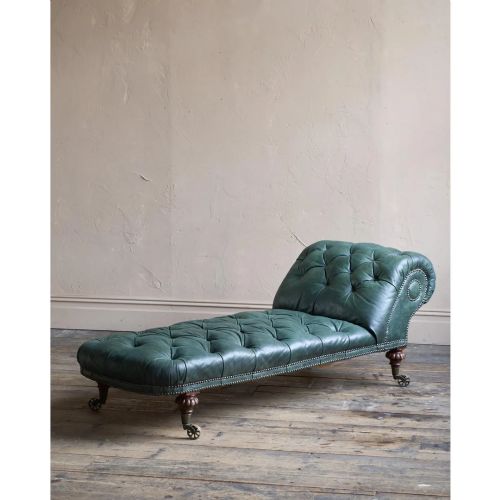
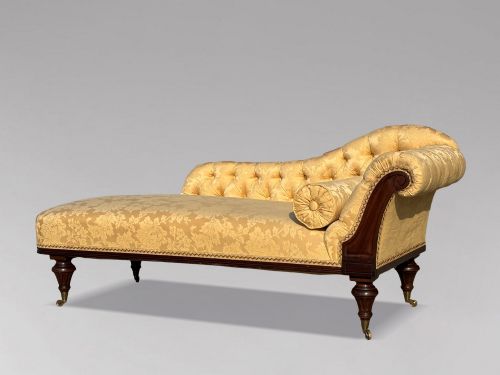
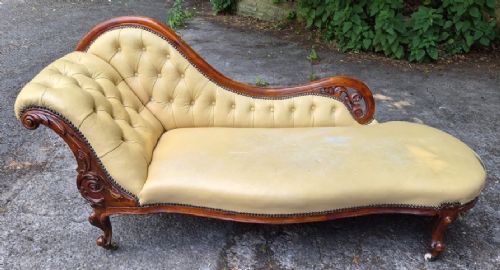
A buttoned fainting couch offers a reclining seat designed for Victorian repose, combining sweeping wooden frames with deep button-tufted upholstery.
Buttoned Fainting Couch
A buttoned fainting couch primarily emerges from nineteenth-century workshops, taking the form of an asymmetric daybed or chaise longue with a raised headrest. The pieces appearing most frequently across this selection belong to the Victorian period, though examples stretch from the Regency era into the early twentieth century.
The timber frames support varied configurations, including single scroll ends, double spoonbacks, and kidney sofa profiles. Makers designed these daybeds and settees for semi-reclined sitting rather than sleeping, placing the single elevated backrest to support the sitter in a half-recumbent posture.
Makers often applied descriptive titles such as daybed, settee, or couch interchangeably with chaise longue. Buyers will find both large, heavily carved rosewood frames and more compact mahogany or ebonised structures among the current offerings.
Materials and construction
Cabinetmakers utilised dense hardwoods like mahogany, rosewood, walnut, and ebonised wood to build the structural frames. These timbers permitted deep relief carving, curved scroll ends, and applied ormolu or brass details.
Upholsterers secured horsehair or similar traditional stuffing beneath top coverings of velvet, damask, leather, or plain fabric. Deep buttoning distributed tension across the backrest, securing the padding to the wooden framework while creating the characteristic dimpled pattern.
Buttoned Fainting Couch Retail Price Guide 2026
Typical asking prices for buttoned fainting couch among the pieces listed under this phrase on Sellingantiques today, from the lower quarter to the upper quarter. They describe what is for sale here now, not the wider market.
Miniature ebonised chaise longues appear among full-scale sofas, offering curious craftsmen a tiny canvas for complete upholstery.
Distinguishing quality in construction
The distinction between standard and superior pieces rests upon the crispness of the timber carving and the architectural ambition of the frame. Elaborate mouldings, Ionic column legs, and matched pairs indicate workshops operating at the highest level of craftsmanship.
Upholstery execution separates ordinary examples from exceptional ones through the regularity of the buttoning and the choice of covering material. Finer pieces feature carefully fitted silk damasks, aged leathers, or intricate show-wood frames that display sustained attention to detail.
Howard and Sons·H Goodall and Sons·Holland and Sons·Jas Shoolbred·Miles and Edwards
The Buttoned Fainting Couch Glossary
- Chaise longue
- An elongated chair for reclining, literally translating from French as long chair. These seating forms combine the functions of a chair and a daybed.
- Button back
- An upholstery method where tufts are pulled tight and secured with buttons, creating a padded surface with diamond or square indentations. This technique provides structural stability to the stuffing.
- Scroll end
- A sweeping, curved wooden terminal on a couch or daybed that forms the headrest or arm. Makers carved these elements into volutes resembling rolled paper or parchment.
- Spoonback
- A chair or settee backrest shaped in the concave contour of a spoon bowl, designed to fit the human spine. Victorian makers often joined two of these forms together on larger seats.
- Ormolu
- Gilded bronze or brass applied to furniture frames for decorative effect. Workshops cast and chased these metal mounts to accent key structural points.
Buttoned Fainting Couch: Frequently Asked Questions
What is a fainting couch used for?
A buttoned fainting couch served as a daytime resting place for nineteenth-century women wearing restrictive corsets. The single raised end allowed the sitter to recline without lying completely flat.
Today, these pieces function as statement daybeds in living rooms, bedrooms, or studies, offering a comfortable spot for reading or afternoon relaxation.
How do I tell Victorian from Regency?
Regency pieces date from the early nineteenth century, around eighteen hundred to eighteen thirty, displaying classical restraint, cleaner lines, and mahogany or rosewood surfaces. They often reference ancient Roman and Greek furniture forms.
Victorian examples, produced from the eighteen thirties onward, tend toward heavier proportions, ornate carvings, elaborate show-wood frames, and diverse timber choices including walnut and ebonised wood.
Where should I place a daybed?
These couches look best positioned against a flat wall where the asymmetric backrest can act as a visual anchor. Placing one perpendicular to a window or in a large hallway allows the carved frame to be viewed from multiple angles.
Because the backrest is directional, consider which way the headrest points so that sitters face towards the centre of the room or toward a focal point like a fireplace.
Are these couches comfortable for sleeping?
While historic daybeds provide excellent support for reading or resting, they are generally shorter than standard modern beds. The fixed scroll end limits the overall length for taller individuals.
They excel as daytime lounging furniture rather than overnight beds, though shorter rests or naps fit their original design purpose perfectly.