


Butler Table on Stand
A butler table on stand pairs a portable serving tray with a folding support, offering flexible service and display across Georgian, Victorian, and Edwardian periods.
Butler Table on Stand
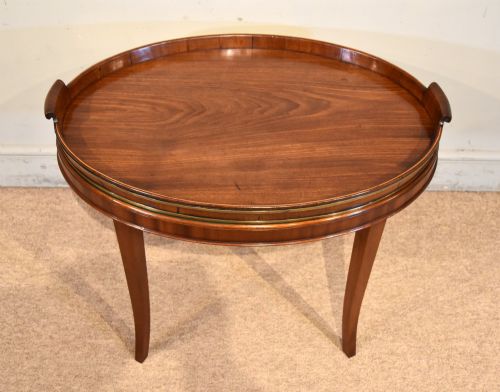
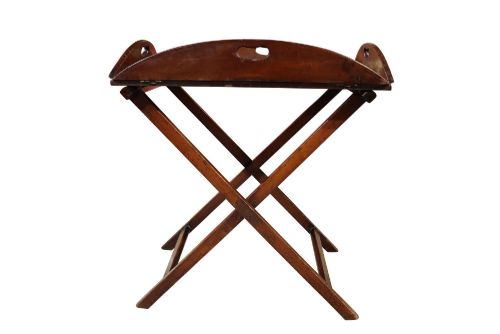
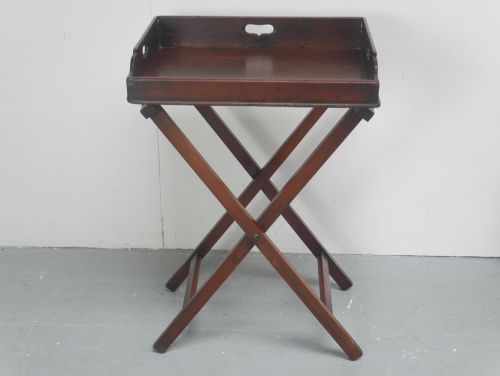
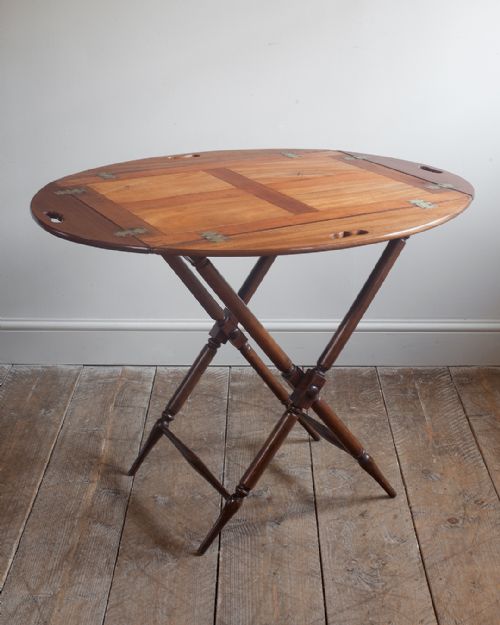
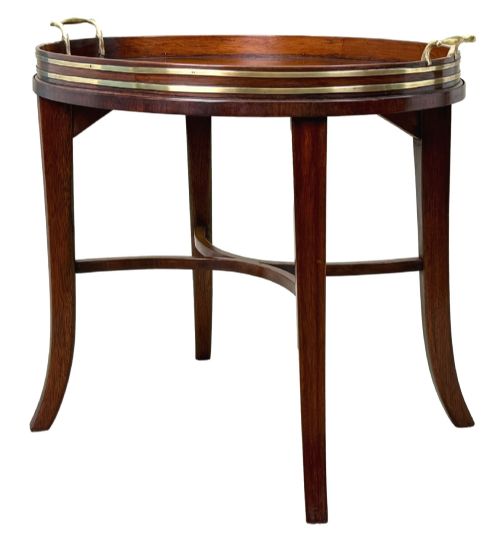
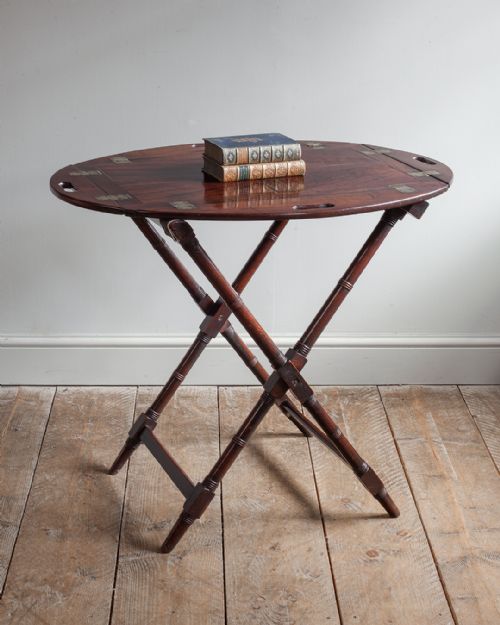
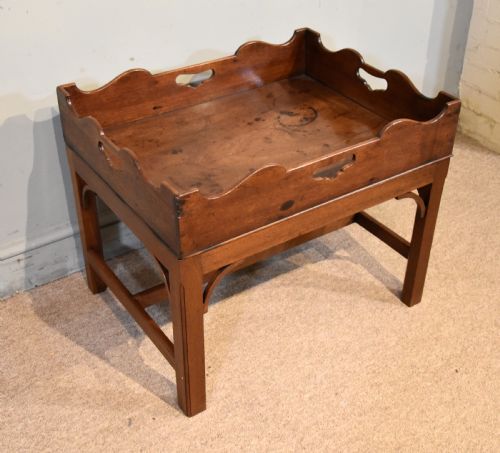
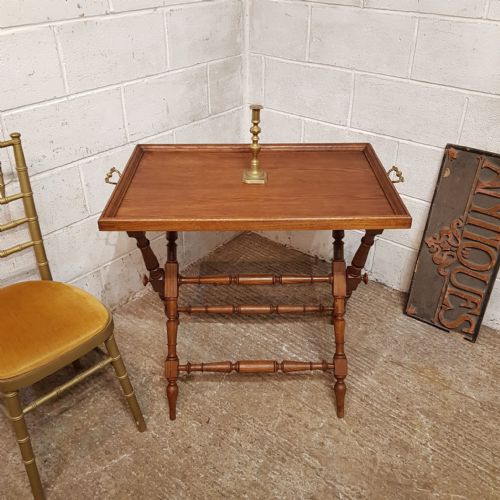
A butler table on stand comprises a detachable tray resting on a folding or fixed timber base, designed originally for carrying and serving meals. The form survives most commonly in mahogany from the eighteenth and nineteenth centuries, spanning Georgian, Regency, and Victorian eras.
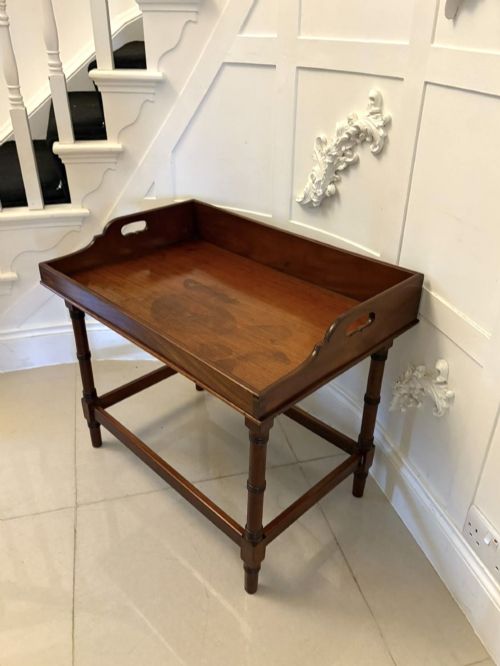
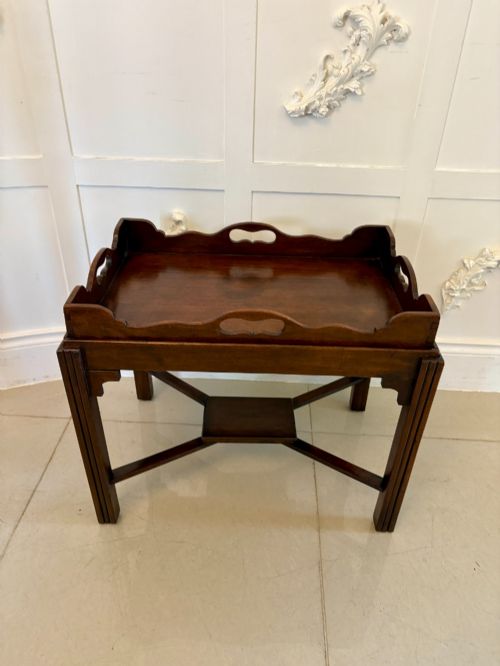
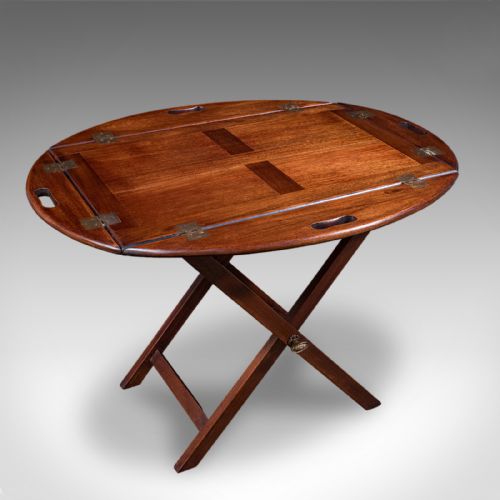
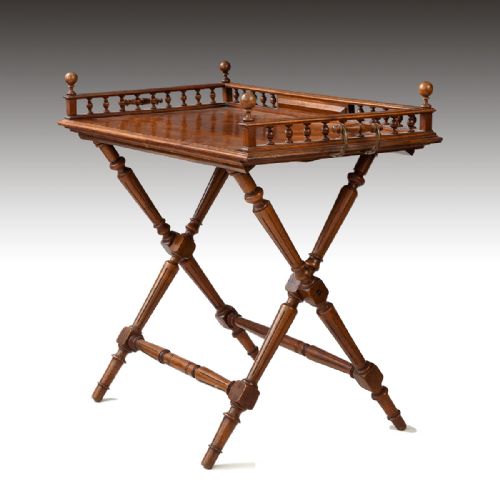
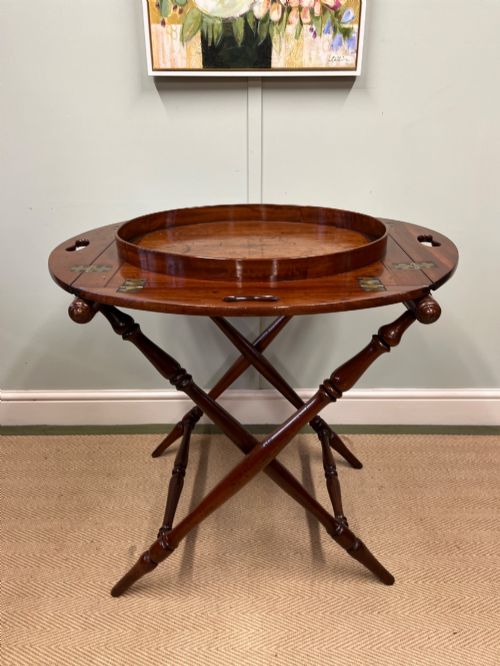
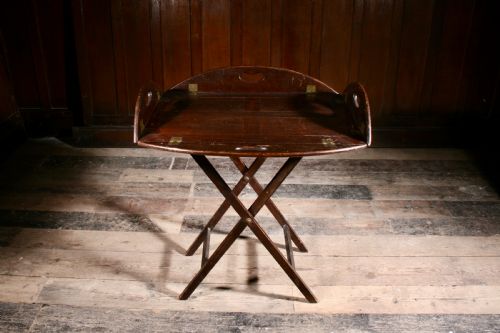
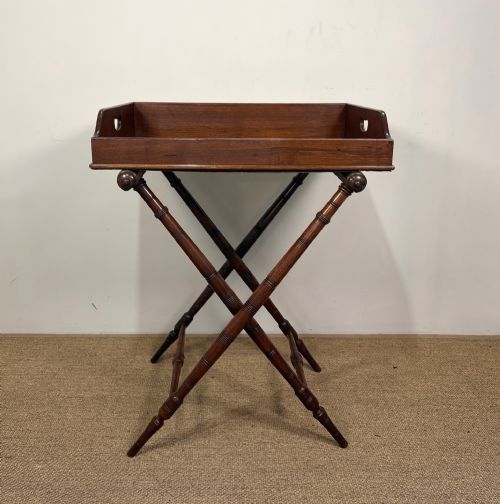
Tray tops appear in rectangular, oval, and shaped formats, often with hinged drop flaps or carrying handles cut directly into the timber. The supporting stands range from simple folding X-frames to turned legs with stretcher bases, accommodating the tray securely when opened.
Materials and construction
Mahogany dominates the construction, complemented by walnut, oak, rosewood, and occasional examples in papier-mâché finished with gold leaf and ebonised details. Timber selection dictates the weight and grain pattern of the tray, while brass hinges and bound corners provide structural reinforcement at stress points.
Carpenters utilised traditional joinery for the tray frames, frequently incorporating dovetails or pegged joints to withstand the regular lifting and moving associated with serving duties. Stands are engineered to fold flat or dismantle easily, relying on precise pivot points and cross-bracing for stability.
Butler Table on Stand Retail Price Guide 2026
Typical asking prices for butler table on stand among the pieces listed under this phrase on Sellingantiques today, from the lower quarter to the upper quarter. They describe what is for sale here now, not the wider market.
Certain Victorian trays doubled as cheese truckles, featuring crescent shapes designed to serve Stilton.
Differences in quality
Quality rests upon the choice of timber and the crispness of the cabinetwork, from plain utilitarian service pieces to elaborately figured veneers and marquetry inlays. Superior examples retain their original matching stands and retain clean lines without excessive timber shrinkage or warping on the tray surface.
Decoration distinguishes finer commissions, including brass bound edges, carved handles, or hand-painted Chinoiserie motifs on papier-mâché surfaces. The integration between tray and stand indicates the level of original craftsmanship, where bespoke fitting prevents lateral movement during use.
The Butler Table on Stand Glossary
- Butler tray
- A shallow wooden tray with raised sides or hinged flaps designed for carrying tableware. These trays lift off their supports to double as serving items.
- Drop-flap
- A hinged section on the side of a tray that folds down to ease placement or expands the surface area when locked horizontally. Brass hinges typically secure these moving parts.
- X-frame stand
- A folding base constructed from two crossed pairs of legs that pivot centrally. This configuration allows the stand to collapse flat for compact storage.
- Papier-mâché
- A composite material made from paper pulp or layers of paper bound with glue, pressed and baked to form rigid trays. These surfaces frequently receive dark japanning and gold leaf decoration.
- Brass bound
- A method of reinforcing tray corners and edges with fitted metal strips secured by small pins. This addition protects vulnerable wood grain from impact during transport.
Butler Table on Stand: Frequently Asked Questions
How were butler tables used originally?
Servants utilised these trays to carry food, glassware, and china from the kitchens to dining or drawing rooms. Once delivered, the tray rested upon its folding stand to serve drinks or tea.
After use, staff folded the base and removed the tray to clear the space efficiently. This portability suited the fluid social habits of Georgian and Victorian households.
Are the trays removable from the stands?
Most traditional examples feature a loose tray that simply rests within the upper frame of the stand. This design allowed the serving vessel to travel independently without carrying the entire piece of furniture.
Some later or alternative configurations incorporate fixed tops or locking mechanisms, but the freestanding tray remains the standard arrangement across nineteenth-century models.
How do I distinguish eighteenth-century pieces?
Early examples from the Georgian period typically exhibit dense Cuban mahogany, hand-cut dovetail joints, and understated brass hardware. The timber patination shows deep, warm tones developed through decades of careful polishing.
Later Victorian and Edwardian iterations often introduce alternative woods like walnut and oak, alongside more decorative elements such as marquetry inlay or ebonised finishes.
Can I use a butler table for daily living?
These tables function well as occasional coffee tables, side tables, or drinks stands in modern interiors. Their folding frames allow for easy repositioning or storage when floor space is required.
Care should be taken to protect historic wood finishes from moisture and heat by using coasters and placemats during everyday use.