



Burr Wood Credenza
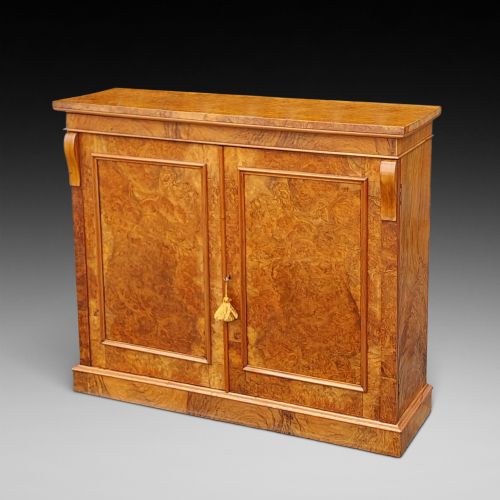
A burr wood credenza brings rich, swirling grain patterns and substantial timber presence into a room.
Burr Wood Credenza
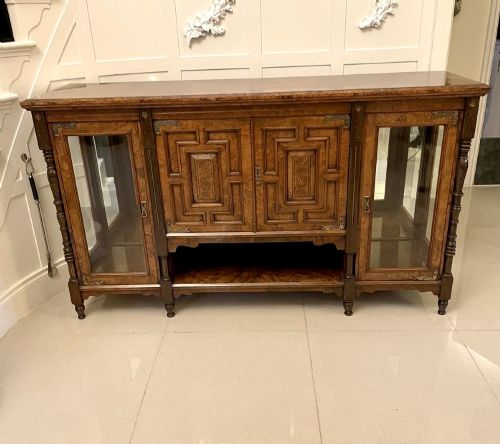
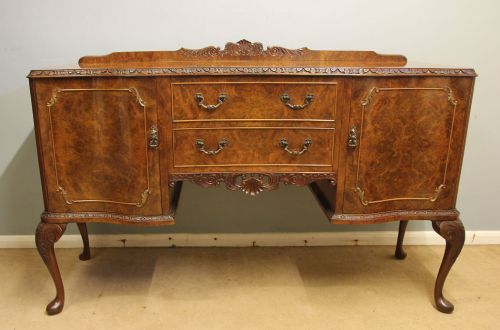
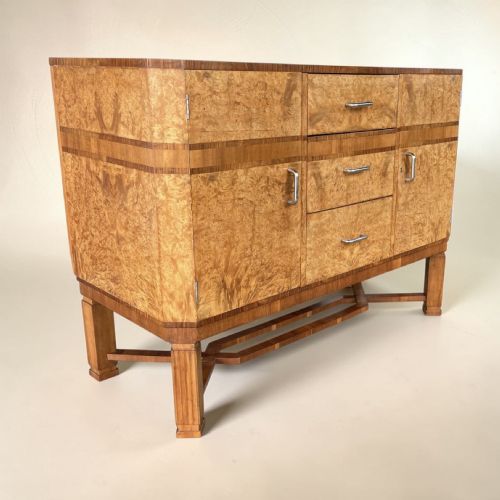
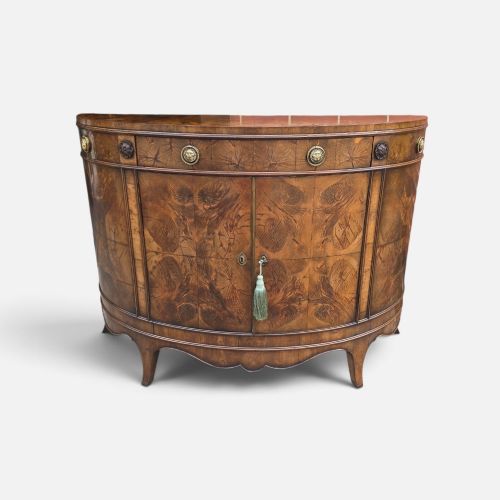
A burr wood credenza represents a significant item of case furniture, combining expansive storage with decorative timber surfaces. When searching for a burr wood credenza, buyers encounter pieces primarily originating from the Victorian era, alongside 18th-century, Regency, and Art Deco examples.
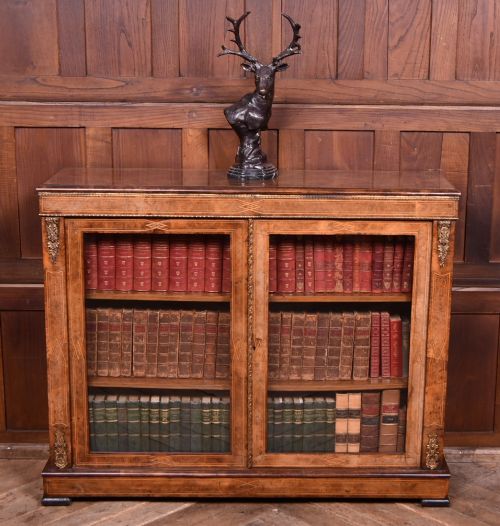
The form appears under various overlapping descriptions in the evidence, including sideboards, display cabinets, and pier cabinets. Victorian walnut and burr walnut iterations dominate the selection, frequently featuring glazed doors, serpentine fronts, and marquetry inlay.
Materials and construction
Cabinetmakers utilised highly figured veneers sliced from burr growths, particularly burr walnut, burr elm, and burr yew, applied over solid secondary timbers. These decorative veneers are matched and arranged across doors and panels to create symmetrical patterns in the grain.
Construction frequently incorporates crossbanding, ebonising, and marquetry inlay to frame the main panels of burr wood. Secondary materials such as glass, brass, and ormolu mounts appear on glazed display cabinets, credenzas, and salon pieces from the 19th century onwards.
Burr Wood Credenza Retail Price Guide 2026
Typical asking prices for burr wood credenza among the pieces listed under this phrase on Sellingantiques today, from the lower quarter to the upper quarter. They describe what is for sale here now, not the wider market.
Some burr yew cabinets hide their treasures behind mirror-backed display shelves designed to bounce candlelight around a dim Victorian parlour.
Distinctions in quality
Quality reveals itself in the intricacy of the timber selection and the precision of the veneer matching. Superior pieces display dense, lively burr patterns that flow harmoniously across the entire front elevation without jarring interruptions or clumsy joins.
The standard of supplementary decoration distinguishes finer examples from simpler production. Finely executed marquetry inlay, disciplined crossbanding, and well-cast brass or ormolu mounts elevate the status of a credenza or cabinet.
S Jamar
The Burr Wood Credenza Glossary
- Burr wood
- Timber harvested from tree growths containing distorted, knotty grain formations that produce intricate patterns when sliced into veneer.
- Credenza
- A low cabinet or sideboard, historically featuring central cupboards flanked by curved glass doors or open shelving.
- Marquetry
- Decorative patterns formed by fitting small pieces of veneer into a fitted ground to create pictorial or geometric designs.
- Crossbanding
- A narrow strip of veneer laid around the border of a panel so that the grain runs at right angles to the central timber.
- Pier cabinet
- A narrow cabinet designed specifically to fit against the wall space between windows.
Burr Wood Credenza: Frequently Asked Questions
What is a burr wood credenza used for?
These cabinets serve as principal storage and display surfaces within dining rooms, hallways, and formal reception spaces. Their flat tops and internal shelving accommodate books, decorative objects, and dining ware.
The enclosed cupboards and glazed sections allow owners to conceal utility items while exhibiting finer ceramic or glass collections behind glass doors.
How do I date a Victorian credenza?
Dating relies on observing structural timbers, mounting hardware, and stylistic markers recorded in the historical record. Victorian pieces commonly utilise walnut and burr walnut with applied marquetry and ebonised details.
Earlier pieces from the Georgian and Regency periods exhibit different proportions and secondary woods, such as oak or cherrywood, alongside distinct neoclassical or revival decorative motifs.
Where were these cabinets placed historically?
Credenzas and side cabinets were traditionally positioned against principal walls in Victorian and Georgian reception rooms. Pier cabinets specifically occupied the narrow wall sections situated between large windows.
This placement maximised natural light on the reflective glass panels and decorative marquetry surfaces while balancing the room architecture.
What woods are common in these listings?
Walnut and burr walnut dominate the selection, particularly amongst Victorian examples. Burr elm and burr yew appear across 18th-century commodes, dresser bases, and Aesthetic Movement cabinets.
Additional materials include cherrywood, amboyna, Hungarian ash, and ebonised timber, often combined with brass fittings and glass.