




Burr Walnut Stationery Desk
When you handle a burr walnut stationery desk, you appreciate the rich grain and practical compartments designed for Victorian correspondence.
Burr Walnut Stationery Desk
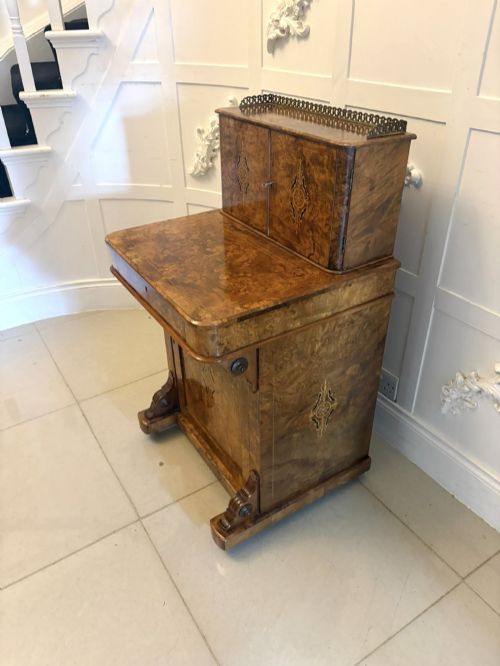
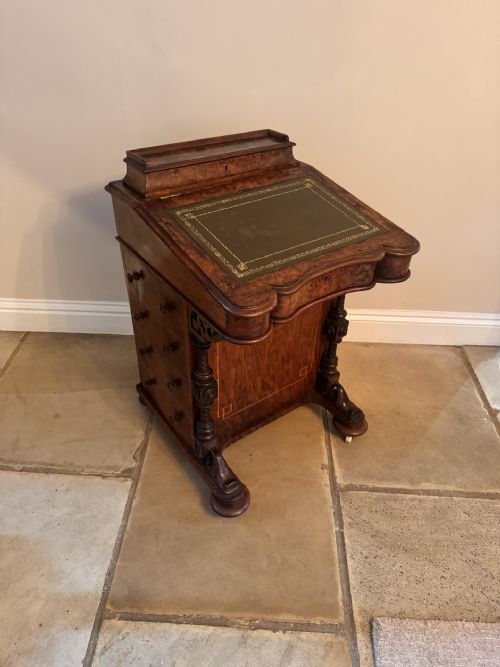
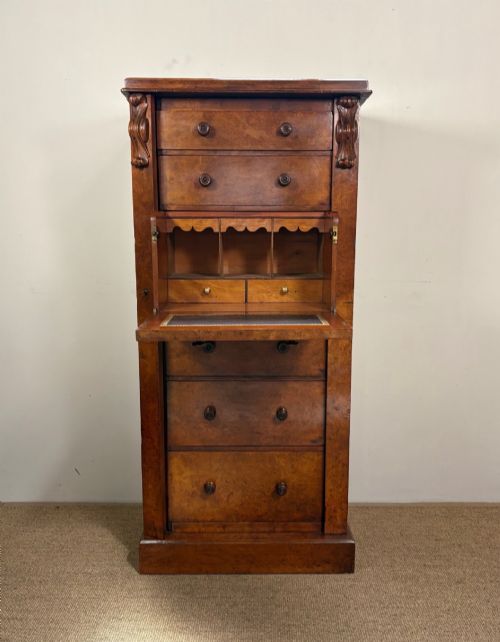
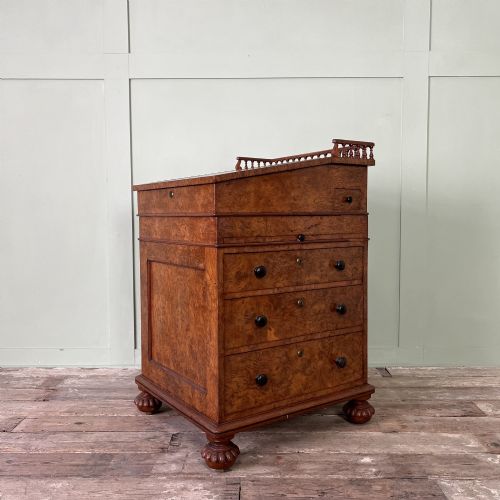
A burr walnut stationery desk brings together compact writing surfaces and dedicated letter storage, predominantly originating from the Victorian period alongside late Georgian and Edwardian examples. You will frequently encounter Davenport desks, slope-front writing boxes, and desktop stationery cabinets on this page.
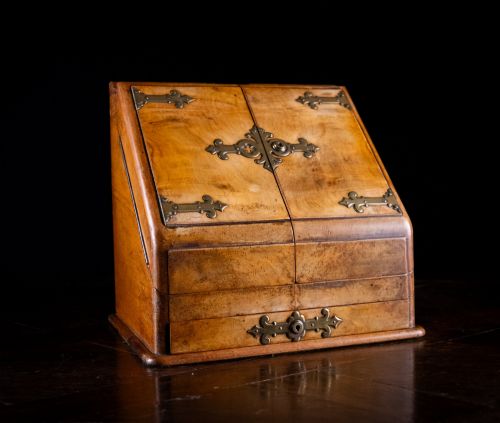
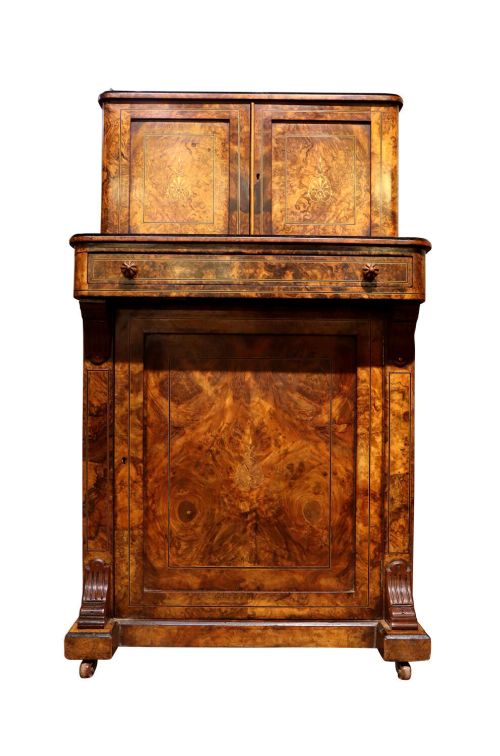
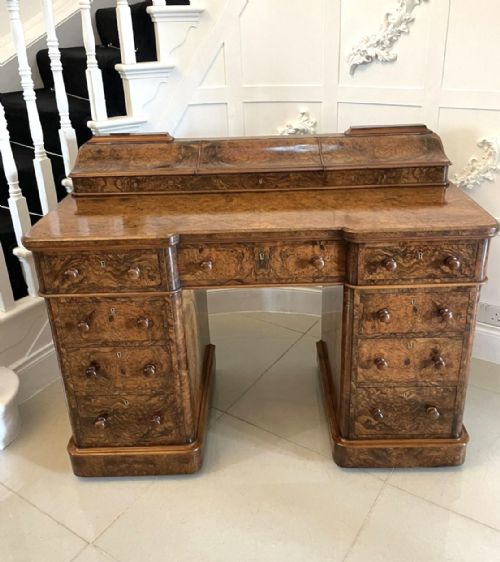
The form ranges from freestanding kneehole tables and bureau de dame desks to lift-top pop-up Davenports and brass-bound writing slopes. These pieces served the nineteenth-century household for writing letters, storing documents, and organising daily correspondence.
Makers utilised rich burr veneers across various desk accessories, creating functional furniture pieces designed for the boudoir, library, or drawing room. Each piece reflects the nineteenth-century preference for organised writing equipment enclosed in decorative wood.
Materials and construction
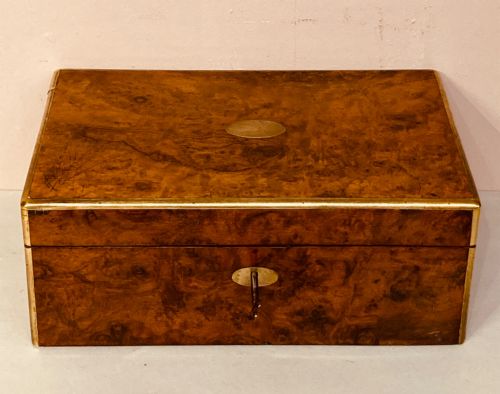
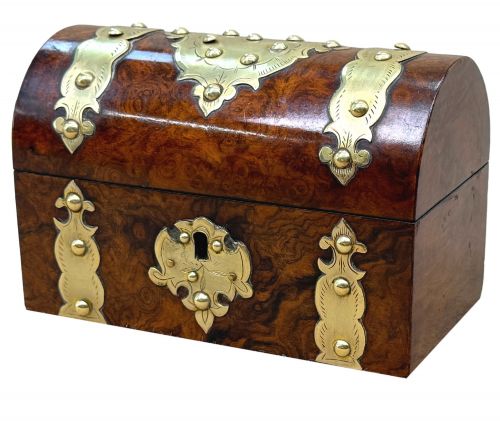
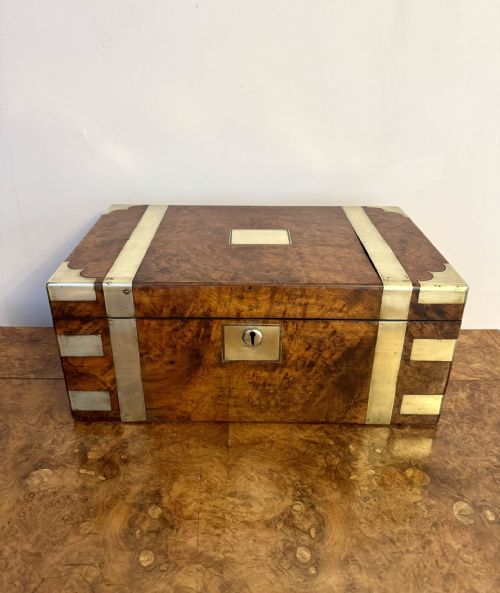
Cabinet makers applied highly figured burr walnut veneers over solid secondary timbers, often accented with boxwood inlay, parquetry, or marquetry patterns. Brass mounts, corner brackets, and handles provided structural reinforcement for portable writing boxes and campaign pieces.
Interiors frequently incorporate fitted leather writing surfaces, secret drawers, and specialised compartments for stationery, pens, and inkwells. Secure locking mechanisms such as Bramah locks protected private documents within the desk or box.
Many writing slopes conceal secret drawers behind dummy pigeonholes, designed to keep private love letters safe from prying housemaids.
Quality variations in burr walnut pieces
The intricacy and matching of the burr walnut veneer pattern dictate visual appeal, with symmetrical grain alignment marking superior examples. Finer pieces display meticulous marquetry, crisp boxwood inlay, and integrated secondary woods rather than plain secondary veneers.
Hardware quality distinguishes workshop standards, evident in heavy brass mounts, operational Bramah locks with original keys, and tightly fitted internal stationery compartments. Structural integrity in freestanding Davenport desks and stationery cabinets depends on solid joinery and intact leather writing skivers.
Maple & Co·Gillow & Co·Mappin & Webb
The Burr Walnut Stationery Desk Glossary
- Burr walnut
- A figured wood veneer derived from the wart-like growths on walnut trees. It provides dense, swirling grain patterns highly prized for Victorian desk surfaces.
- Davenport
- A compact pedestal desk featuring a sloping, hinged writing surface above a bank of drawers. This form became popular during the nineteenth century for ladies' correspondence.
- Writing slope
- A portable box with a hinged lid that opens to form an angled writing surface. Inside compartments store paper, pens, and ink.
- Bramah lock
- A high-security cylindrical lock patented by Joseph Bramah in the late eighteenth century. These locks frequently secure better-quality nineteenth-century writing boxes.
- Stationery cabinet
- An upright desk accessory or tabletop box fitted with shelves and partitions for organising letters and envelopes. They often feature double doors or drop fronts.
Burr Walnut Stationery Desk: Frequently Asked Questions
What is a pop-up Davenport?
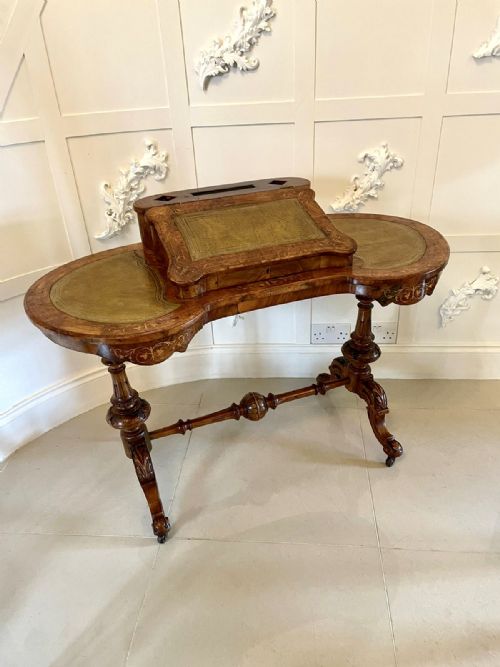
A pop-up Davenport incorporates a rising stationery compartment at the back of the desk top. This section elevates when the writing lid is opened to reveal additional letter slots.
Such mechanisms demonstrate the mechanical ingenuity applied to Victorian compact furniture.
How do I use a writing slope?
A writing slope opens flat to reveal an angled writing surface lined with leather or velvet. Internal partitions securely hold stationery, stamps, and writing implements.
Portable versions allow owners to write correspondence away from a fixed library table.
Where were stationery boxes placed?
Stationery boxes sat upon larger library tables, desks, or credenzas to keep writing paper tidy. Desktop versions housed envelopes and correspondence within reach.
Freestanding cabinets fulfilled a similar organisational role in nineteenth-century rooms.
How do I date a burr walnut desk?
Dating relies on architectural styles, construction methods, and hardware types associated with Victorian, Georgian, or Edwardian periods. Burr walnut veneers and brass binding are particularly characteristic of mid to late nineteenth-century pieces.
Makers' marks or locks inscribed with patent names provide further chronological clues.