



Burr Walnut Jewellery Case
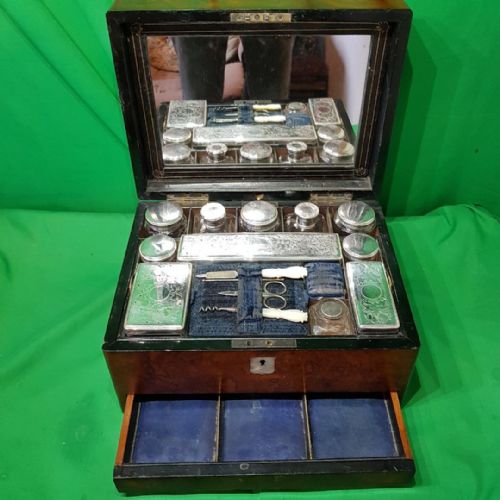
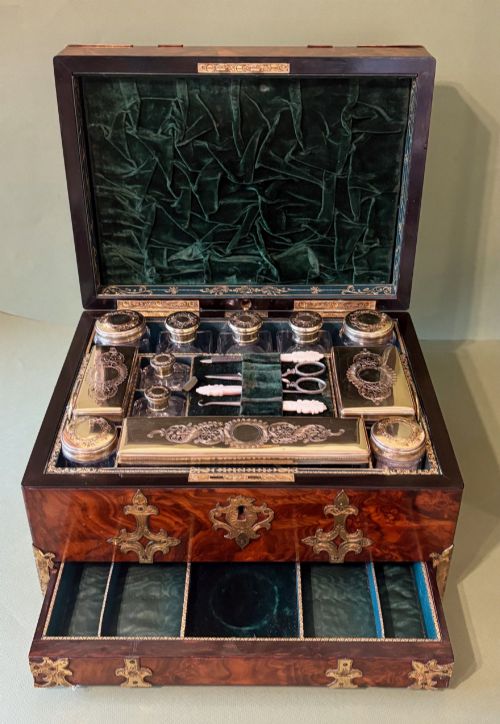
A burr walnut jewellery case offers exceptional timber figure and considered internal fitted compartments to keep your precious items secure.
Burr Walnut Jewellery Case
A burr walnut jewellery case represents a sophisticated category of nineteenth-century storage designed for personal valuables and dressing accessories. These pieces typically manifest as substantial boxes, travelling sets, and table cabinets originating from the Victorian era, alongside occasional examples attributed to the Georgian period.
The objects serve multiple functions, frequently combining jewellery storage with fitted interiors, mirrors, and writing or vanity compartments. Buyers encounter formats ranging from compact boxes to spacious dressing cases equipped with silver or glass accessories.
Most examples on this page date from the Victorian period, spanning decades such as eighteen-sixty, eighteen-eighty, and nineteen-hundred. They showcase the characteristic rich figuring of walnut timber combined with utilitarian brass hardware.
Materials and construction
Maker construction relies heavily upon burr walnut veneer applied over solid timber carcasses to achieve dramatic decorative grain patterns across the lid and sides. Brass mounts, escutcheons, and banding frequently reinforce the structural corners and provide structural contrast.
Interiors utilise tactile linings including velvet and silk to protect delicate items, alongside fitted compartments designed for specific dressing implements. Certain examples incorporate silver fittings and glass bottles alongside the primary wooden structure.
Burr Walnut Jewellery Case Retail Price Guide 2026
Typical asking prices for burr walnut jewellery case among the pieces listed under this phrase on Sellingantiques today, from the lower quarter to the upper quarter. They describe what is for sale here now, not the wider market.
Many Victorian dressing cases include secret hidden drawers released by pushing tiny concealed wooden pins inside the main compartment.
Distinguishing quality in craftsmanship
Quality reveals itself primarily through the selection and bookmatching of the burr walnut veneer across the exterior surfaces. Superior pieces display complex, symmetrical grain patterns that wrap seamlessly around the box edges.
Internal complexity dictates the upper tier of the range, separating simple storage boxes from elaborate dressing cases with comprehensive silver and glass fittings. Maker attribution, such as signed work by established London retailers, further elevates the standing of an individual piece.
Parkins & Grotto Oxford St London·Parkins and Gotto London
The Burr Walnut Jewellery Case Glossary
- Burr walnut
- A type of wood veneer taken from the growth excrescence of a walnut tree, prized for its swirling, highly figured patterns. It forms the defining exterior visual characteristic of these cases.
- Dressing case
- A fitted box containing compartments for cosmetics, brushes, and jewellery, often including a folding mirror. These larger cases are designed for travel or elaborate vanity use.
- Escutcheon
- A flat plate of brass surrounding a keyhole to protect the surrounding wood from wear. They are commonly integrated into the front of these boxes.
- Bookmatching
- A veneer technique where adjacent slices of timber are opened like a page to mirror each other's grain pattern. This creates symmetrical and decorative surfaces on box lids.
Burr Walnut Jewellery Case: Frequently Asked Questions
How were these boxes used?
Owners utilised them on dressing tables to organise rings, necklaces, and personal grooming implements securely.
Travelling versions allowed wealthy individuals to transport their personal dressing and vanity items safely during journeys.
How do I date a Victorian piece?
Dating relies on stylistic clues, construction methods, and occasionally inscribed maker marks or specific patent dates on the hardware.
Victorian examples frequently incorporate brass banding, velvet interiors, and fitted mirrors characteristic of the mid to late nineteenth century.
How do I care for burr walnut?
Protect the polished wooden surface by keeping the case away from direct sunlight and maintaining stable room humidity.
Gentle dusting with a dry cloth preserves the finish without risking moisture damage to the delicate veneer.