



Burr Walnut Hallway Table
A burr walnut hallway table brings warmth and rich timber grain immediately to an entrance, offering a surface for letters and keys.
Burr Walnut Hallway Table
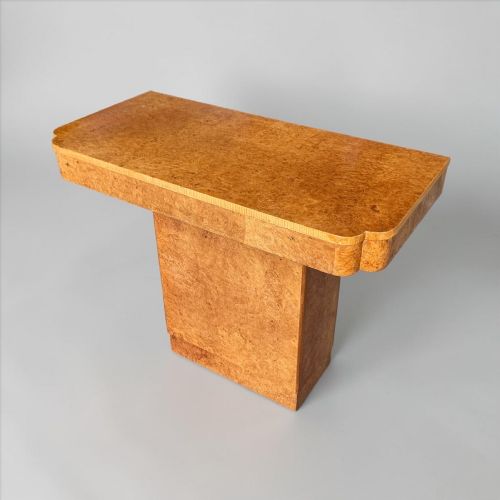
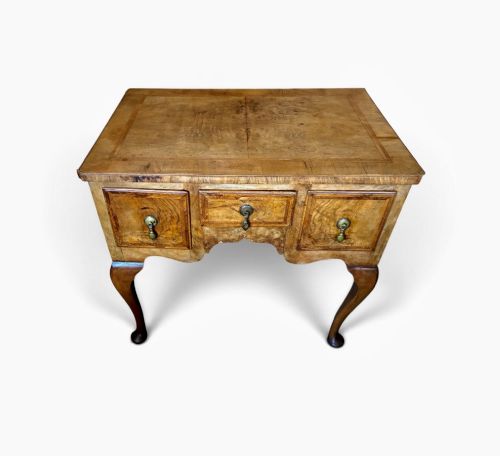
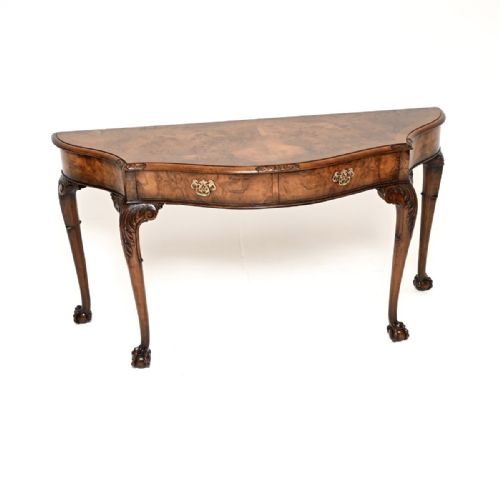
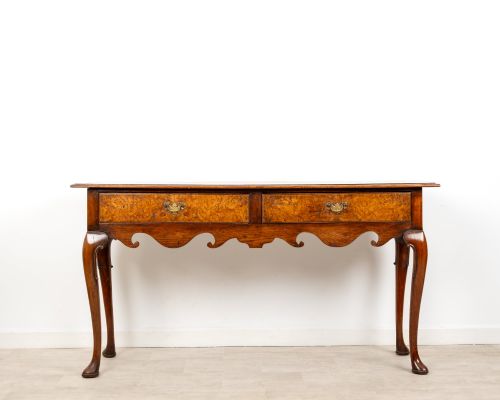
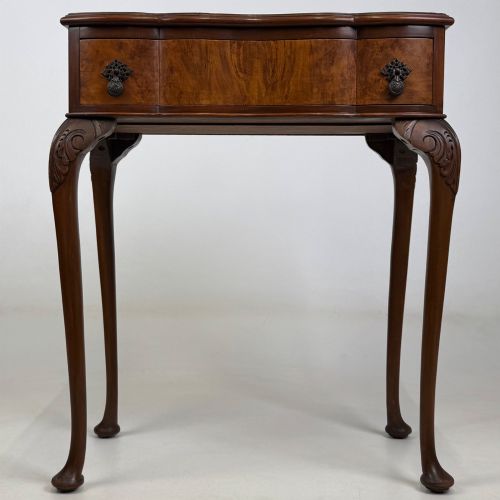
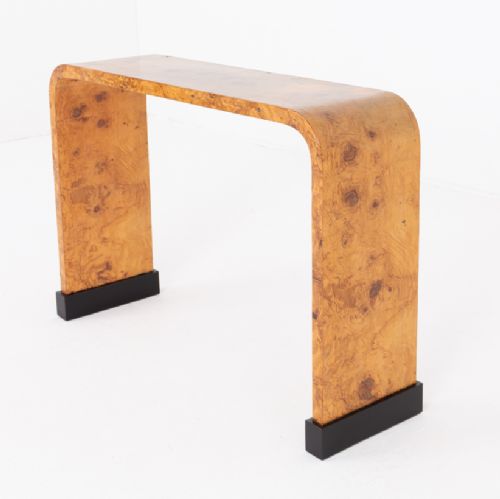
When you search for a burr walnut hallway table, you encounter a selection of console tables, side tables, lowboys, and occasional pieces spanning the Victorian era through the 1930s. These forms range from Georgian design lowboys and Queen Anne style consoles to striking Art Deco modernist creations.
The pieces appearing most frequently reflect early twentieth-century revival styles and Art Deco geometric lines, often designed specifically for narrower spaces like halls and corridors. Whether you select a marble-topped console or a two-drawer serving table, each piece serves to anchor an entryway with traditional or modernist character.
Materials and construction
The primary visual appeal relies on burr walnut and figured walnut veneers, chosen for their swirling, knotty grain patterns and applied over solid wood foundations. Accents of brass hardware appear alongside occasional marble tops and glass elements, particularly on pieces from the Victorian period up to the Art Deco era.
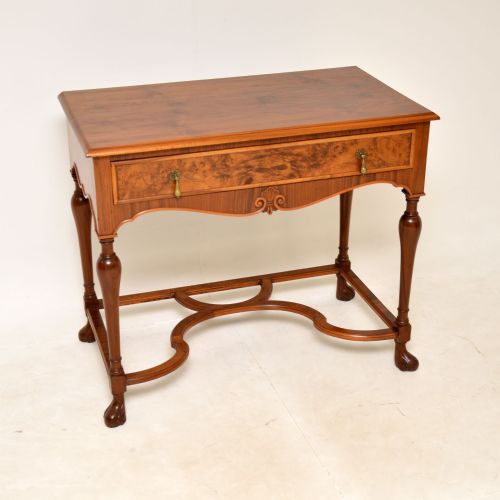
Joinery methods vary from nineteenth-century cabinet-making traditions to twentieth-century production techniques, incorporating drawer construction with timber framing. Veneers are carefully matched and laid symmetrically across table tops and aprons to maximise the natural decorative qualities of the timber.
Listings span from the 1860 Victorian era through Edwardian productions up to Art Deco pieces from 1930.
Factors of quality
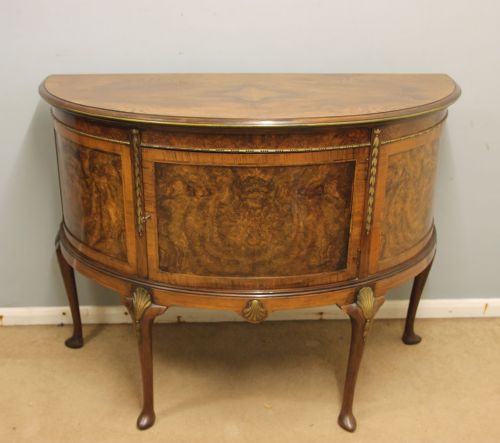
Quality in these tables rests upon the selection and matching of the burr walnut veneer, where tighter, more dynamic grain patterns indicate superior timber choice. The precision of the cabinet work, particularly around the curves of bow fronts, demi-lune shapes, and stretcher joints, further distinguishes finer examples.
Proportion and the integrity of the original surface finish play significant roles in the standing of a piece. Tables retaining well-maintained polish that highlights the depth of the walnut figure generally represent the higher end of the range.
Hille·Maple and Co
The Burr Walnut Hallway Table Glossary
- Burr walnut
- A prized timber harvested from the growth excrescences on walnut trees, yielding complex, swirling grain patterns. It is typically sliced into veneer for furniture surfaces.
- Lowboy
- A small seventeenth or eighteenth-century style table with drawers, often standing on relatively tall legs. This form frequently serves as a compact hallway or side table.
- Console table
- A table designed to stand against a wall, traditionally fixed with brackets or supported by front legs. These pieces suit hallways due to their shallow depth.
- Demi-lune
- A half-moon shape used for the tops and frames of specific side tables and cabinets. This configuration allows the furniture to sit flush against a wall while saving floor space.
- Stretcher
- A horizontal wooden brace connecting the legs of a table for structural stability. On Victorian pieces, these often feature shaped or decorative carving.
Burr Walnut Hallway Table: Frequently Asked Questions
Where should I place a console table?
These tables find their natural home in hallways, corridors, and entrance spaces where a shallow surface is required without blocking foot traffic.
They provide a convenient drop-off point for daily items while establishing a strong decorative statement as guests enter the home.
How do I care for walnut veneer?
Walnut veneer responds best to gentle dusting with a dry, soft cloth and protection from direct sunlight and extreme temperature shifts.
Avoiding excessive moisture and applying appropriate wax sparingly preserves the clarity and depth of the grain pattern over time.
What is the difference between a console and a lowboy?
A console table is designed specifically to stand flush against a wall, often featuring decorative front legs and flat backs suited for narrow spaces.
A lowboy is traditionally a small table featuring one or more rows of drawers beneath the work surface, drawing on earlier Georgian cabinet forms.
How do I identify an Art Deco table?
Art Deco pieces from the 1920s and 1930s typically display clean geometric lines, symmetrical veneer layouts, and streamlined silhouettes free of heavy historic ornamentation.
These designs often embrace minimalist curves or sharp angles that reflect the modernist aesthetic of the interwar period.