



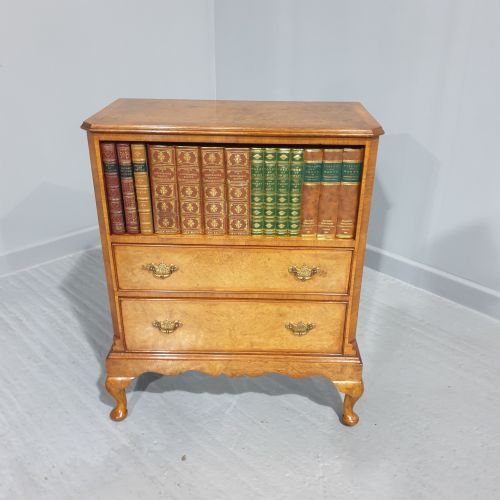

Burr Walnut Bookshelves
Burr walnut bookshelves offer remarkable grain patterns and rich warmth, bringing sophisticated storage to traditional and modern interiors alike.
Burr Walnut Bookshelves
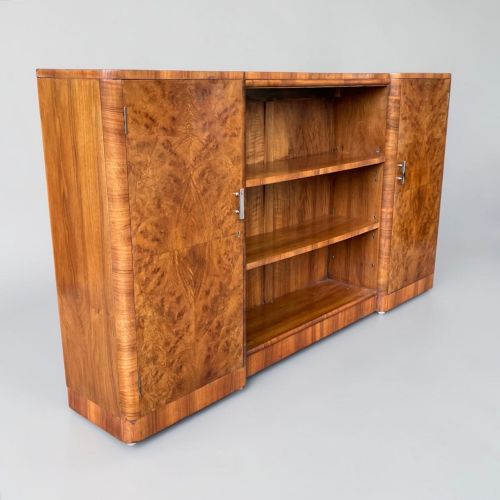
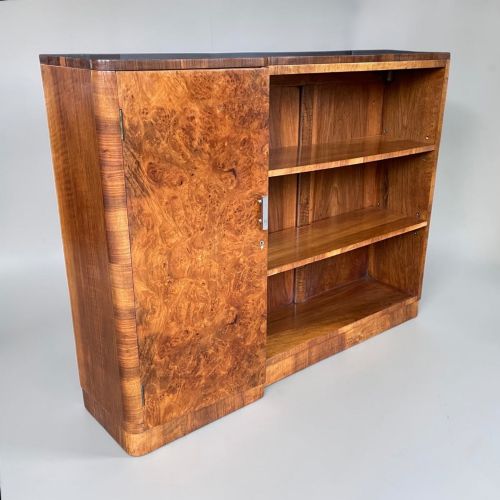
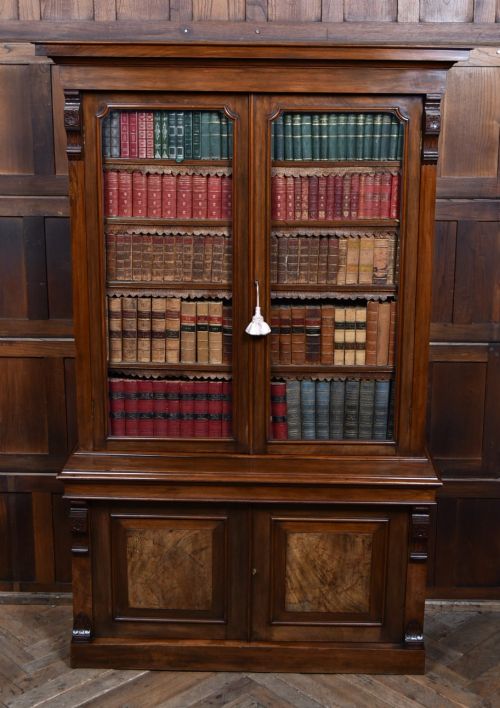
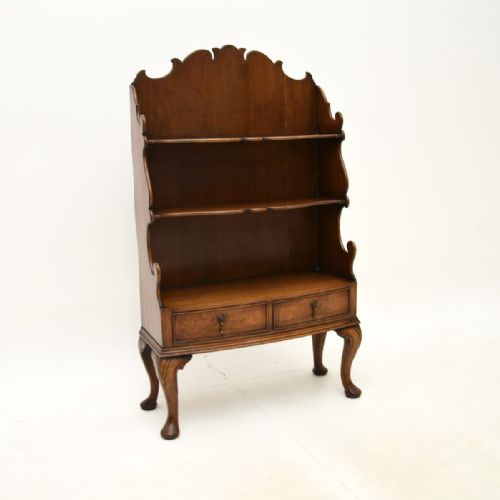
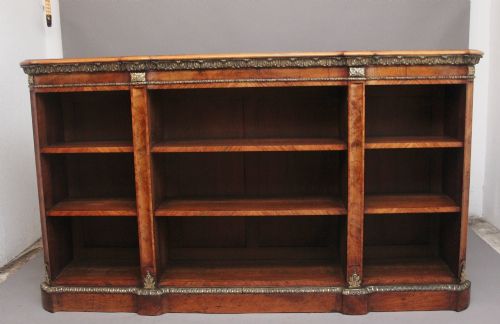
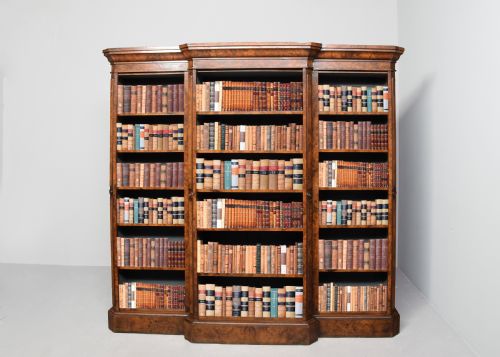
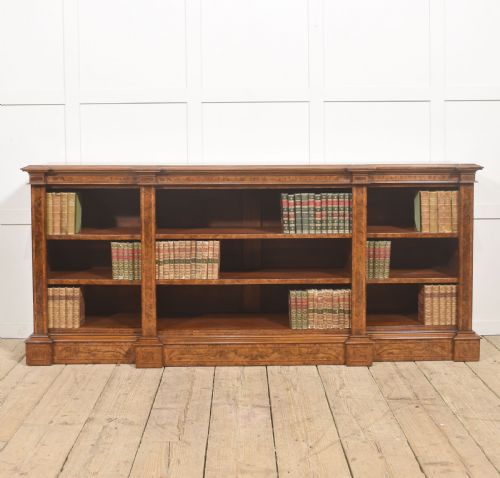
Burr walnut bookshelves combine practical open shelving with the decorative impact of highly figured burl timber. Buyers seeking burr walnut bookshelves encounter open bookcases, cascading shelves, breakfront designs and multi-tier whatnots dating from the Victorian period through to the early twentieth century.
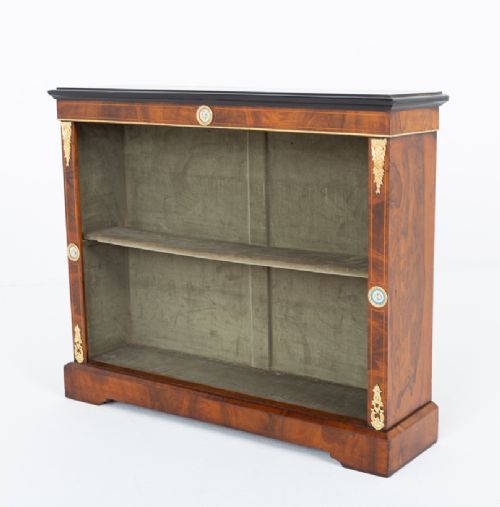
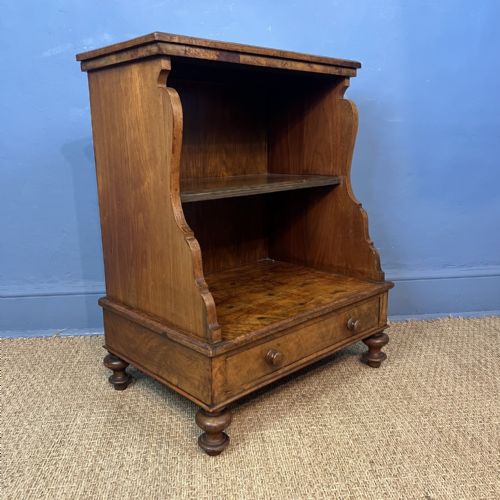
The selection ranges from compact bedside cabinets and low open shelves to large breakfront configurations featuring adjustable timber shelving. Styles span Victorian craftsmanship, William IV examples, Regency style interpretations, and Queen Anne revival pieces.
Most items rely on open configurations designed for displaying books and decorative objects rather than enclosed glass cabinets. These pieces suit studies, libraries and drawing rooms where timber tone and grain pattern play a central role in the room scheme.
Materials and construction
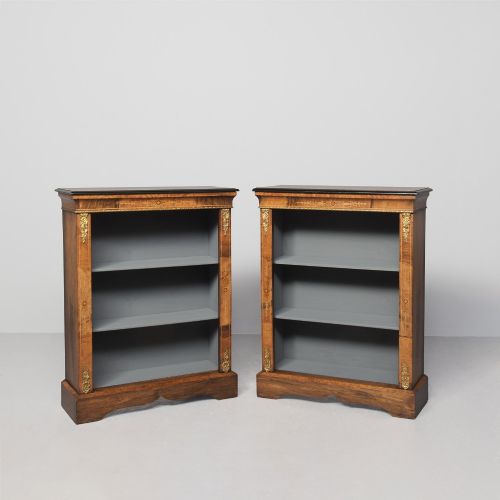
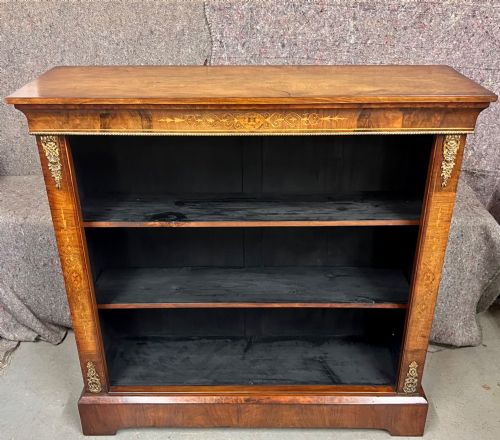
Makers utilised burr walnut veneer laid over stable secondary timber substrates to achieve swirling, knotty grain patterns across flat surfaces and cornices. Solid walnut provided structural framing, whilst brass galleries, ormolu mounts and gilt bronze details added decorative contrast.
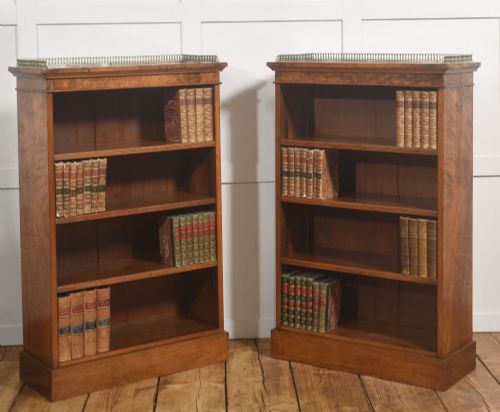
Interior elements frequently incorporated adjustable timber shelving supported by wooden racks or brass studs. Selected pieces integrated brass galleries along the top tier or incorporated drawers beneath the main shelving compartments.
Burr Walnut Bookshelves Retail Price Guide 2026
Typical asking prices for burr walnut bookshelves among the pieces listed under this phrase on Sellingantiques today, from the lower quarter to the upper quarter. They describe what is for sale here now, not the wider market.
Several pieces include delicate brass galleries on top, designed presumably to stop your favourite volumes from sliding off into history.
Distinguishing quality factors
Quality rests upon the selection and matching of the burr walnut veneer across the front elevation, where symmetrical grain alignment elevates the visual impact. Superior examples exhibit careful timber selection, crisp mouldings and well-integrated brass or ormolu mounts.
Structural proportions and functionality also dictate standing, with adjustable shelving mechanisms and solid construction separating standard workshop output from higher grade commissions.
Johnstone And Jeanes
The Burr Walnut Bookshelves Glossary
- Burr walnut
- A veneer derived from the growth excrescences of walnut trees, prized for its complex, swirling knot patterns and rich colour. This timber forms the primary decorative surface on quality Victorian and revival furniture.
- Breakfront
- A piece of furniture where the central section projects forward from the flanking sections. This configuration adds architectural depth to larger library bookcases.
- Whatnot
- A piece of freestanding furniture featuring multiple open shelves supported by slender columns or uprights, used for displaying books and ornaments. Victorian examples frequently utilise burr walnut construction.
- Ormolu
- Cast brass that has been mercury gilded to achieve a bright gold finish, utilised as decorative mounts on nineteenth-century library furniture. It provides a metallic contrast against dark timber.
Burr Walnut Bookshelves: Frequently Asked Questions
How do I style a burr walnut bookcase?
These open shelves suit studies and living rooms where the figured timber grain complements traditional architectural details.
Keep shelf arrangements balanced with books and small decorative objects to let the walnut pattern remain visible.
Are these shelves adjustable?
Many nineteenth-century and revival examples feature adjustable timber shelving supported by traditional racking systems.
This allows the internal layout to accommodate varying book heights and display requirements.
What is the difference between a bookcase and a whatnot?
A bookcase is primarily constructed for housing books within sturdy vertical partitions, whilst a whatnot is a multi-tiered stand designed for lighter display items.
Both forms appear in burr walnut across the Victorian period.
How should I care for walnut veneer?
Protect the timber from direct sunlight and maintain stable room humidity to prevent the veneer from drying out.
Dust gently with a soft cloth and avoid chemical polishes that can build up on the polished surface.