
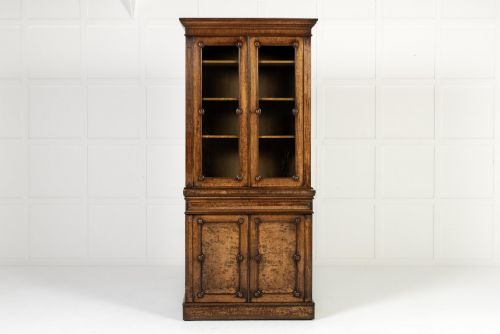


Burr Oak Cabinet
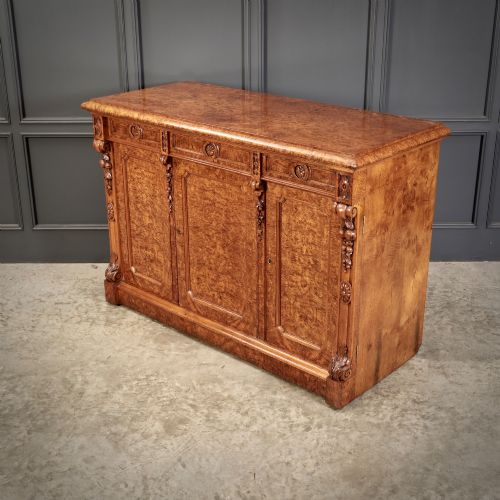
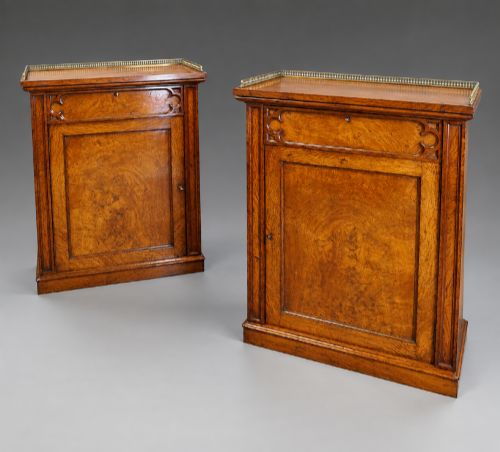
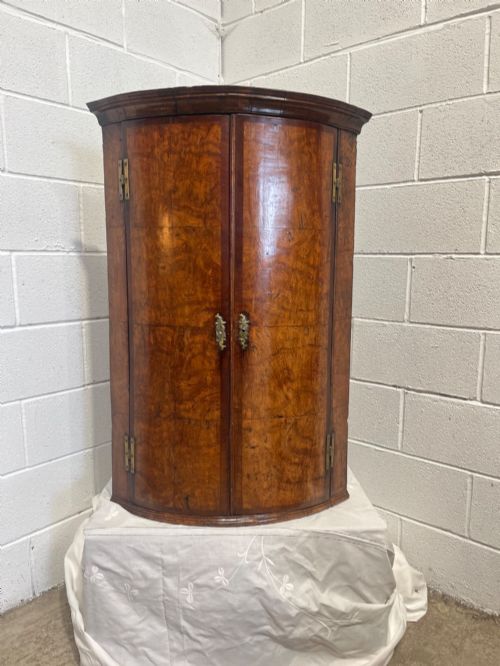
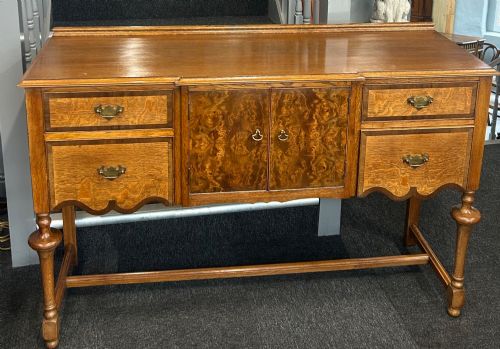
These burr oak cabinet pieces bring extraordinary grain movement and rich depth to a room through centuries of skilled British cabinet-making.
Burr Oak Cabinet
A burr oak cabinet brings together practical storage and striking natural timber patterns, appearing across Georgian, Regency, and Victorian periods. These pieces take various functional forms, from corner cupboards and side cabinets to bookcases, sideboards, and secretaire chests.
The material shows remarkable variation in grain formation, frequently accompanied by related timbers such as pollard oak, burr walnut, and burr elm. Buyers encounter everything from compact bedside units and break-front side cabinets to substantial library bookcases and dresser bases.
Materials and construction
Cabinet-makers selected highly figured burr oak veneers for their visual impact, laying them over solid oak carcasses to create durable yet decorative surfaces. These timbers often appear alongside brass hardware, mirror glass, and occasional marble tops.
Joinery methods reflect the period of production, utilising traditional techniques to handle complex timber movements in woods like pollard oak and walnut. Makers balanced structural stability with the display of intricate grain swirls across door panels and drawer fronts.
Listings feature oak, pollard oak, burr oak, walnut, and burr elm across 19th Century, Georgian, Regency, and Victorian periods.
Assessing quality and craftsmanship
Quality rests upon the selection and matching of the burr timber veneers, where superior examples exhibit balanced, continuous grain patterns across the front. The depth of colour and the preservation of the natural surface figure distinguish finer items from simpler utilitarian storage.
Construction integrity defines the upper tier of these pieces, showing precision in the fitting of drawers, doors, and original brass furniture. The harmony between the secondary structural oak and the decorative burr surfaces indicates the maker's level of skill.
Whytock & Reid of Edinburgh·Burroughes & Watts
The Burr Oak Cabinet Glossary
- Burr oak
- A growth deformity on an oak tree that produces tightly clustered, swirling grain patterns highly prized for veneer work. It creates a rich, mottled surface texture across cabinet doors and drawer fronts.
- Pollard oak
- Timber taken from a tree that has been pruned at a height above animal browsing, resulting in dense and clustered growth rings. This wood shares a similar speckled appearance to burr timber.
- Secretaire
- A piece of furniture incorporating a pull-down writing flap that conceals small drawers and pigeonholes. It combines desk functionality with standard cabinet storage.
- Cellarette
- A fitted container or cabinet designed for holding bottles of wine or spirits. These frequently appear in Georgian and Regency dining spaces.
- Break-front
- A piece of furniture where the central section projects forward from the flanking wings. This architectural arrangement adds depth and shadow to large cabinets and sideboards.
Burr Oak Cabinet: Frequently Asked Questions
What is a burr oak cabinet?
A burr oak cabinet is a storage piece constructed using highly figured oak veneer derived from the tree's knotty growths. These items range from small corner cupboards to large library bookcases.
They serve as both functional furniture and decorative focal points, showcasing natural grain patterns that developed over centuries of traditional British woodworking.
How do I date a burr oak cabinet?
Dating relies on examining the construction methods, hardware, and prevailing styles such as Georgian, Regency, or Victorian Gothic. Structural details like drawer dovetails and backboards provide clear chronological indicators.
Comparing the specific secondary timbers used inside the carcass also helps narrow down the period of manufacture.
Where should I place a burr oak cabinet?
These cabinets suit living rooms, dining spaces, or studies where their rich grain patterns can be appreciated in natural light. Smaller bedside cabinets and corner cupboards fit effectively into compact architectural spaces.
Keep them away from direct heat sources and strong sunlight to protect the aged wood and veneer surfaces.
How do I care for burr oak furniture?
Maintain the timber by applying appropriate furniture wax occasionally to preserve the lustre of the burr grain. Avoid modern chemical sprays that can damage historic polish.
Stable room humidity prevents the solid oak and veneered surfaces from experiencing stress or movement over time.