



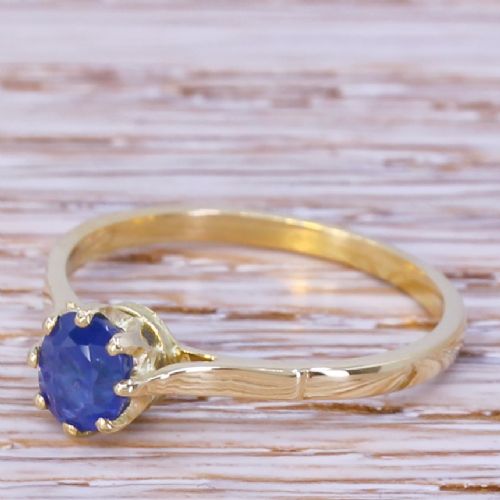
Burmese Sapphire Jewellery
Burmese sapphire jewellery brings together striking stones and fine precious metals, offering a tangible link to periods from the Victorian era to the mid-century.
Burmese Sapphire Jewellery
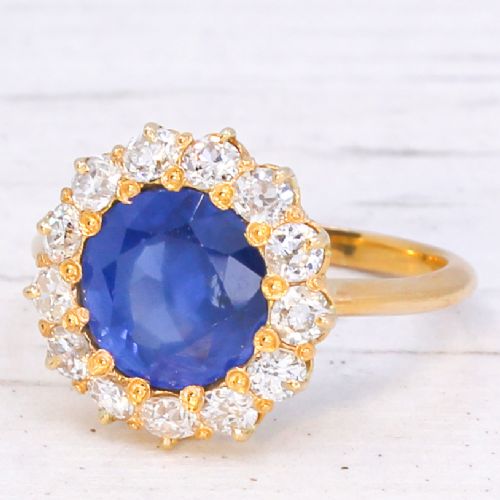
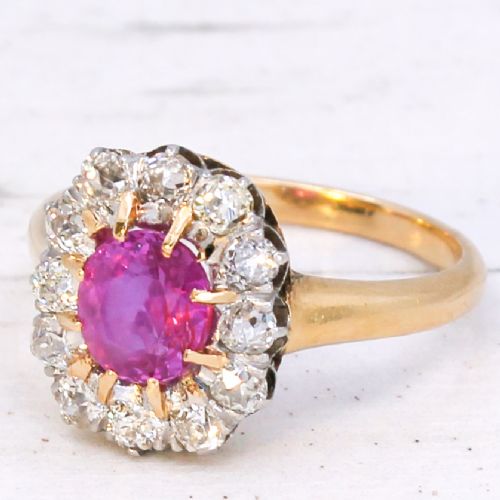
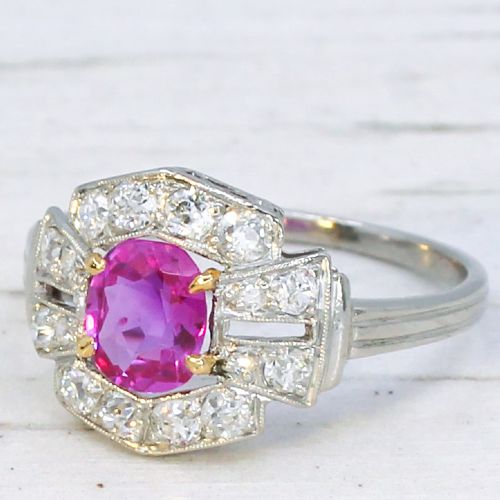
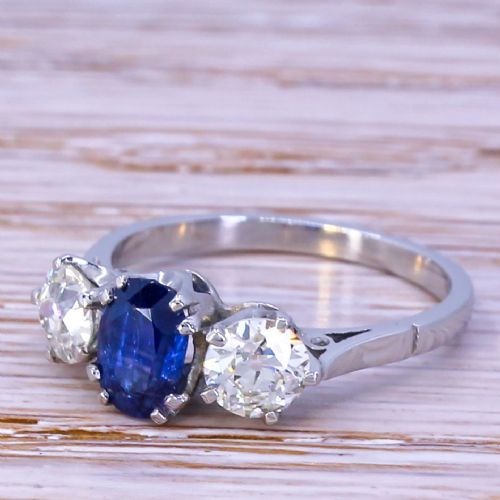
Burmese sapphire jewellery represents a focused selection of rings and bracelets set with prized gemstones originating from Myanmar. Buyers searching for burmese sapphire jewellery will find that rings dominate the selection, spanning styles such as Edwardian, Art Deco, Victorian, and mid-century.
The assortment on this page concentrates heavily on rings, featuring solitaire, cluster, and trilogy designs alongside a Portuguese bracelet incorporating multiple gemstones. These pieces draw interest for their central blue or pink sapphires paired with diamonds in platinum or gold settings.
How they were made
The construction of these pieces relies heavily on platinum and gold, including both yellow gold and higher carat variations, which provide durable housings for the gemstones. Jewellers utilised precious metals to securely mount sapphires alongside old-cut diamonds.
Techniques from the Victorian, Edwardian, and Art Deco periods dictate the mounting styles, ranging from delicate prong settings to geometric cluster and trilogy arrangements. Stones such as rubies and emeralds occasionally appear alongside sapphires and pearls in multi-gem bracelets.
One adventurous bracelet takes a tour through the rainbow by cramming sapphire, ruby, emerald and pearl into a single Portuguese piece.
What varies in quality
Quality differences reside in the carat weight of the central gemstones and the accompanying diamond work, alongside the precision of the period metalwork. Larger unheated Burmese sapphires and substantial diamond accents elevate a piece.
The integrity of the setting and the specific stylistic execution - whether a restrained Edwardian solitaire or a geometric Art Deco cluster - influence the overall character and visual impact of the jewellery.
The Burmese Sapphire Jewellery Glossary
- Solitaire
- A ring featuring a single prominent gemstone as the central focus. This setting highlights the colour and characteristics of the main stone without distraction.
- Trilogy
- A ring set with three stones, traditionally representing the past, present, and future. In these listings, they typically pair a central Burmese sapphire with flanking diamonds.
- Cluster
- A gemstone setting where a central stone is surrounded by a halo of smaller stones, often diamonds. This arrangement maximises the overall brilliance and visual presence on the hand.
- Old Cut
- A precursor to the modern brilliant cut diamond, characterised by a smaller table, higher crown, and open culet. These cuts possess a softer, candlelit sparkle typical of antique jewellery.
- Unheated
- A descriptor for natural gemstones that have undergone no thermal enhancement to improve colour or clarity. Unheated Burmese stones hold particular appeal for collectors.
Burmese Sapphire Jewellery: Frequently Asked Questions
What periods do these pieces span?
The inventory covers several distinct eras, including Victorian, Edwardian, Art Deco, and mid-century designs. Most pieces cluster around the early decades of the twentieth century.
Dates range from around 1900 through to 1960, reflecting changing aesthetic preferences in gemstone jewellery over a sixty-year span.
Are all sapphires here unheated?
Several listings specifically note unheated Burmese sapphires or natural Burmese sapphires. Certification or historical description usually clarifies the treatment status of the stone.
Buyers should examine individual titles for specific mentions of unheated stones versus natural classifications.
What metals are used in the settings?
Platinum is a frequent choice, particularly for Art Deco and Edwardian rings, providing strength for delicate work. Yellow gold also appears in various carats, such as fifteen-carat gold.
These precious metals work in tandem with the blue or pink sapphires and diamond accents.
Do these items include bracelets?
While rings form the vast majority of the selection, bracelets do occasionally feature. An antique Portuguese bracelet combining sapphires, rubies, emeralds, and pearls represents this alternative form.
Such pieces offer a broader display of multi-gem antique work alongside the predominant ring inventory.