



Brown Wooden Semainier
A brown wooden semainier is a tall, narrow chest built for daily organisation, offering exceptional storage for compact spaces with timeless style.
Brown Wooden Semainier
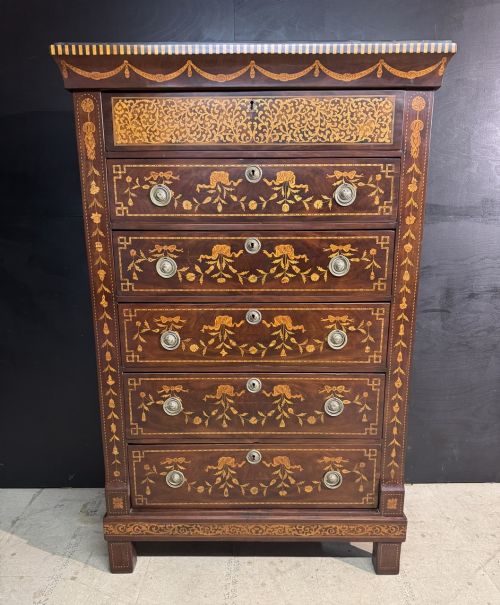
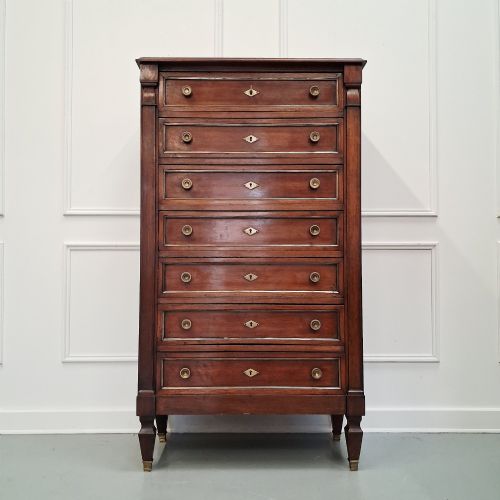
A brown wooden semainier is a tall, slender chest designed traditionally with seven drawers, one for each day of the week. When searching for a brown wooden semainier, buyers encounter tall case pieces originating from various periods including the nineteenth century and the Edwardian era.
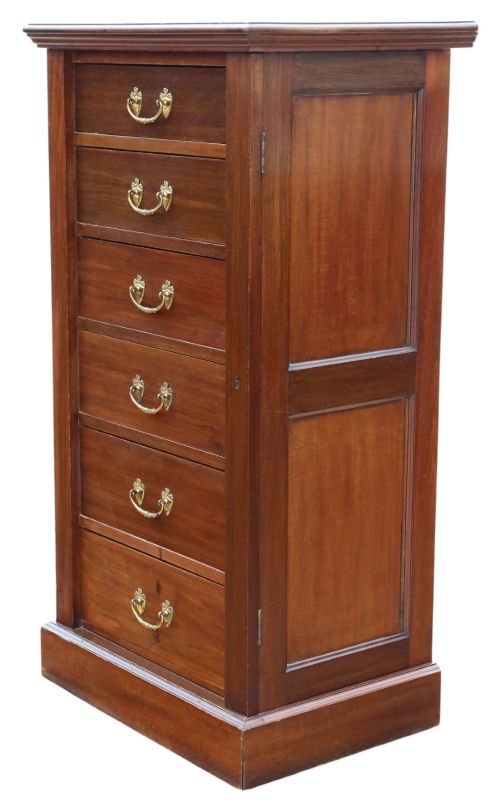
The pieces on this page span several styles such as Victorian, French classical, and Dutch neo-classical forms. Alongside French semainiers, the selection includes related tall forms like mahogany Wellington chests and narrow bedside cabinets.
Origins represented in these listings stretch across English, Irish, French, and Dutch workshops. The dominant formats rely on vertical proportion, making them practical storage units that maximise floor space.
Materials and construction
Cabinetmakers utilised dense timbers such as mahogany, walnut, rosewood, and cherrywood to build these tall carcasses. Grain selection dictated the exterior visual appeal, often enhanced through fruitwood inlay or marquetry.
Hardware components commonly involve brass for handles, escutcheons, and locking mechanisms. Specialised designs incorporate secret locking bars to secure the entire stack of drawers with a single turn of a key.
Brown Wooden Semainier Retail Price Guide 2026
Typical asking prices for brown wooden semainier among the pieces listed under this phrase on Sellingantiques today, from the lower quarter to the upper quarter. They describe what is for sale here now, not the wider market.
Listings feature mahogany, walnut, rosewood, cherrywood, and fruitwood inlay across nineteenth-century and earlier periods.
Assessing quality and craftsmanship
The standard of timber preparation and veneer matching separates standard utility pieces from finer creations. Superior examples exhibit continuous grain patterns and precise joinery across every drawer frame.
Hardware execution and the integration of locking mechanisms reveal the maker's hand. Robust timber thickness and stable carcase construction ensure the tall structure remains rigid over generations of use.
The Brown Wooden Semainier Glossary
- Semainier
- A tall, narrow chest of drawers traditionally numbering seven, designed originally to hold a week's supply of linen. This French form provides substantial vertical storage with a minimal footprint.
- Wellington chest
- A tall, narrow chest featuring a hinged locking flap on one side that secures all the drawers simultaneously. Named after the Duke, this British variant is typically constructed from mahogany.
- Marquetry
- The art of applying decorative pieces of veneer to a structure to form intricate pictorial patterns. Dutch makers frequently utilised this technique on eighteenth-century tall chests.
- Escutcheon
- A flat plate surrounding a keyhole, often made of brass to protect the surrounding wood from wear. It serves both a functional and decorative purpose on drawer fronts.
Brown Wooden Semainier: Frequently Asked Questions
What is a semainier used for?
A semainier provides tall, vertical storage designed originally to hold seven days of clothing or linen. Its narrow footprint makes it practical for bedrooms or dressing rooms lacking wide wall space.
Today, owners utilise the multiple drawers to organise accessories, paperwork, or personal items while adding a traditional decorative element to an interior.
How do I spot a Wellington chest?
A Wellington chest stands out through its tall, narrow proportions and a locking stile on the right side. Swinging this hinged wooden bar open allows the drawers to pull out.
Most examples found here appear in mahogany and date from the Victorian period, often featuring six or seven shallow drawers stacked vertically.
Are these chests French or English?
The pieces listed originate from various European traditions, encompassing both French semainiers and British Wellington chests. Regional preferences shaped the decorative details and hardware choices.
French versions often highlight cherrywood or lighter veneers, whereas English and Irish equivalents favour dark mahogany construction with brass fittings.
How do I care for antique wood?
Antique timber requires stable indoor humidity levels and protection from direct sunlight to prevent warping or fading. Regular dusting with a soft, dry cloth maintains the polished surface.
Applying a quality wax occasionally nourishes the grain of walnut, mahogany, or rosewood without building up heavy chemical residues.