
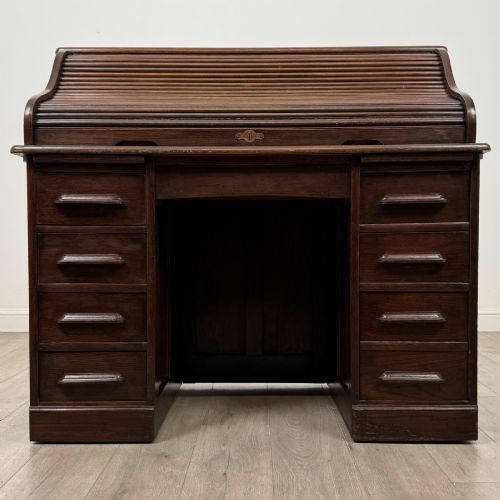
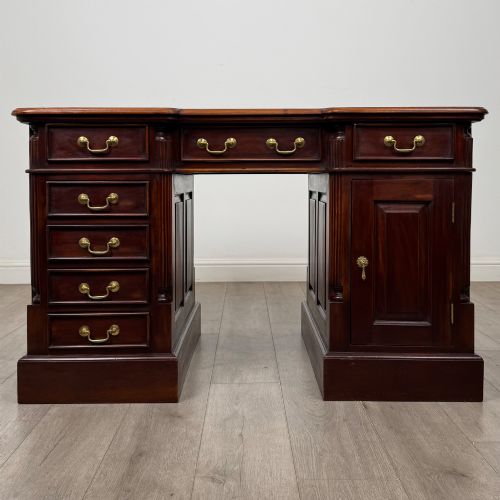
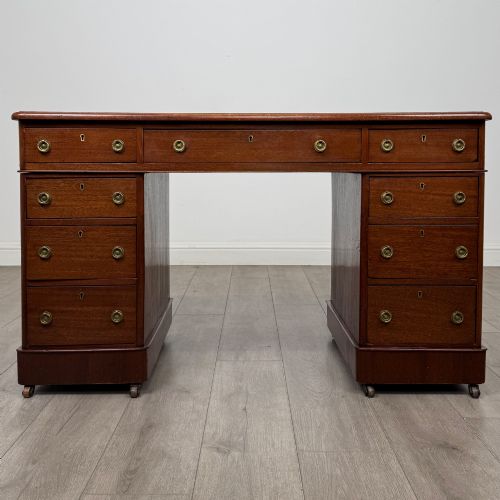
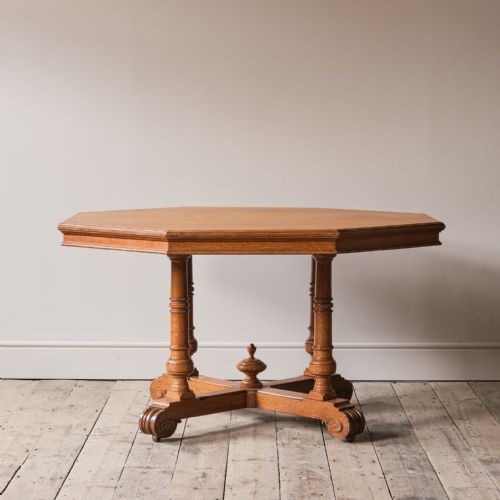
Brown Wooden Pedestal Desk
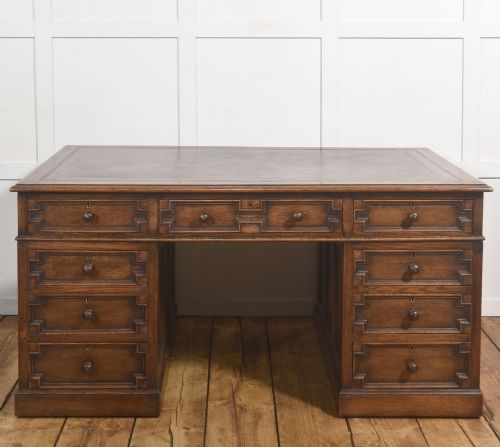
A brown wooden pedestal desk brings a commanding presence to a study, offering generous surface area and sturdy drawers on either side for daily writing.
Brown Wooden Pedestal Desk
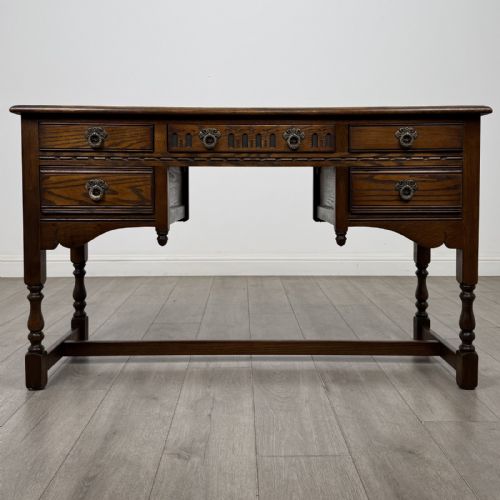
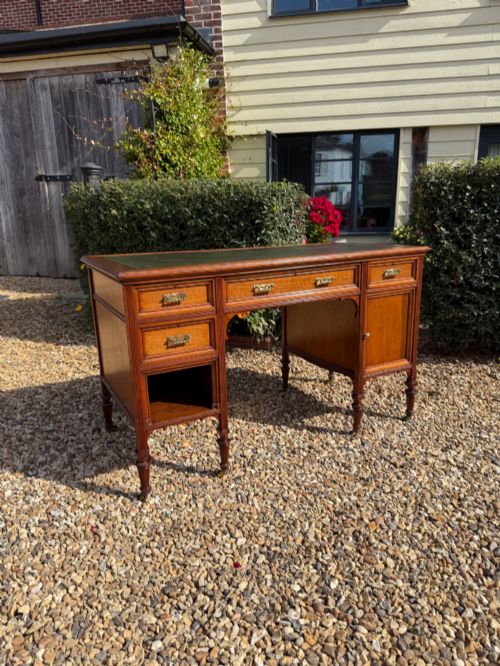
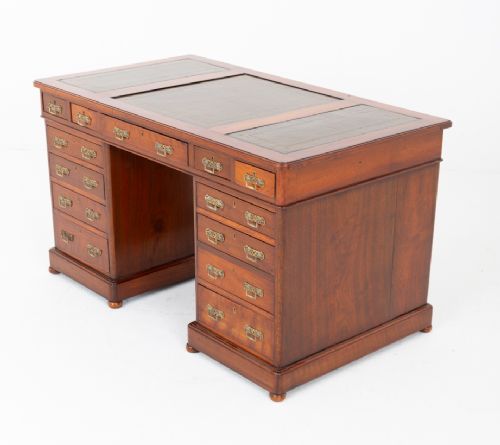
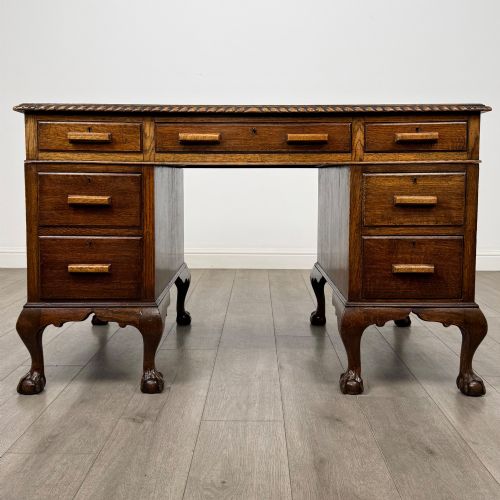
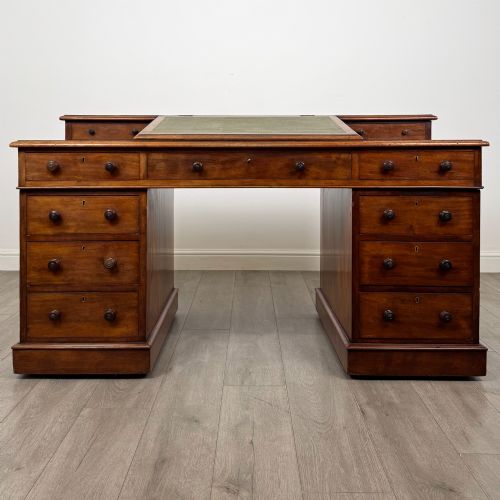
A brown wooden pedestal desk is a substantial workspace featuring twin banks of drawers supporting a central writing surface. Buyers seeking a brown wooden pedestal desk often encounter substantial mahogany, oak, and walnut examples originating from the nineteenth and early twentieth centuries.
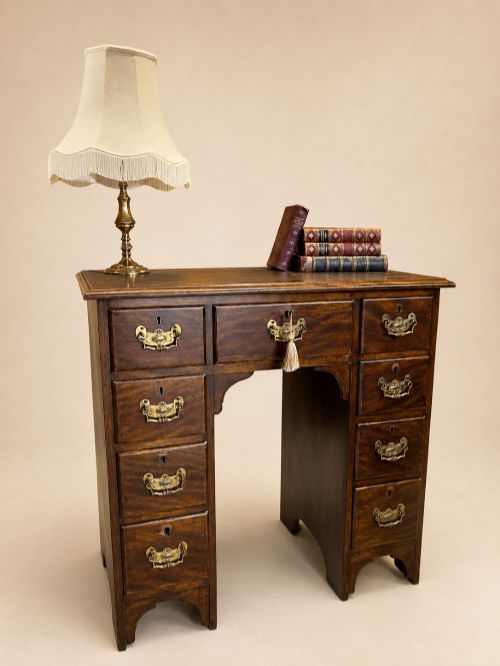
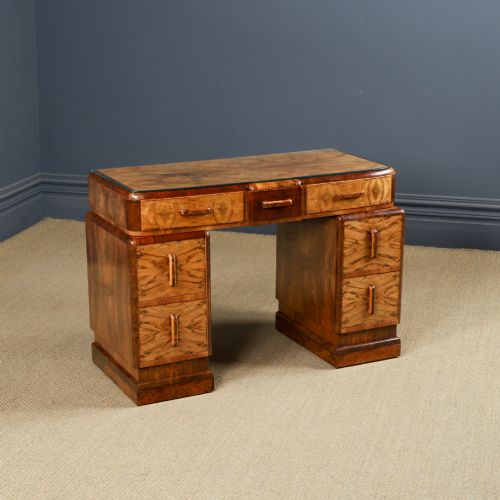
The format encompasses various iterations from standard Victorian double pedestal tables to Edwardian kneehole variations and later Art Deco interpretations. These pieces were designed to anchor a study or library, providing a fixed and authoritative station for correspondence and administration.
Surviving examples span periods from the mid-nineteenth century through the nineteen-thirties, reflecting shifting tastes in joinery while maintaining the core structural two-pedestal arrangement.
How they were made
Makers utilised dense timbers such as mahogany, oak, and walnut, often applying burr walnut veneers to drawer fronts for visual depth. Secondary woods provided structural stability to the internal framing and drawer boxes.
Writing surfaces were typically inset with leather panels, frequently tooled in gilt, providing a smooth writing texture atop the wooden carcass. Brass hardware, including drop handles and escutcheons, secured the drawers and added functional metallic accents.
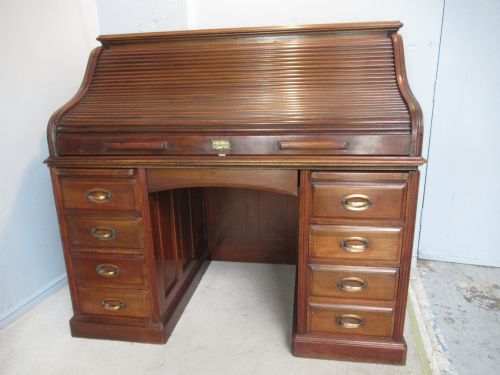
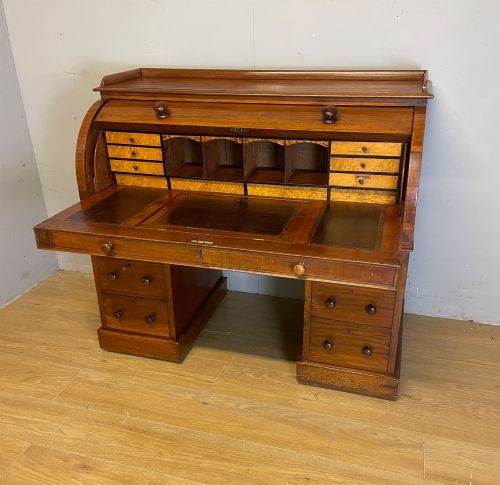
Carved pillars, claw and ball feet, and tambour fronts demonstrated the cabinetmaker's repertoire of decorative techniques applied to the pedestals and superstructure.
Secret compartments occasionally hide within the pedestals, rewarding those who thoroughly inspect the inner drawer runs.
What varies in quality
The selection of timber grain sets high-grade examples apart, particularly the symmetry and figuring found in burr walnut veneers and matched mahogany boards. Superior pieces exhibit meticulous attention to the internal drawer linings and dovetail joinery.
Carved ornamentation reveals the hand of a skilled artisan rather than routine workshop production, visible in the depth and crispness of pillars and feet. The integrity of the original leather writing surface and matching brass hardware also distinguishes exceptional specimens from standard utility desks.
Howard and Sons·Hobbs and Co.·Heal's·Maple and Co
The Brown Wooden Pedestal Desk Glossary
- Pedestal desk
- A freestanding office or library table supported by two separate columns or banks of drawers.
- Partners desk
- A double-sided workstation designed for two people to sit opposite one another, incorporating drawers or cupboards on both faces.
- Tambour front
- A flexible sliding shutter formed of narrow vertical wooden slats glued to a canvas backing, commonly found on roll top desks.
- Kneehole desk
- A compact pedestal variation featuring a recessed central space for the legs, often incorporating a single small drawer above the opening.
- Escutcheon
- A protective brass plate surrounding a keyhole, designed to prevent the surrounding wood from splintering.
Brown Wooden Pedestal Desk: Frequently Asked Questions
How do I care for the leather top?
Keep the leather surface clean with a dry cloth and occasionally nourish it with appropriate balms to prevent drying.
Avoid placing damp items directly onto the leather to protect the underlying wooden structure.
Can these desks be dismantled for moving?
Many pedestal desks separate into three main components consisting of the two drawer pedestals and the top.
Lifting the top off reveals screws or fixings that secure the assembly together for transport.
What is a partners desk?
A partners desk is built to allow two people to work opposite each other simultaneously.
These pieces feature drawers and cupboards accessible from both the front and the back.
How do I distinguish Victorian from Edwardian desks?
Victorian desks generally display heavier timber dimensions, denser mahogany, and deeper red or brown tones.
Edwardian examples often incorporate lighter oak frames, simpler lines, or revival motifs such as claw and ball feet.