

Brown Wooden Executive Desk
A brown wooden executive desk grounds a study with solid timber and fitted leather, offering a formal workspace shaped by Victorian and Art Deco hands.
Brown Wooden Executive Desk
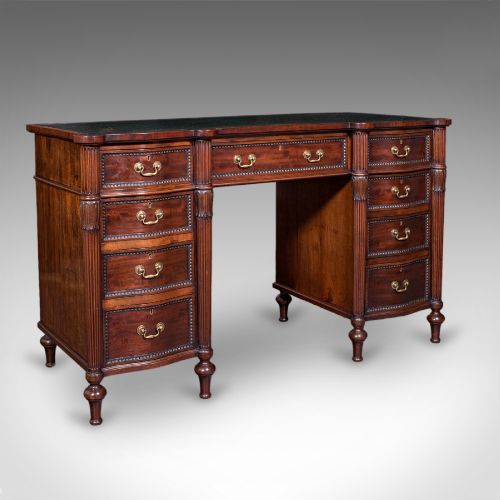
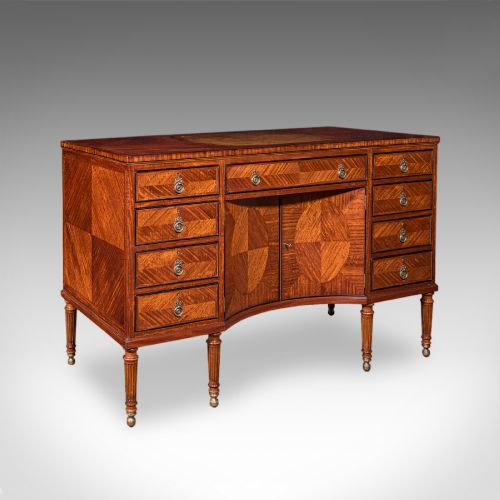
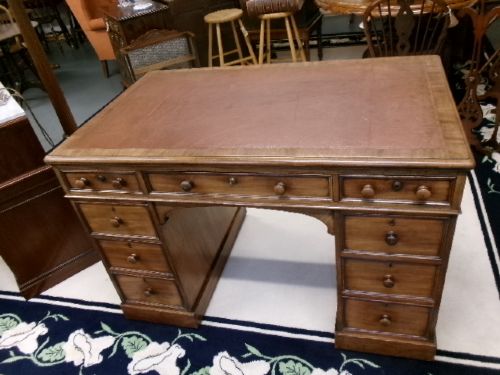
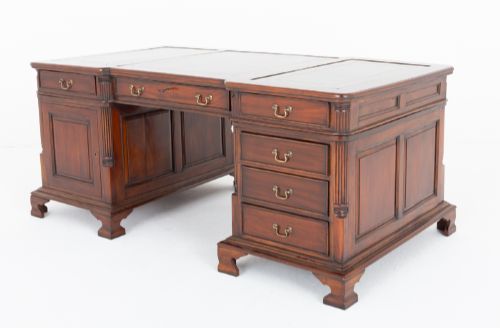
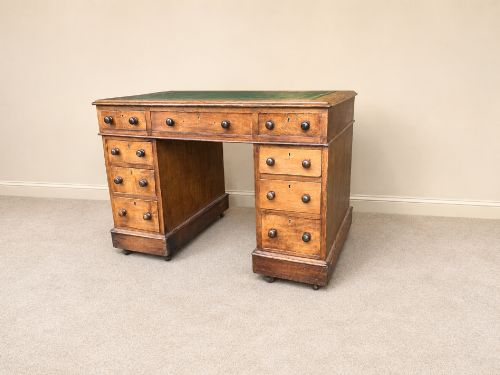
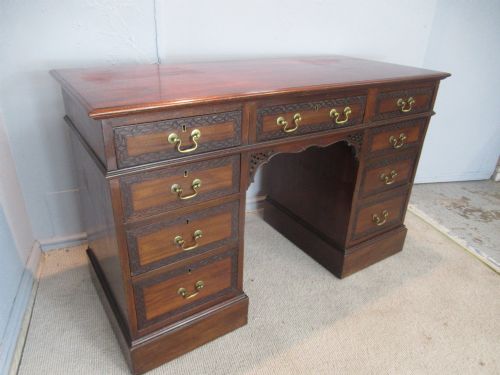
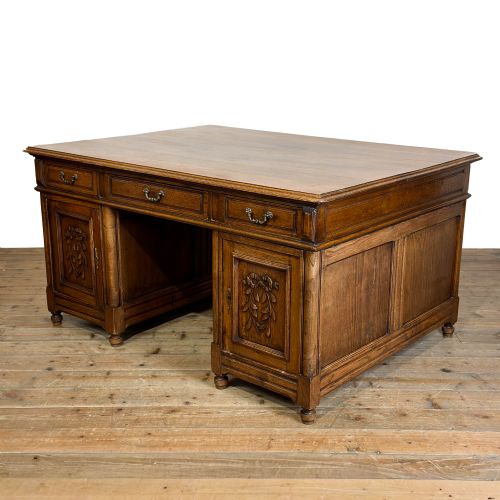
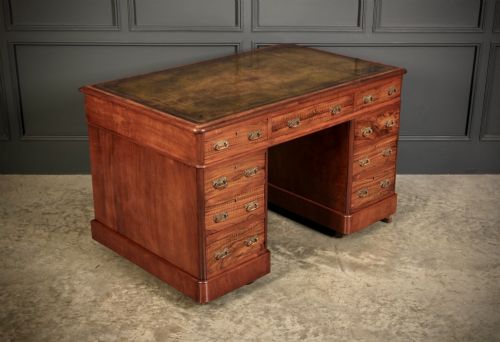
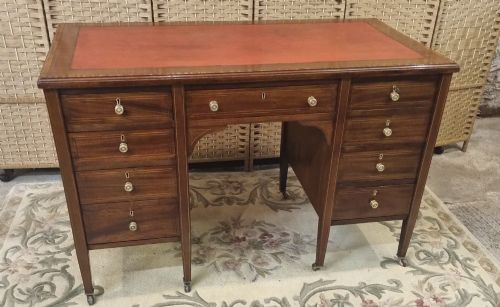
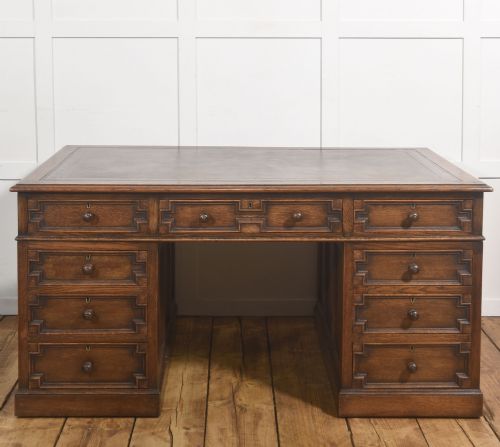
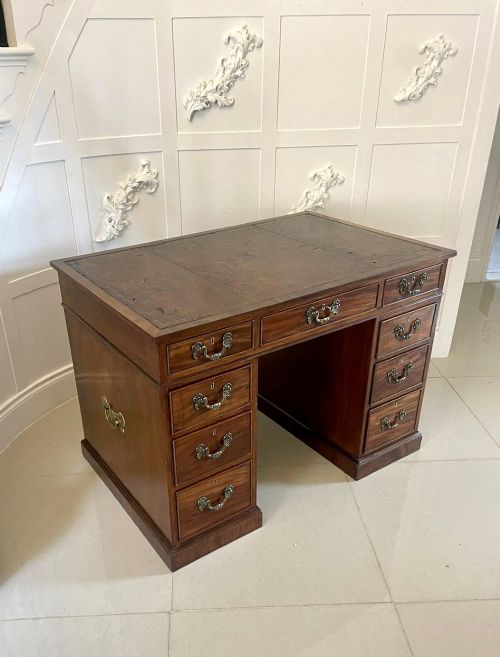
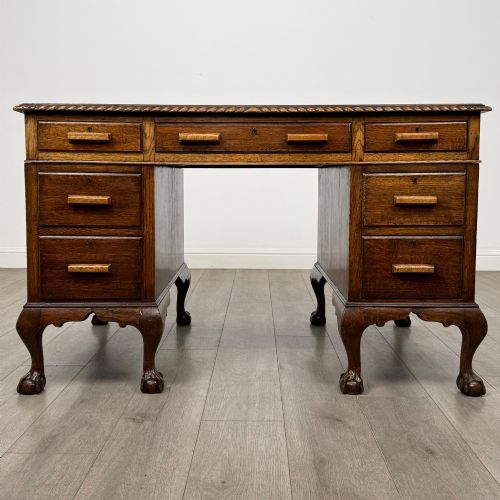
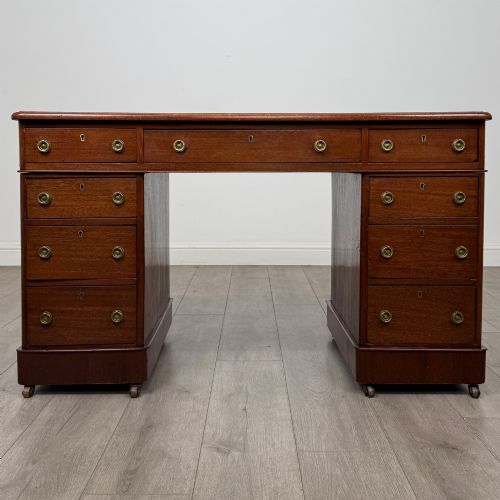
A brown wooden executive desk is a substantial writing or office station designed for heavy daily use, appearing primarily in pedestal and partners formats. Buyers seeking this phrase encounter large mahogany, walnut, and oak constructions dating from the nineteenth and early twentieth centuries.
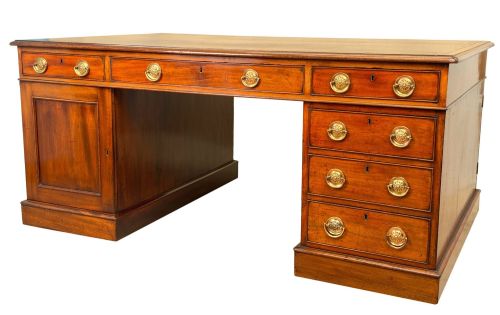
The pedestal desk forms the backbone of these listings, featuring banks of drawers flanking a central kneehole. Partners desks provide double-sided drawer configurations, while Dickens desks incorporate tiered compartments and galleries above the main writing surface.
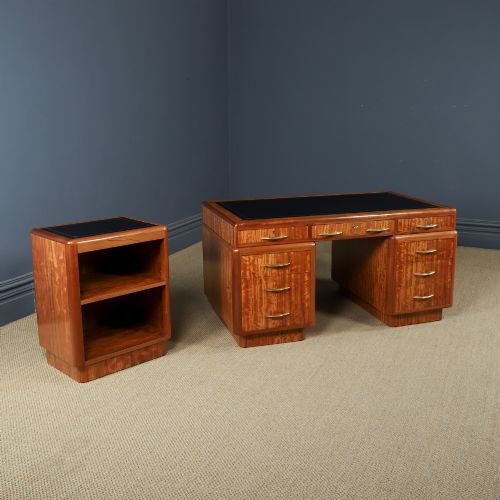
Originating largely from British workshops of the Victorian and Edwardian eras, these pieces also extend into Art Deco designs from the nineteen thirties. Materials range from solid mahogany and oak to burr walnut and burr elm veneers.
Factors that distinguish quality
The refinement of cabinetmaking separates standard office furniture from high-end workshop commissions. Superior examples display carefully matched timber veneers, hand-cut dovetail joints, and intricate carvings on pillars and plinths.
Hardware integration and secondary timbers influence the overall standard of a desk. High-grade pieces incorporate robust brass locks, well-figured secondary woods inside drawers, and heavy leather writing surfaces tooled with gold leaf.
Brown Wooden Executive Desk Retail Price Guide 2026
Typical asking prices for brown wooden executive desk among the pieces listed under this phrase on Sellingantiques today, from the lower quarter to the upper quarter. They describe what is for sale here now, not the wider market.
Some nineteenth-century pedestals include concealed secret compartments behind the lower drawers for storing private ledgers.
Howard and Sons·Hobbs and Co.·Heal's·Étienne Kohlmann·Maurice Adams·Maple and Co.
The Brown Wooden Executive Desk Glossary
- Pedestal desk
- A heavy office desk comprising two independent pedestals of drawers supporting a single top board. This format creates a central kneehole for seating.
- Partners desk
- A large double-sided desk built with drawers and cupboards accessible from both front and back. It allowed two people to work opposite one another.
- Kneehole desk
- A smaller configuration featuring a recessed central space for the legs beneath a single bank of drawers or flanking pedestals.
- Dickens desk
- A specialised writing desk featuring a tiered superstructure of small drawers and pigeonholes above a sloping or flat writing surface.
- Burr walnut
- Timber taken from the wart-like growths on walnut trees, yielding highly figured patterns used for decorative veneer panels.
- Escutcheon
- A protective metal plate surrounding a keyhole, frequently cast in brass on nineteenth-century desk drawers.
Brown Wooden Executive Desk: Frequently Asked Questions
What is a partners desk?
A partners desk is a double-sided office table designed with matching drawers and cupboards on both faces. This configuration permitted two individuals to sit opposite each other while working.
Such pieces usually required substantial floor space and were built from dense hardwoods like mahogany or oak to withstand heavy administrative use.
How do I identify a Victorian desk?
Victorian desks are typically constructed from solid mahogany or walnut, featuring hand-dovetailed drawer boxes and inset leather writing surfaces. They often display classical revival details or robust pedestal proportions.
Examining the secondary timbers inside the drawers and the style of the brass hardware helps confirm the nineteenth-century origin.
What is a Dickens desk?
A Dickens desk is a variation of the pedestal desk that includes a raised compartment of small drawers and pigeonholes along the rear. This superstructure provided organised storage for correspondence and ledgers.
They appear in Victorian and Edwardian walnut or mahogany versions, frequently accompanied by a galleried top.
How should I care for the leather top?
The leather writing surface benefits from gentle dusting and occasional treatment with appropriate leather balms to prevent cracking. Avoiding excessive moisture and direct sunlight preserves the tone and suppleness of the hide.
Most historic desks retain either original or replaced leather that integrates with the surrounding wooden frame.