



Brown Wooden Dumb Waiter
A brown wooden dumb waiter is a tiered servant for the dining room that keeps food and drink close at hand without crowding the table.
Brown Wooden Dumb Waiter
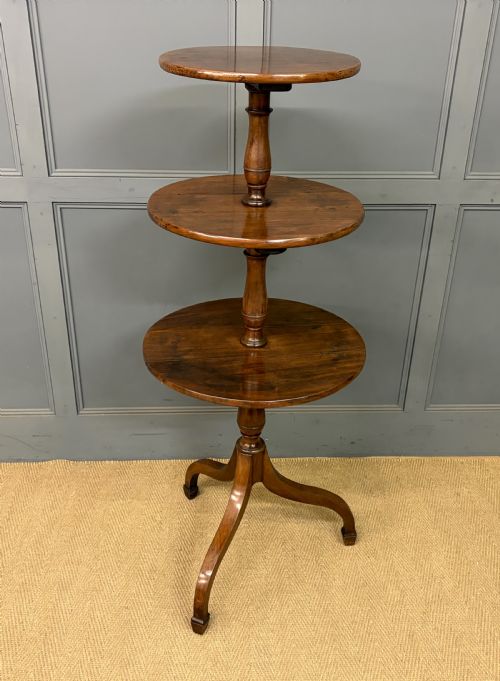
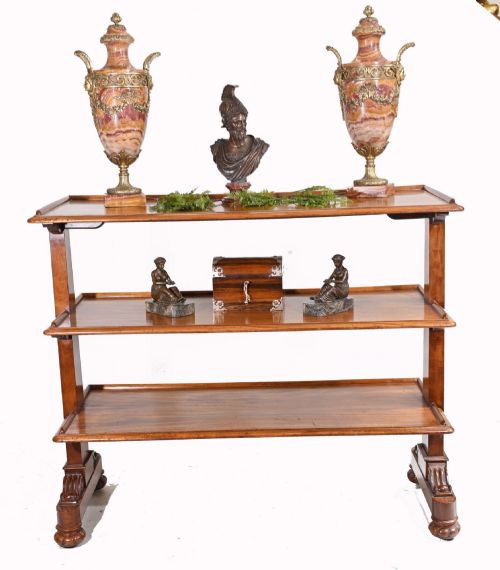
A brown wooden dumb waiter serves as a multi-level stand designed for dining rooms, libraries, and drawing rooms across several centuries of British interior design. When searching for this form, a buyer encounters pieces ranging from compact two-tier tables to tall revolving stands and substantial sideboards.
The examples on this page span the Georgian, Regency, Victorian, and Edwardian periods, utilising timbers such as mahogany, oak, teak, and rosewood. These pieces served practical roles in holding dishes, bottles, and books before sliding into decorative service as plant stands or occasional furniture.
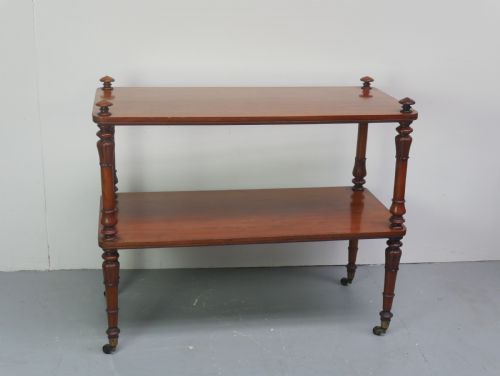
Most pieces seen here adopt classic tiered or folding formats, often featuring turned columns or brass castors. The form adapts easily to modern rooms as a corner display or bedside surface.
Materials and construction
Cabinet makers relied primarily on dense hardwoods like mahogany and oak, chosen for structural strength and stability over repeated use. These timbers were frequently turned on a lathe to create central pedestals or upright columns supporting multiple circular shelves.
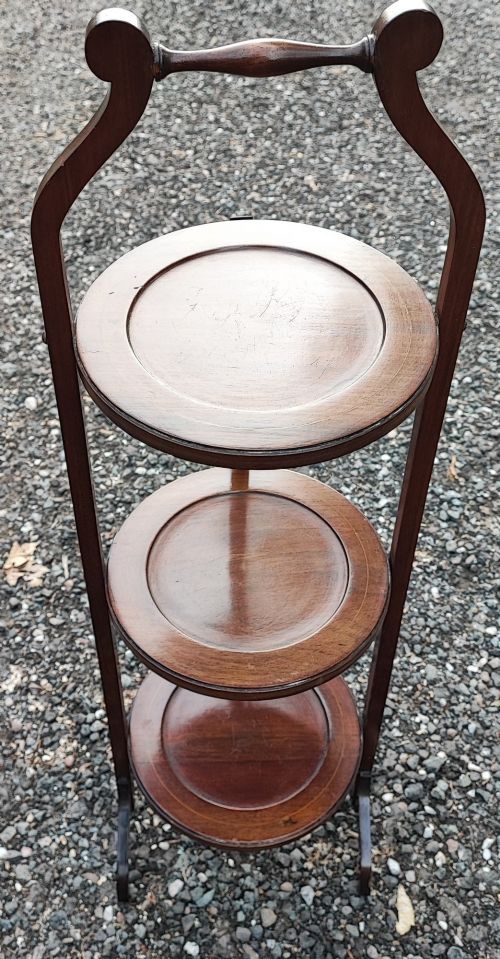
Inlaid sections incorporate boxwood and satinwood banding to provide subtle contrast against darker mahogany or rosewood surfaces. Joinery techniques included sturdy dowels, tenons, and hinged folding mechanisms designed to support weight on each tier.
Brown Wooden Dumb Waiter Retail Price Guide 2026
Typical asking prices for brown wooden dumb waiter among the pieces listed under this phrase on Sellingantiques today, from the lower quarter to the upper quarter. They describe what is for sale here now, not the wider market.
Some Victorian dumb waiters doubled as book shelves and food trolleys, proving that nineteenth-century dining rooms appreciated multi-tasking furniture just as much as modern kitchens do.
Assessing quality
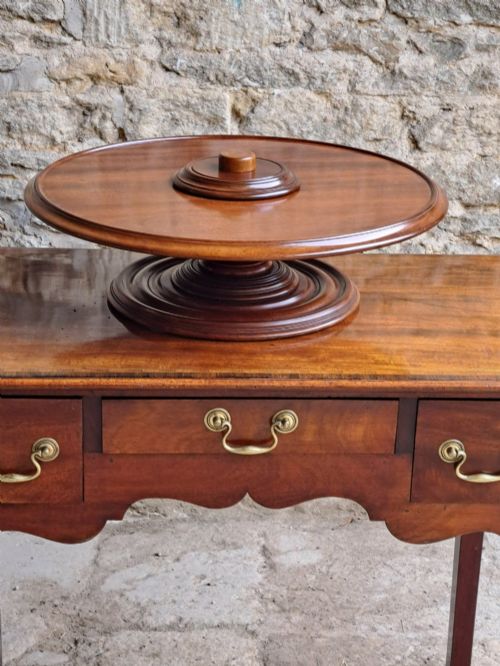
Quality rests upon the selection of timber grain and the precision of the turning on central columns and tier edges. Fine pieces display balanced proportions across every tier, with heavy brass castors and smooth movement on any revolving or folding mechanism.
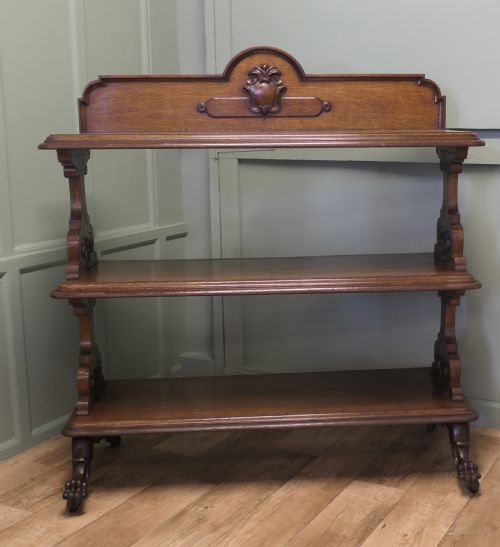
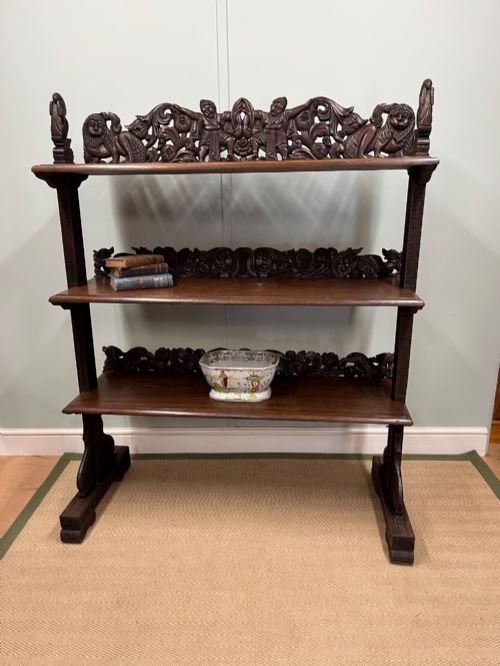
Workshop skill shows in the crispness of carved oak foliage, the tight fit of boxwood stringing, and the stability of upright supports under weight. Lesser examples rely on plain pine secondary woods or simpler bracket joints with minimal hand-finishing.
The Brown Wooden Dumb Waiter Glossary
- Tier
- A single horizontal shelf or tray mounted upon a central column in a multi-level stand. Multiple tiers allowed servants to organise different courses or plates.
- Whatnot
- A piece of open shelving designed to hold books, ornaments, or small items in a drawing room. This term often overlaps with dumb waiters in nineteenth-century listings.
- Inlay
- A decorative technique where thin pieces of contrasting timber, such as boxwood or satinwood, are set flush into the primary wood surface.
- Castor
- A small wheel mounted on the base of a leg or pedestal to allow the piece to roll across floorboards. Brass fittings indicate better quality.
- Buffet
- A low sideboard or serving table used for holding food and drink during meals. These often feature cupboards or multiple serving surfaces.
Brown Wooden Dumb Waiter: Frequently Asked Questions
What is a dumb waiter used for?
A dumb waiter was designed to hold food, wine bottles, and tableware beside a dining table without requiring servant attendance.
Today, these tiered stands function well as corner display surfaces, plant holders, or bedside tables in domestic settings.
How do I tell an 18th-century dumb waiter from a Victorian one?
Eighteenth-century examples often feature tripod legs with snake feet and heavy mahogany tops designed for revolving service during formal dinners.
Victorian and Edwardian pieces tend to introduce multiple tiers, turned columns in golden mahogany or oak, and occasional brass castor wheels.
Are all dumb waiters made of mahogany?
While mahogany is the dominant timber seen across these listings, makers also utilised oak, teak, rosewood, and walnut depending on the period.
Lighter woods like satinwood and boxwood appear as decorative stringing and inlay on Edwardian cake stands and tables.
Can dumb waiters fold away?
Certain Georgian and Regency models incorporate folding trays or drop-leaf mechanisms designed to save space when not in use.
Most multi-tier Victorian stands remain fixed in position, relying on their narrow footprint to fit neatly beside furniture.