
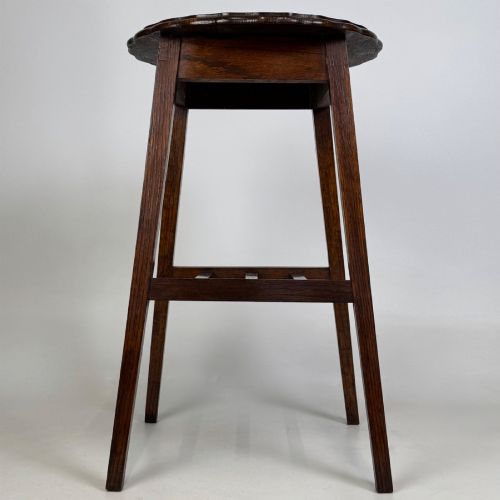
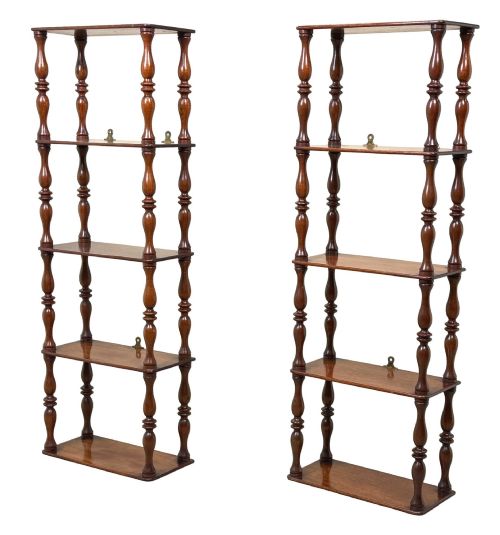
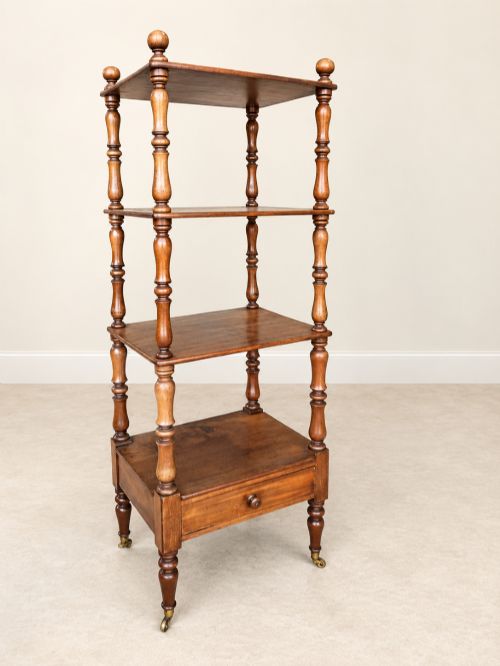
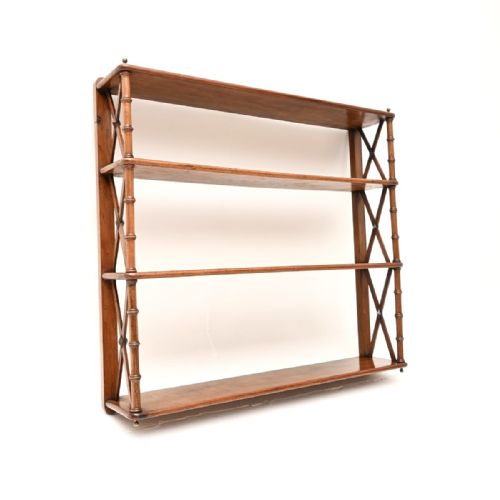


Brown Wooden Display Shelves
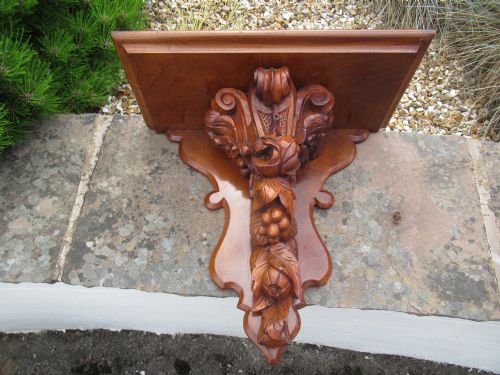
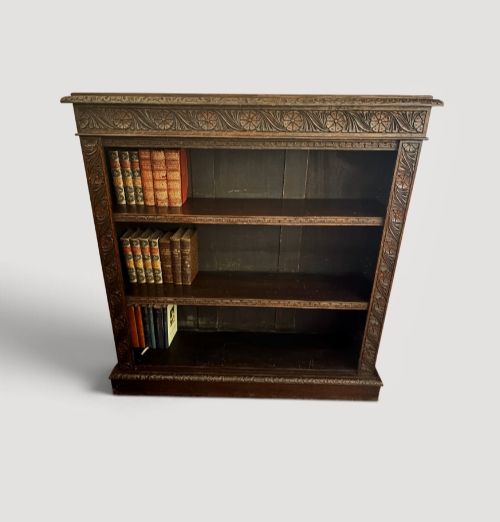
Brown wooden display shelves bring warmth and practical organisation to a room, appearing in forms from open bookcases to wall-mounted brackets.
Brown Wooden Display Shelves
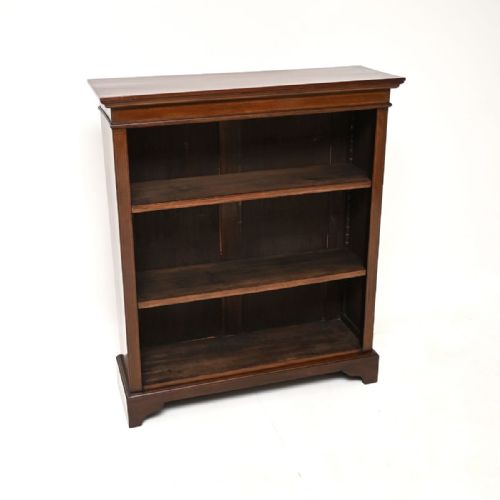
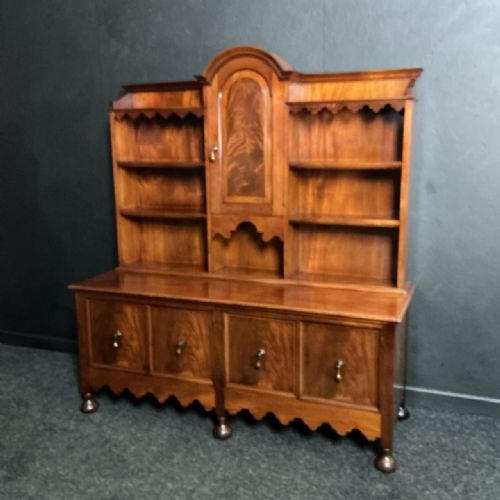
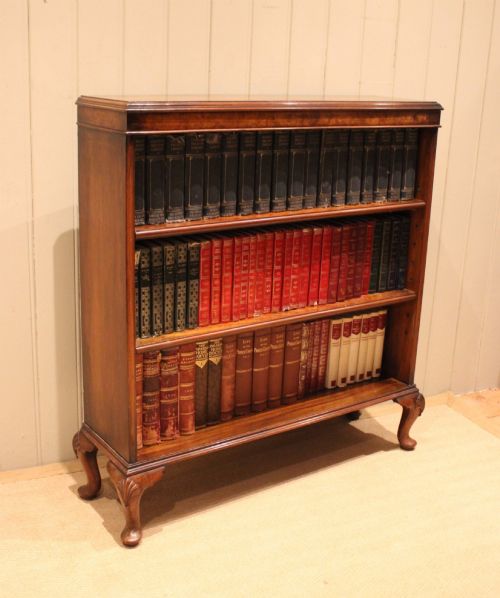
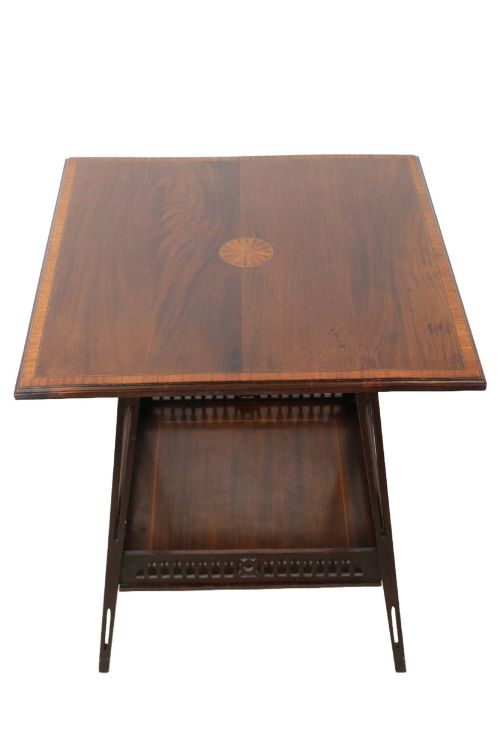
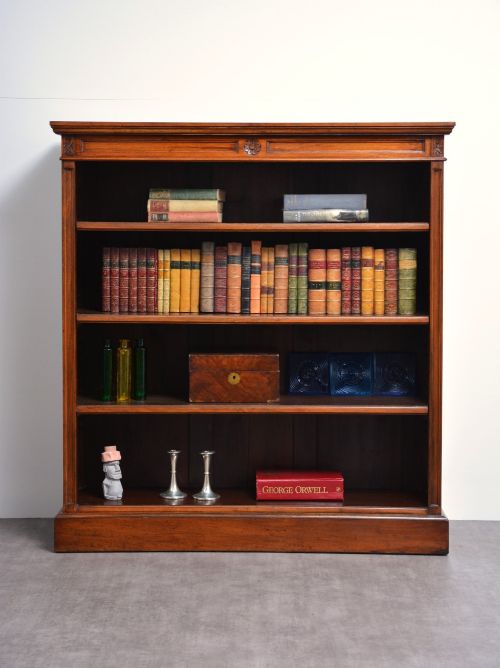
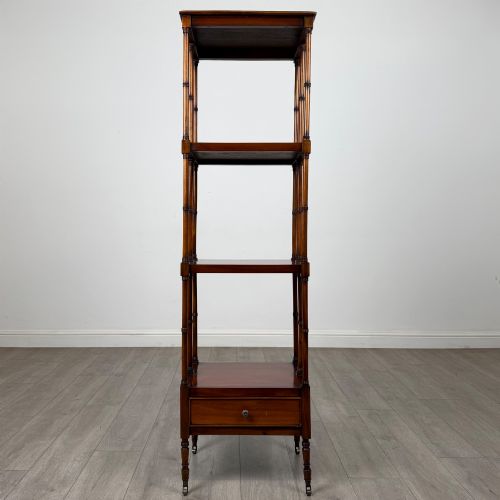
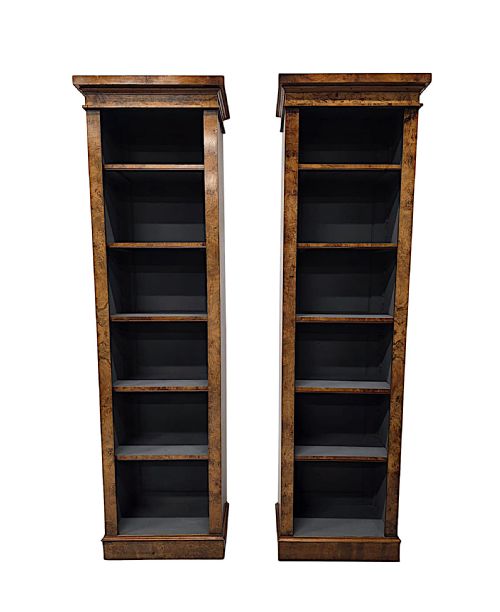
When buyers search for brown wooden display shelves, they encounter a variety of storage forms spanning multiple centuries and regional workshops. Open bookcases and wall shelves dominate the selection, often featuring adjustable shelving or tiered tiers for books and ceramics.
The pieces originating from the Georgian, Victorian, and Edwardian periods showcase traditional cabinet-making methods applied to domestic storage. Most items on this page lean towards practical utility, combining surface tops with open compartments for daily use.
How they were made
Cabinet-makers relied on solid timbers like oak, walnut, and mahogany, frequently applying figured veneers such as burr walnut to prominent surfaces. Brass hardware, including castors and hanging brackets, provided functional reinforcement and subtle contrast against the dark woods.
Joinery techniques ranged from simple pegged joints in earlier oak pieces to fine inlay work and delicate carvings in later Edwardian and Victorian examples. Glass panels and mirrored backs occasionally appeared in cabinets, while simpler wall brackets relied on carved wood supports.
Listings feature woods like oak, walnut, and mahogany across Edwardian, Victorian, and Georgian eras.
What varies in quality
Quality rests primarily in the selection of timber and the precision of the cabinet work rather than surface decoration alone. Pieces utilising richly figured burr walnut or substantial quarter-sawn oak generally sit at a higher tier than plain secondary woods.
The integrity of the structural joinery dictates durability, particularly in items with adjustable shelves or hanging mechanisms. Refined details like hand-cut inlay, well-fitted backboards, and original brass castors elevate the standing of a piece.
Trevor Page And Co·Heals
The Brown Wooden Display Shelves Glossary
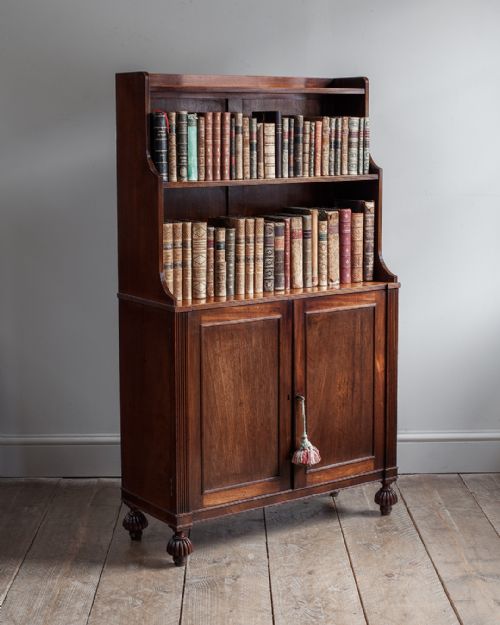
- Waterfall bookcase
- A tiered set of open shelves where each level steps back progressively from the one below. This design became popular during the Regency and Victorian periods for holding small books or ornaments.
- Delft rack
- A set of wall-mounted wooden shelves specifically designed to display plates and ceramic platters. These typically feature shallow grooves or plate rails to keep dishes upright.
- Burr walnut
- A prized timber veneer taken from the knotted growth of a walnut tree. It produces intricate, swirling grain patterns that cabinet-makers used on prominent doors and drawer fronts.
- Inlay
- A decorative technique where contrasting pieces of wood or shell are fitted into depressions within the solid surface. Edwardian makers utilised this method for delicate floral or geometric borders.
Brown Wooden Display Shelves: Frequently Asked Questions
How do I secure wall shelves safely?
Wall-mounted brackets and hanging shelves require sturdy fixings into solid masonry or direct wall studs to support the weight of the timber and displayed items. Heavier oak and walnut pieces demand appropriate wall anchors to prevent displacement under load.
Ensuring the horizontal boards remain level during installation protects the structural integrity of the piece over time. Professional fitting is often advisable for antique wall furniture to distribute weight evenly.
How do I adjust wooden shelving?
Many bookcases feature traditional wooden support strips or metal pins that allow shelves to be repositioned at different heights. Carefully lifting the board clears the support pegs so they can be relocated into alternative slots.
Older mechanisms may require gentle handling to avoid damaging the surrounding timber grooves. Regular alignment checks ensure the shelves sit securely without wobbling.
Can these shelves hold heavy books?
Solid mahogany, oak, and walnut construction provides robust support for standard volumes and display objects. Thicker shelves resist sagging better than thin variations over long periods of use.
Distributing heavier items towards the lower sections helps maintain stability in tall bookcases. Checking the thickness of the timber helps determine the appropriate weight limit for each tier.
How do I clean wooden display furniture?
Dusting with a dry, soft cloth maintains the natural lustre of mahogany, oak, and walnut surfaces without harming the finish. Avoiding silicone-based polishes preserves the original patina built up over decades.
Periodic application of appropriate wax feeds the timber and protects against dryness. Direct sunlight should be avoided to prevent the rich brown tones from fading.