
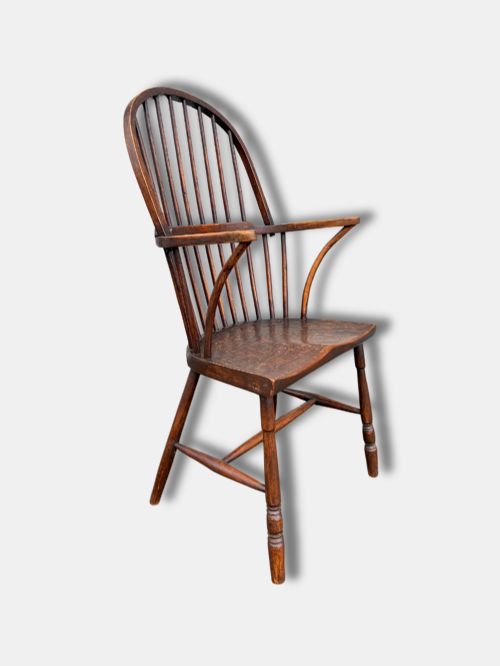
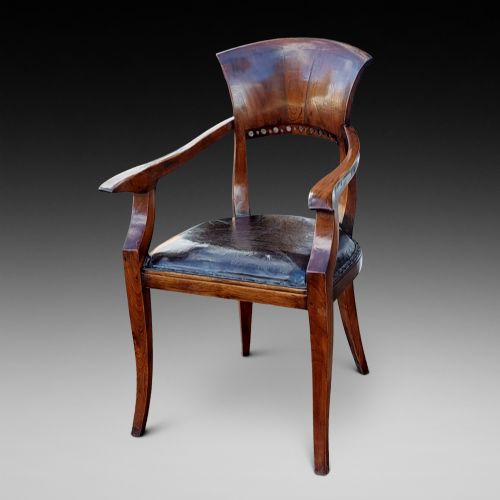
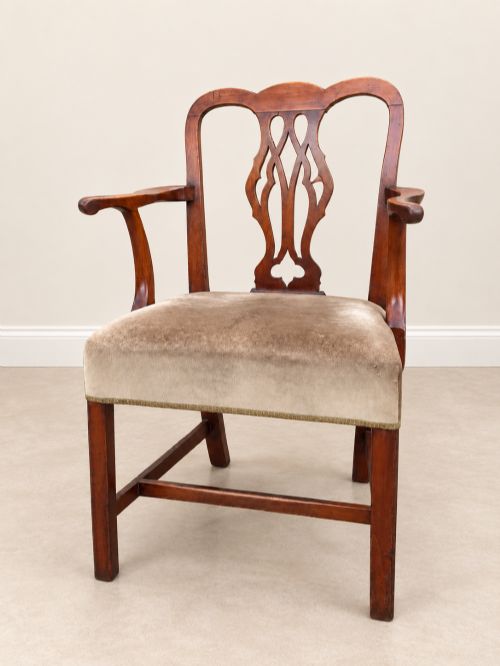
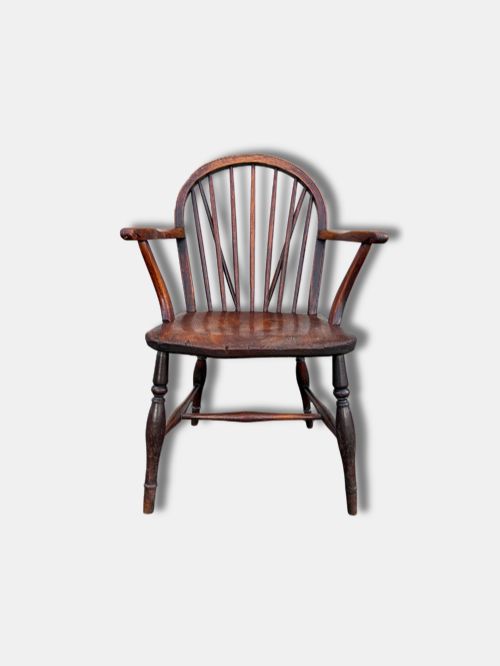
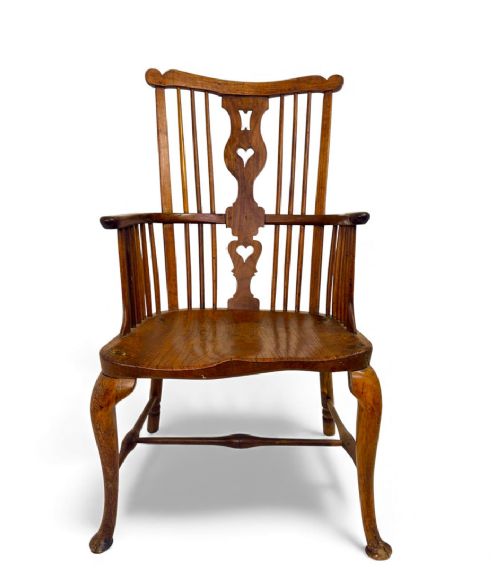
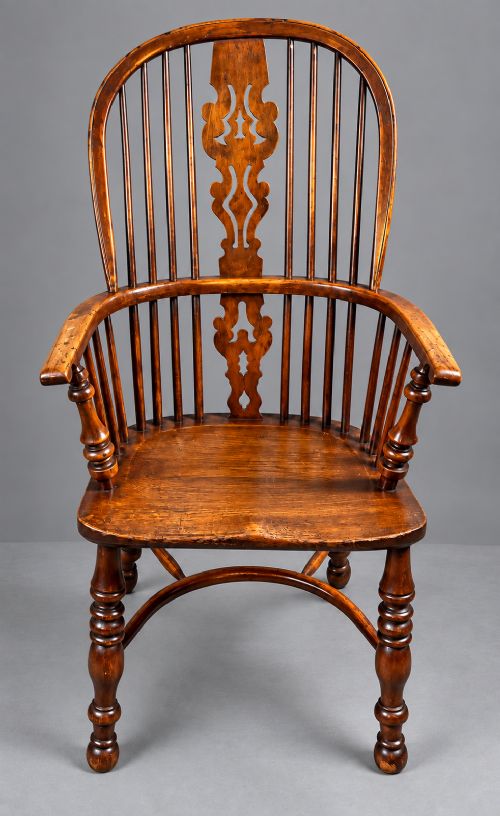
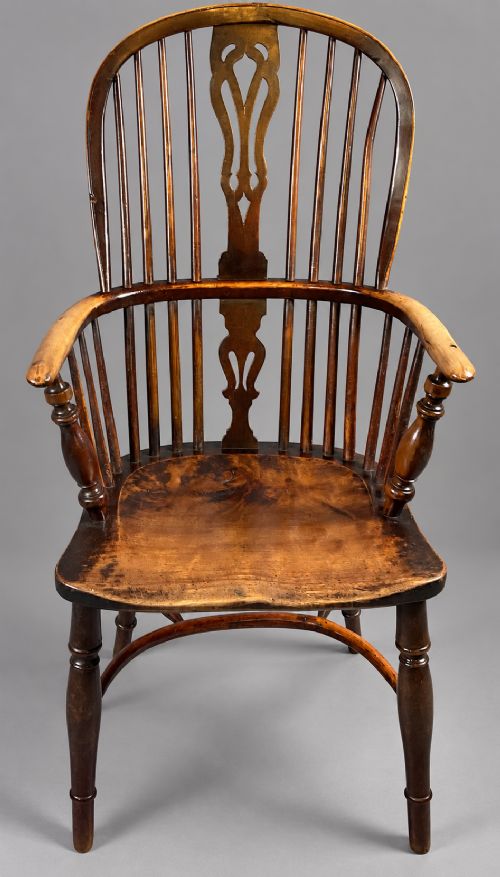
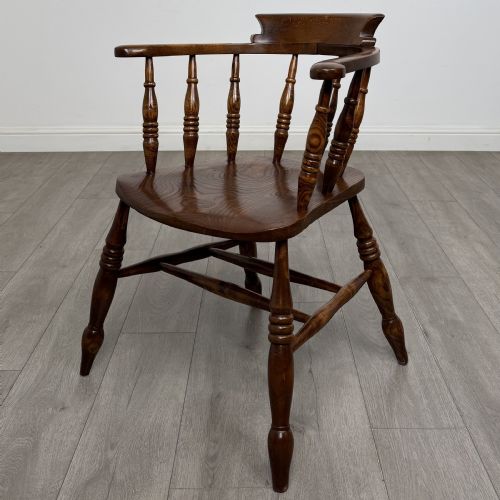
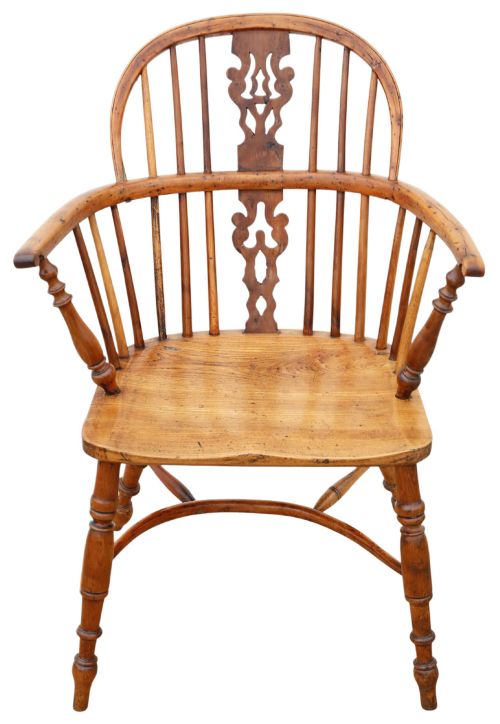
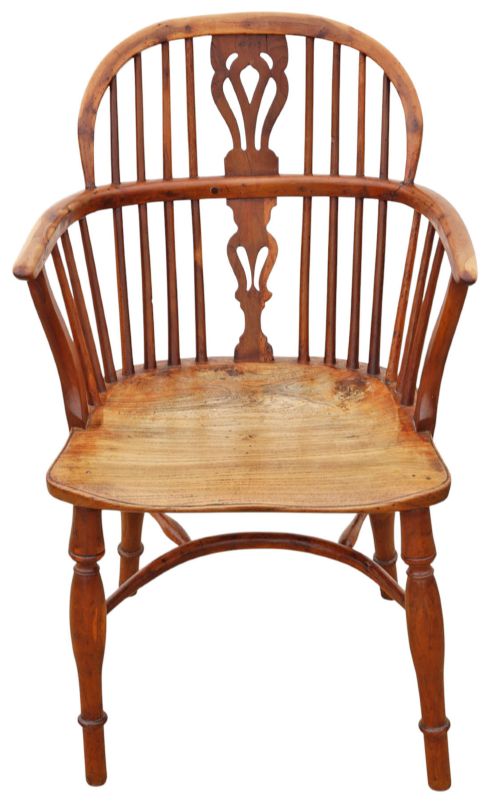

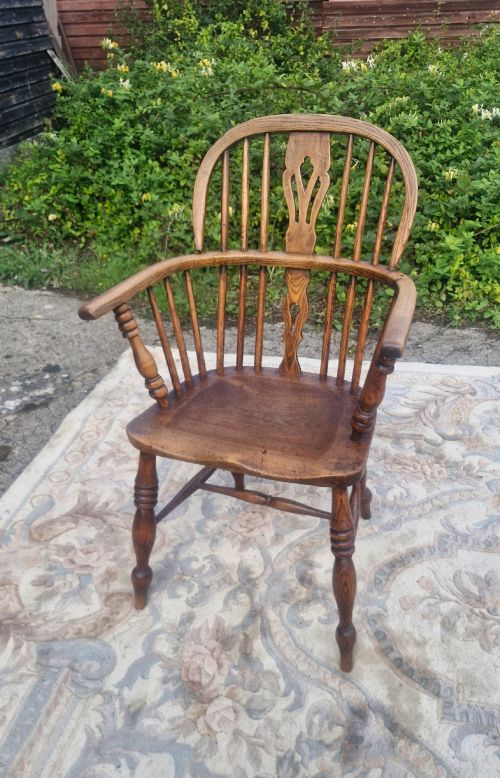
Brown Wooden Country Armchair
A brown wooden country armchair brings vernacular craft and honest timber into daily use.
Brown Wooden Country Armchair
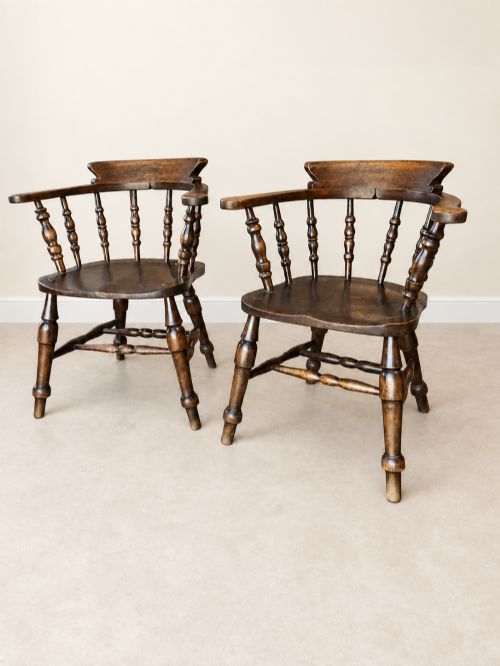
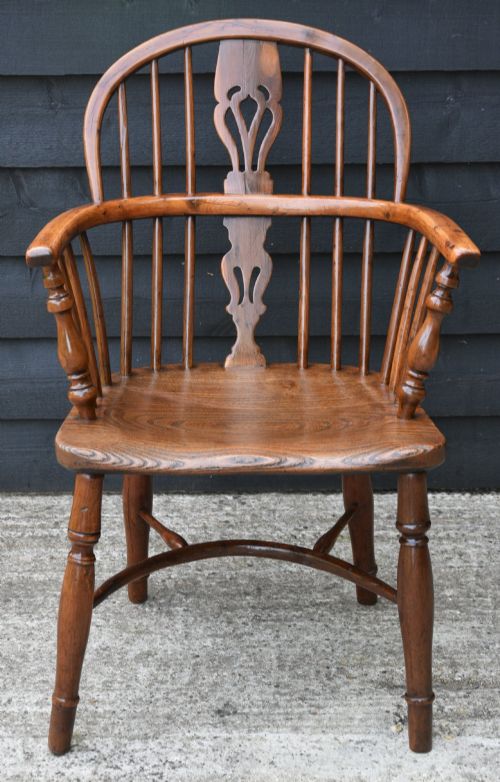
A brown wooden country armchair is a vernacular seat rooted in provincial workshops, built for utility and comfort rather than formal court display. These pieces appear frequently as Windsor chairs, stickbacks, and smokers' bows, drawing on English country traditions spanning the eighteenth and nineteenth centuries.
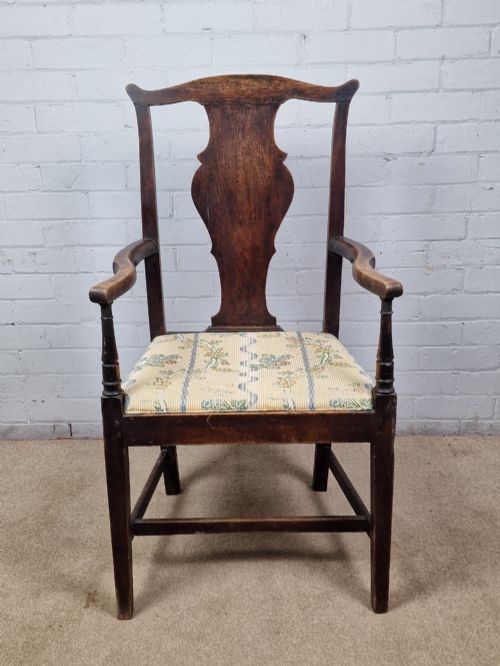
Most examples encountered here are constructed from native hardwoods such as elm, ash, and yew, often combining multiple timbers within a single frame for structural strength. Forms range from low and high back Windsor chairs to captains' chairs and ladderback armchairs, originating from periods including the Georgian and Victorian eras.
Buyers often select a brown wooden country armchair to anchor a domestic interior with organic grain and time-worn character. The survival of these rural seats demonstrates the enduring practicality of provincial cabinet-making and chair-bodging traditions.
Materials and construction methods
Makers utilised contrasting native timbers, pairing durable elm seats with flexible ash spindles and bent yew wood bows. This multi-wood construction allowed each component to perform its specific mechanical function within the chair frame.
Turned legs and spindles were produced using pole lathes, while seats were deeply saddled using adzes and scorps to accommodate the sitter. Traditional pegged joinery and steam-bending secured the components without relying on modern adhesives.
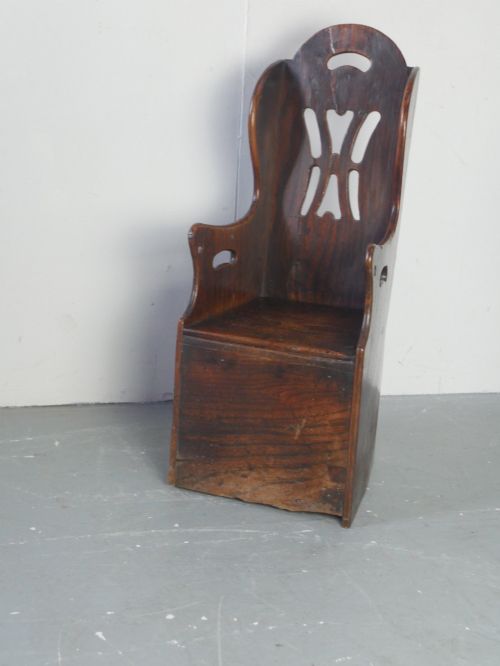
Listings feature eighteenth and nineteenth century vernacular forms including stickbacks, comb backs, and captain's chairs made from native elm, ash, and yew.
Factors of quality and distinction
Quality rests upon the balance of the timber selection and the fluency of the turning work in the spindles and legs. A superior chair displays harmonious proportions between the comb or bow and the sculpted solid seat.
The integrity of the original joints and the depth of the surface patina separate exceptional vernacular survivals from heavily altered examples. Traces of tool marks and honest wear reflect the direct hand of the regional maker.
J Spencer
The Brown Wooden Country Armchair Glossary
- Windsor chair
- A chair built with a heavy solid wooden seat into which the legs, back spindles, and bow are directly wedged and pegged. This construction method creates a sturdy and resilient provincial seat.
- Smoker's bow
- A low-backed Windsor variant featuring a continuous curved armrail supported by turned spindles above a thick wooden seat. These comfortable chairs were common in provincial inns and domestic parlours.
- Crinoline stretcher
- An arched or hoop-shaped wooden brace connecting the legs of a chair to provide lateral stability. It takes its name from the hoop skirts worn in the nineteenth century.
- Comb back
- A Windsor chair design where the central vertical spindles extend upward to support a horizontal top rail resembling a hair comb. This regional variation offers additional upper back support.
Brown Wooden Country Armchair: Frequently Asked Questions
What is a brown wooden country armchair?
A brown wooden country armchair is a traditional provincial seat constructed from native hardwoods like elm, ash, and yew. These chairs emerged from regional workshops to serve practical domestic and commercial functions.
Such pieces typically feature turned spindles, solid saddled seats, and robust joints designed for everyday utility. They embody the vernacular furniture traditions of the eighteenth and nineteenth centuries.
How do I identify an 18th century Windsor chair?
Eighteenth-century Windsor chairs are distinguished by heavier timber scantlings, deeper saddle seats, and specific regional turning profiles on the legs and stretchers. They often utilise combinations of ash and elm with visible tool marks from the maker's adze.
Examining the undercarriage reveals hand-pegged joinery and timber movement consistent with early provincial construction. These details separate genuine period pieces from later Victorian revivals.
Where were country armchairs used?
These armchairs served in farmhouses, cottages, country inns, and provincial offices across Britain. Their sturdy construction made them suitable for continuous daily use by the hearth or at the dining table.
Sturdier low-back variants like captains' chairs and smokers' bows were frequently placed in commercial settings and libraries. Their modest scale allowed them to fit easily into smaller domestic rooms.
How should I care for elm and ash furniture?
Maintain country armchairs by dusting them regularly with a dry cloth and occasionally applying natural beeswax to nourish the timber. Avoid placing them near direct heat sources or rapid temperature shifts.
Keeping the environment stable prevents the native hardwoods from splitting or loosening their traditional pegged joints. Gentle maintenance preserves the historic surface finish and rich patina.