

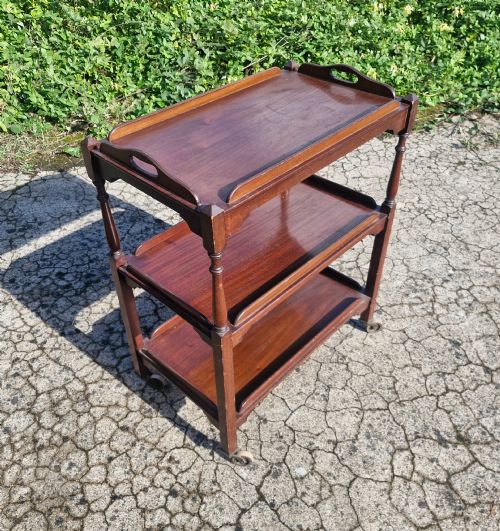


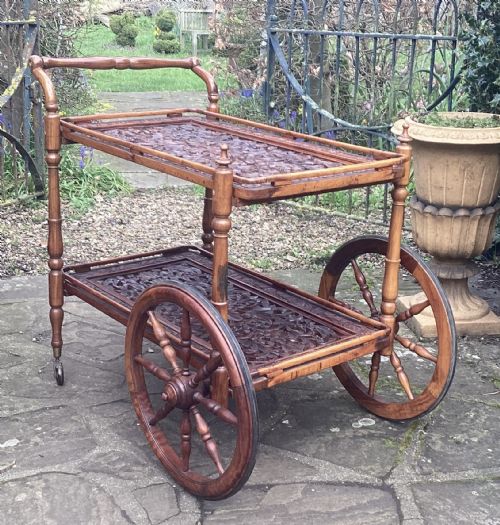


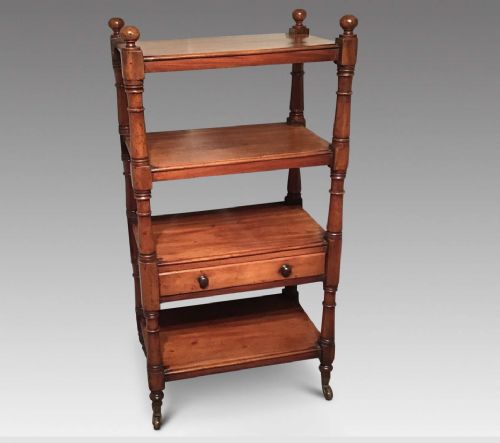


Brown Wood Trolley
A brown wood trolley serves drinks and tea with wheels beneath, moving easily through rooms from Georgian days to the nineteen-thirties.
Brown Wood Trolley
A brown wood trolley brings practical service to the floor, appearing in forms such as tea trolleys, bar carts, and tiered dumb waiters. These pieces span centuries of domestic life, moving from early dining rooms to twentieth-century cocktail lounges.
The selections range from early nineteenth-century mahogany buffets and dumb waiters to nineteen-thirties walnut and amboyna cocktail carts. Edwardian folding tea trolleys and Georgian cheese coasters also populate the group.
Buyers meet sturdy two-tier mahogany frames and elaborate circular walnut cocktail carts with brass details. Hardwood and burr amboyna finishes add grain and tone to these rolling tables.
Materials and construction
Cabinetmakers utilised dense timbers like mahogany, walnut, and oak to build these frames, often embellishing surfaces with burr amboyna veneers. Brass fittings, castors, and removable glass trays complete the hardware on serving pieces.
Makers constructed multi-tiered structures such as three-tier dumb waiters and buffets using solid hardwoods. Folding mechanisms and rise-and-fall tiers demonstrate mechanical ingenuity in Edwardian and Victorian examples.
Brown Wood Trolley Retail Price Guide 2026
Typical asking prices for brown wood trolley among the pieces listed under this phrase on Sellingantiques today, from the lower quarter to the upper quarter. They describe what is for sale here now, not the wider market.
Georgian dining rooms relied on rolling cheese coasters so guests could pass dairy without asking servants.
Factors of quality
The quality rests in the choice of timber figure, such as burr walnut or amboyna, and the crispness of carved details on hardwood frames. Original castors and functional folding leaves elevate the merit of a rolling table.
Design complexity separates basic service tables from exceptional cocktail carts and rise-and-fall buffets. Finer examples integrate brass hardware and matched wood grains seamlessly into the overall form.
The Brown Wood Trolley Glossary
- Dumb waiter
- A multi-tiered serving stand used to hold dishes or drinks without needing servants at the table. These pieces often feature graduated shelves supported by turned columns.
- Cheese coaster
- A small trolley or tray fitted with castors designed to slide along a dining table for passing cheese. They typically feature low wooden walls and original metal wheels.
- Burr amboyna
- A heavily figured exotic wood grain prized for its rich swirling patterns. Cabinetmakers applied this veneer to decorative surfaces on Art Deco bar carts.
- Castor
- A small wheel mounted on a swivel attached to the base of furniture. Original castors allow the brown wood trolley to roll smoothly across floors.
Brown Wood Trolley: Frequently Asked Questions
What is a brown wood trolley used for?
These pieces served historical roles ranging from holding afternoon tea to carrying cheese and wine around the dining table. Today they function as mobile drinks cabinets and serving tables in modern rooms.
Their tiered designs allow hosts to display glassware and bottles while keeping floor space organised. Original castors make it simple to shift refreshments from the kitchen to the living room.
How do I identify a Georgian trolley?
Georgian and early nineteenth-century pieces display dense mahogany timbers, bow fronts, and sturdy tiered architecture. They often take the form of dumb waiters or serving buffets rather than modern cocktail carts.
Look for traditional joinery and classical proportions typical of the period before mass production. Original castors and unpainted wood surfaces confirm the age of these dining room additions.
Are Art Deco bar carts different from tea trolleys?
Art Deco bar carts from the nineteen-thirties lean into circular shapes, brass frames, and figured burr walnut or amboyna veneers. They were designed specifically for serving cocktails rather than afternoon tea.
Edwardian and earlier tea trolleys usually feature rectangular wooden tiers, sometimes with folding leaves or removable glass trays. The materials and geometric lines clearly distinguish the interwar cocktail pieces from earlier domestic tables.
Do these trolleys have original castors?
Many surviving pieces retain their original metal or brass castors beneath the legs or base supports. These wheels were essential for the mobility required of dumb waiters and tea carts.
Checking the mountings helps determine if the hardware matches the period of the wood frame. Original wheels move smoothly and show appropriate wear for their age.