
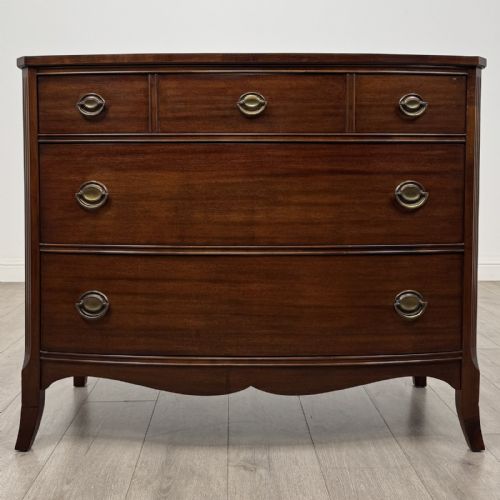
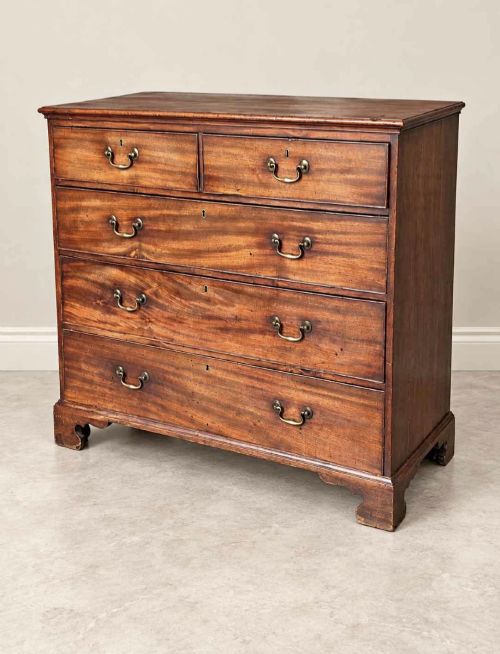
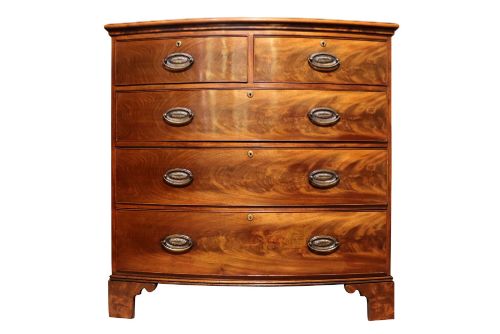
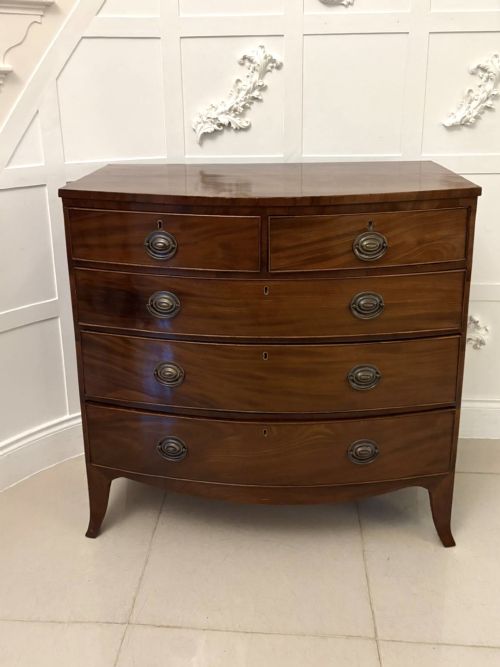
Brown Wood Storage Commode
These brown wood storage commode selections offer practical utility through traditional forms crafted in mahogany, oak, and walnut.
Brown Wood Storage Commode
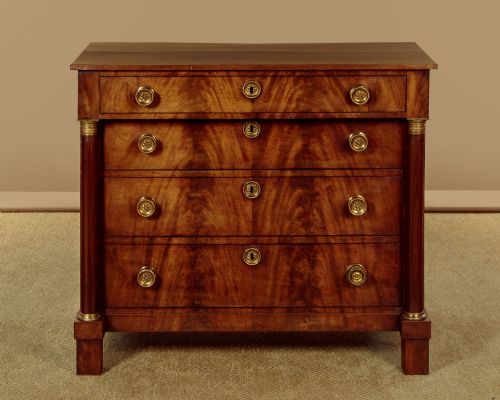
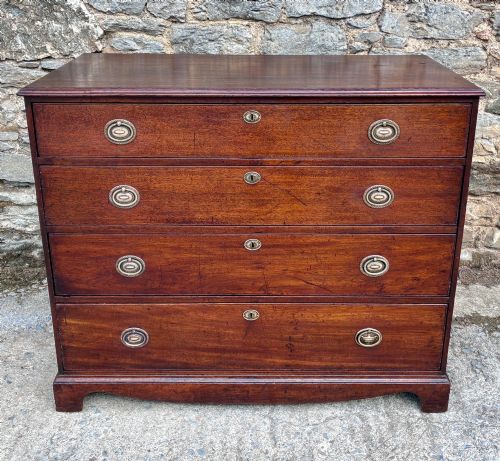
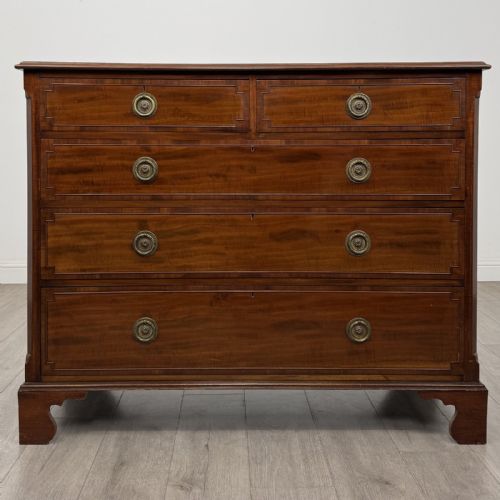
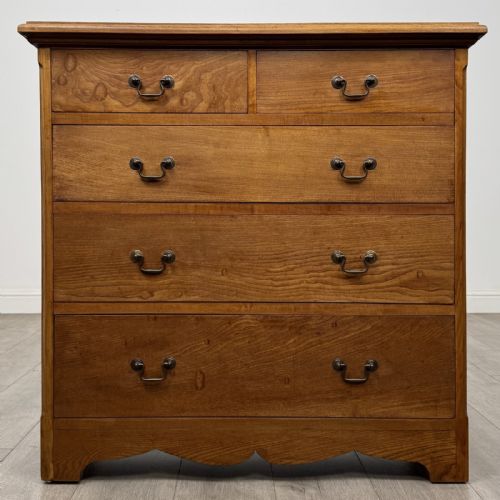
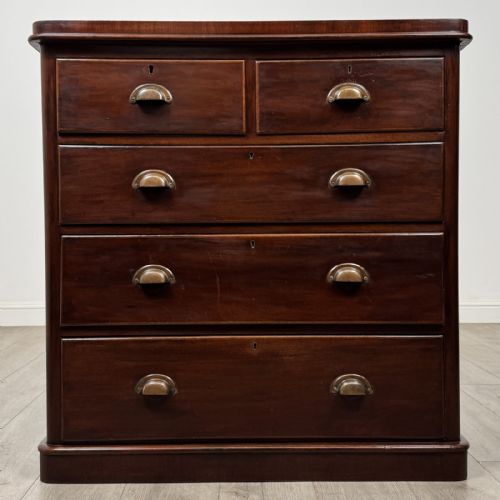
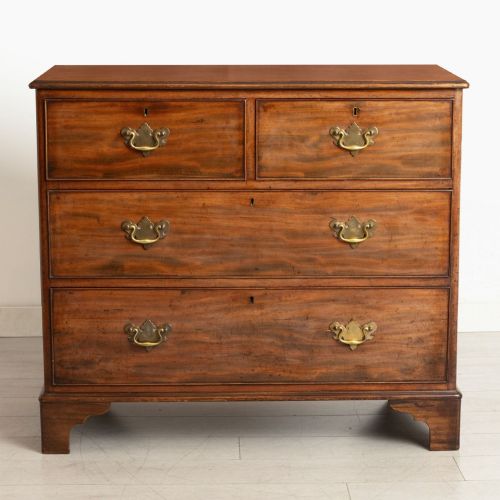
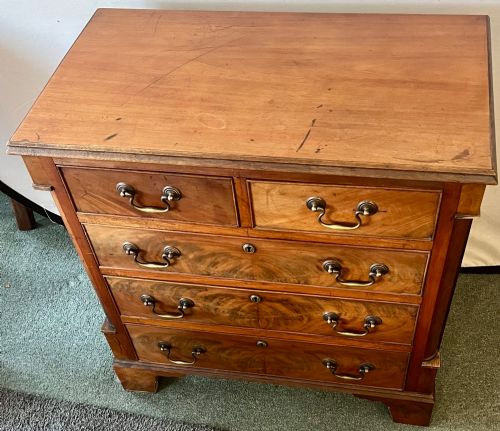
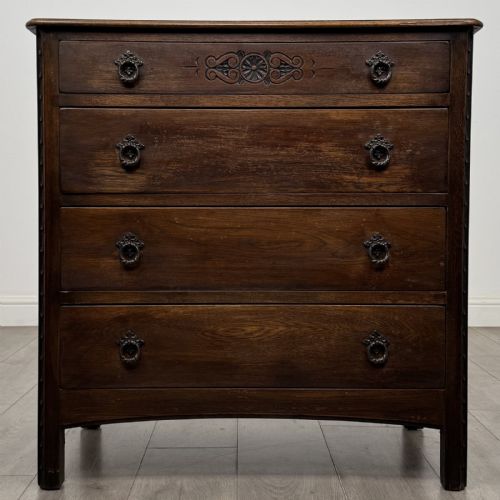
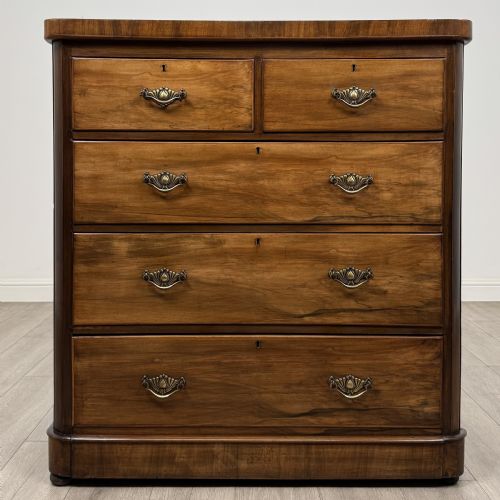
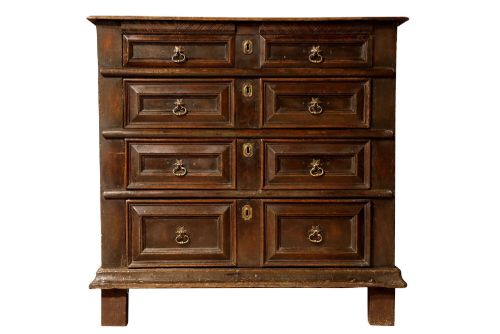
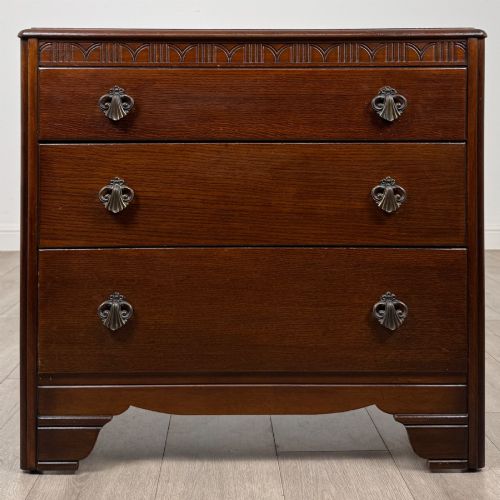
A brown wood storage commode principally takes the form of a chest of drawers, alongside bedside cabinets and side cabinets intended for domestic use. Buyers seeking this type of furniture will frequently encounter pieces configured with multiple drawers or cabinet doors.
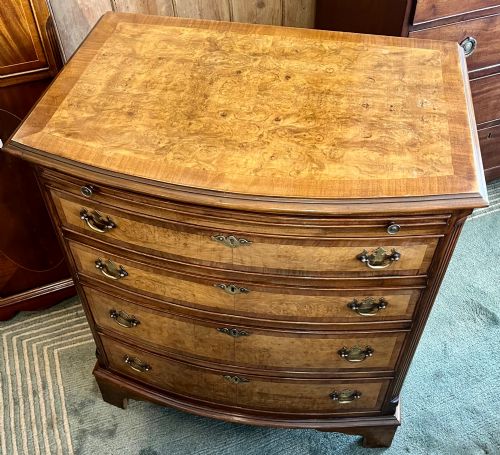
The selections span multiple periods, ranging from the seventeenth century through the Georgian and Regency eras into the Victorian, Edwardian, and twentieth-century periods. Pieces vary from straight-fronted chests to bow front and serpentine profiles.
Originating largely from British and occasionally American workshops, these brown wood storage commodes utilise traditional timber construction tailored for organising and storing garments or household items.
Materials and Construction Techniques
Makers utilised solid timbers alongside veneered surfaces, frequently employing mahogany, oak, and walnut. Flame mahogany veneer and satinwood banding appear on select surfaces to provide decorative contrast.
Hardware such as brass handles complements the wooden frames, while internal construction incorporates secondary timbers like pine and cedar wood. Joinery methods relied on traditional drawer box assembly and fitted carcases.
Some chests hide sliding shelves meant for folding linen.
Factors Differentiating Quality
Quality differences depend on the selection of timber figures, such as highly figured walnut or flame mahogany veneer, balanced against plainer domestic woods. The precision of bow front and serpentine shaping also separates standard joinery from finer cabinet work.
The integrity of original brass handles and the preservation of polished timber surfaces contribute to the overall standard of a piece. Finer examples retain proportions and fitted interior elements like brushing slides.
The Brown Wood Storage Commode Glossary
- Bow Front
- A convex curved front profile popular in Georgian and Regency cabinet making. This shape softens the corners of a chest of drawers.
- Brushing Slide
- A pull-out shelf integrated into the upper section of a chest of drawers. It served as a temporary writing or folding surface.
- Flame Mahogany
- A veneer cut from the fork of a mahogany tree where the branches meet the trunk. It creates a distinctive rippled, flame-like grain pattern.
- Serpentine
- A gently undulating front profile featuring a convex centre flanked by concave curves. It requires advanced woodworking skill to execute properly.
- Satinwood Banding
- A narrow strip of pale exotic wood inlaid around the edges of drawer fronts or tabletops. It provides a bright visual contrast against darker primary woods.
Brown Wood Storage Commode: Frequently Asked Questions
What periods do these commodes come from?
The listings include examples spanning from the seventeenth century through the Georgian, Regency, and Victorian eras into the Edwardian period and the twentieth century.
Buyers will find items representing distinct historical design movements, including George I, George III, and Georgian Revival styles.
What types of wood were used?
Primary materials include mahogany, oak, and walnut, often enhanced with flame mahogany veneer or satinwood banding.
Internal elements and secondary parts occasionally incorporate pine or cedar wood alongside brass hardware.
Are all these pieces traditional chests of drawers?
While the majority function as chests of drawers with varying drawer counts, the category also includes bedside cabinets and side cabinets.
Certain items feature specialised configurations like two-door cabinets on legs or night tables.