





Brown Wood Roll Desk
These brown wood roll desk examples provide secure storage for papers with flexible slatted covers.
Brown Wood Roll Desk
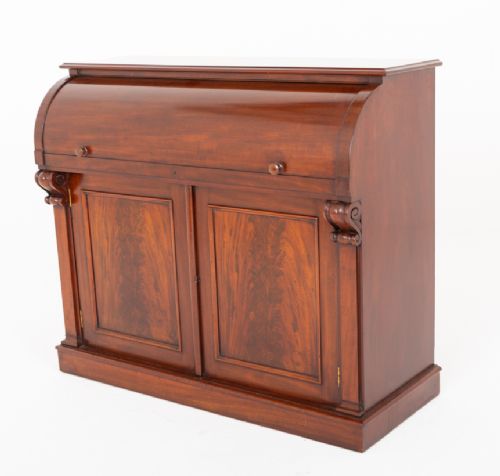
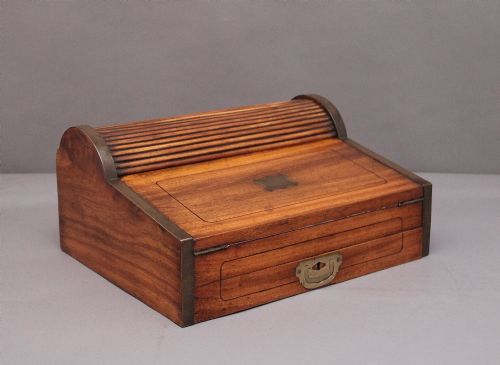
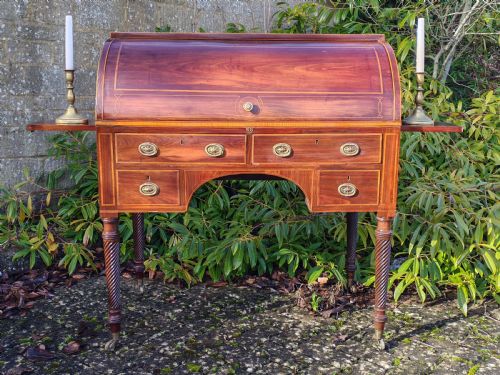
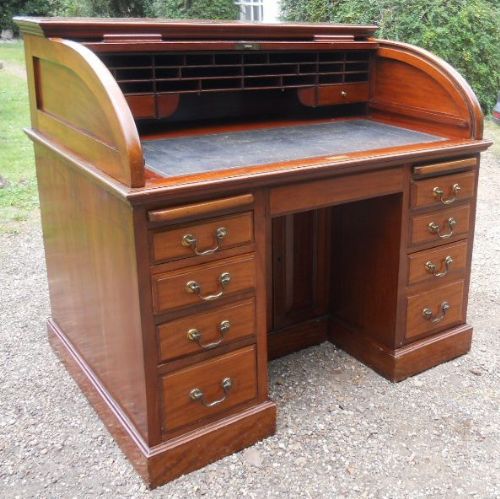
A brown wood roll desk combines a writing surface with a slatted tambour or rigid cylinder closure that conceals the interior compartments when shut. Buyers searching this phrase will find a variety of forms ranging from compact writing boxes and sloped writing desks to large pedestal desks and towering bureau bookcases.
The pieces on this page span several distinct historical periods, including Georgian, Victorian, Edwardian, and William IV eras. Formats vary from stately mahogany kneehole desks to delicate satinwood inlaid ladies writing tables and practical oak stationary cabinets.
Many examples incorporate clever internal fittings such as pigeonholes, small drawers, and adjustable dates. Origin styles include English traditional designs alongside occasional continental examples like Dutch marquetry and camphor wood campaign pieces.
How they were made
Cabinet makers utilised dense hardwoods including mahogany, walnut, oak, and figured yew wood to construct the primary carcasses and drawer linings. Inlays of satinwood and delicate parquetry work frequently accent the main timber surfaces.
Flexible tambour covers require precise joinery, attaching individual narrow wooden slats to a fabric or leather backing so the shutter can slide smoothly around a curved track. Brass handles, hinges, and lock plates provide functional hardware details across the periods.
Writing surfaces frequently inset panels of dyed leather into the wood, providing a flat and durable plane for daily correspondence. Structural reinforcement inside pedestals and bureau compartments ensures stability for heavy use.
Brown Wood Roll Desk Retail Price Guide 2026
Typical asking prices for brown wood roll desk among the pieces listed under this phrase on Sellingantiques today, from the lower quarter to the upper quarter. They describe what is for sale here now, not the wider market.
Some Victorian desks include hidden compartments behind secret panels for stashing particularly private love letters.
What varies in quality
The smoothness of the tambour or cylinder action demonstrates the precision of the original woodworking and the stability of the timber over time. Superior examples glide without sticking, aligning perfectly with the surrounding desk frame when fully closed.
Timber selection dictates the visual impact of the piece, with well-figured mahogany grains, matched veneers, and crisp inlaid stringing marking out finer workshops. Poorer construction shows in uneven slat alignment, warped shutters, or crude secondary timbers used in internal compartments.
Boston Chair Company of Massachusetts
The Brown Wood Roll Desk Glossary
- Tambour
- A flexible shutter made from narrow strips of wood glued to canvas or leather backing, allowing it to slide around a curved track to enclose a desk interior. This mechanism replaced traditional solid fall-front lids on many writing cabinets.
- Cylinder desk
- A piece of furniture featuring a quarter-circle solid wooden roll that conceals the writing surface and pigeonholes when pulled down. Unlike a slatted tambour, a cylinder consists of a single curved panel.
- Bureau bookcase
- A tall cabinet combining a lower writing desk section with upper shelving enclosed by glazed or solid wooden doors. These dual-purpose pieces served for both correspondence and library storage.
- Writing slope
- A portable box with a hinged sloping lid that opens to reveal a velvet or leather-lined writing surface and compartments for inkwells and pens. They were frequently utilised for travel or domestic correspondence.
- Pedestal desk
- A heavy freestanding desk supported by two banks of drawers running down to the floor, often topped with a cylinder or roll top closure. They offer substantial storage capacity alongside a generous writing area.
Brown Wood Roll Desk: Frequently Asked Questions
How do tambour desks work?
A tambour desk uses a flexible curtain made of narrow wooden slats attached to a canvas backing. This slatted shutter runs in a recessed track around a curved enclosure, allowing it to slide open and shut smoothly.
When pushed back, the tambour disappears into the body of the desk to expose the pigeonholes and writing surface. Pulling it forward secures the interior compartments without requiring clearance for a hinged lid.
What is the difference between a cylinder and roll top?
A cylinder desk employs a single curved solid panel of wood that rotates on a pivot to cover the writing area. This mechanism represents earlier Georgian and Victorian cabinet making.
A roll top desk uses multiple small slats joined together, known as tambour, which can bend around tighter curves. This slatted construction became widespread during the later Victorian and Edwardian periods for large pedestal desks.
Were these desks used for writing letters?
These desks served as the primary domestic and professional workstation for correspondence, record keeping, and document storage. The internal pigeonholes and small drawers organised stationery, inkwells, and sealing wax.
Closing the roll top allowed users to leave unfinished paperwork undisturbed and secured away from dust and view. Many examples also incorporate leather writing surfaces designed specifically to provide a smooth plane for ink pens.
How do I care for antique wood roll desks?
Keep wooden roll desks away from direct heat sources and strong sunlight to prevent the timber from drying out and the tambour tracks from warping. Maintain a stable indoor humidity level to ensure the sliding wooden shutters continue to move freely.
Apply quality beeswax periodically to nourish the hardwood surfaces and polish out minor handling marks. Avoid forcing the rolling mechanism if it sticks, checking instead for displaced slats or accumulated dust in the tracks.