

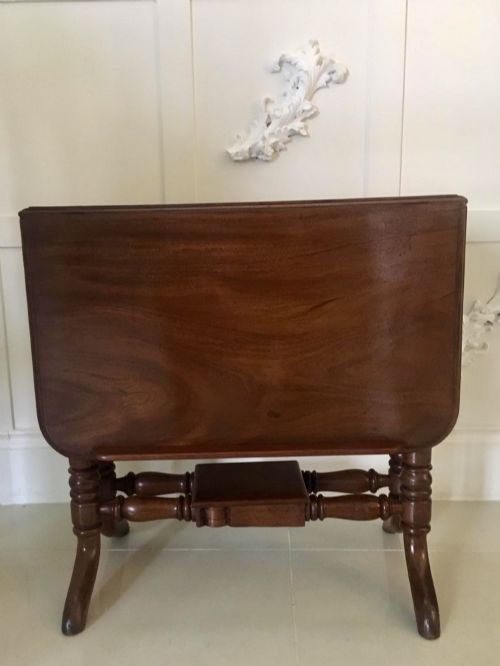
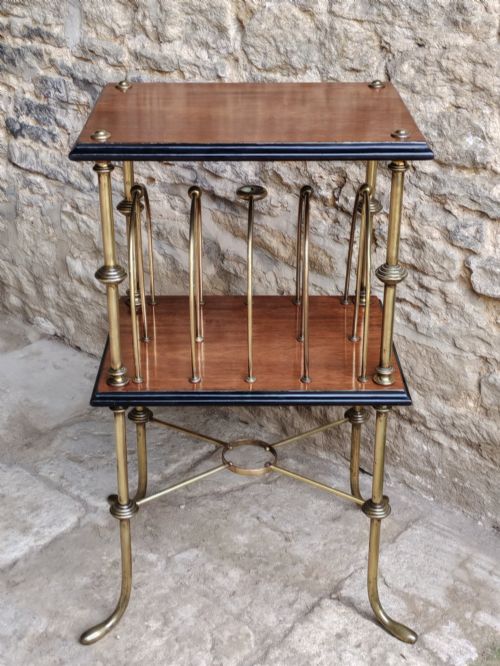
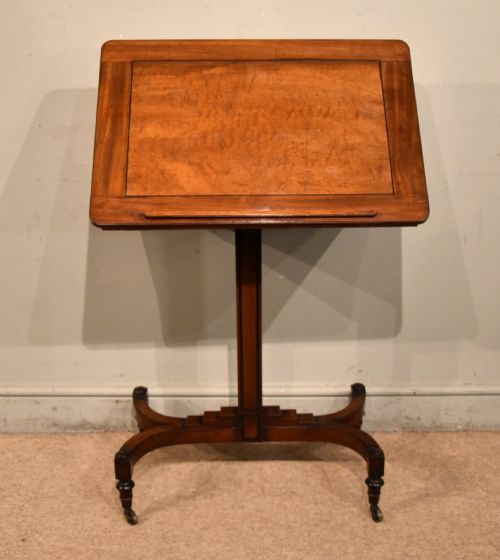
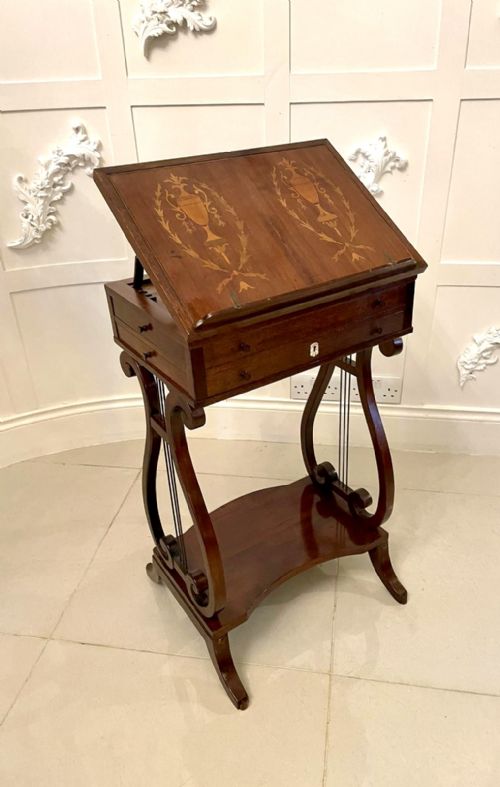


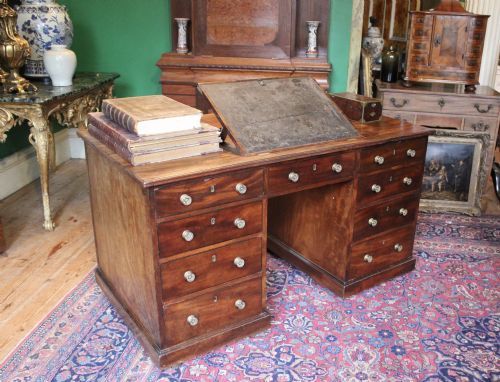

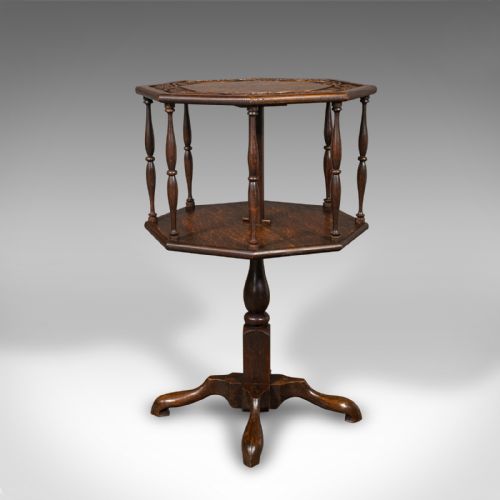


Brown Wood Reading Table
A brown wood reading table is a functional surface designed for books and papers, built primarily from mahogany across Georgian, Regency and Victorian eras.
Brown Wood Reading Table
A brown wood reading table serves as a dedicated support for books, music and documents, appearing in forms such as occasional tables, stands, desks and cabinets. Buyers searching for a brown wood reading table will encounter pieces spanning the Georgian, Regency, Victorian and Edwardian periods.
The selection includes adjustable stands, double-sided designs, campaign pieces and tables with integrated magazine racks or revolving shelves. Most examples utilise mahogany as the primary timber, sometimes complemented by satinwood inlay, boxwood or oak.
Makers adapted these forms for various domestic settings, ranging from formal libraries to drawing rooms, incorporating mechanical adjustments for height or angle. The inventory reflects traditional craftsmanship from the nineteenth century alongside Arts and Crafts examples.
Materials and construction
Makers relied on solid mahogany and veneers to build these tables, often selecting figured timber for prominent surfaces such as top panels and reading surfaces. Brass fittings appear frequently for adjustable mechanisms, hinges, castors and handles.
Inlaid decoration utilised contrasting woods like satinwood and boxwood to create geometric or floral banding, particularly on Edwardian and later pieces. Secondary materials such as cast iron and metal provided structural support for mechanical reading stands and adjustable frames.
Brown Wood Reading Table Retail Price Guide 2026
Typical asking prices for brown wood reading table among the pieces listed under this phrase on Sellingantiques today, from the lower quarter to the upper quarter. They describe what is for sale here now, not the wider market.
Listings feature mahogany as the predominant material, alongside oak and satinwood inlay across nineteenth-century periods.
Distinguishing quality
Quality in a brown wood reading table depends upon the selection of figured timber and the precision of cabinetmaking joints. Superior examples exhibit seamless integration of mechanical adjustments, such as ratchets and rising mechanisms, that operate smoothly.
The refinement of brass mounts, the subtlety of satinwood inlay and the stability of folding or revolving mechanisms separate standard utility pieces from finer architectural or library furniture.
The Brown Wood Reading Table Glossary
- Mahogany
- A durable tropical hardwood prized for its rich brown tone and stability, widely used in Georgian and Victorian cabinetmaking. It accepts fine polishing and carving.
- Satinwood
- A pale, lustrous timber utilised for decorative inlay and banding on mahogany furniture, particularly during the Regency and Edwardian periods. It provides sharp visual contrast against darker woods.
- Campaign
- Portable furniture designed for travel, featuring folding frames, recessed brass handles and robust construction. These pieces were built for military officers and travellers.
- Occasional table
- A small, versatile table intended for specific, periodic use in living spaces rather than permanent placement. They appear in various geometric shapes.
- Metamorphic
- Furniture designed to transform from one form into another, such as an occasional table converting into a reading stand. These pieces incorporate concealed hinges and levers.
Brown Wood Reading Table: Frequently Asked Questions
What is a brown wood reading table used for?
These tables were designed to hold books, folios and music sheets at a comfortable angle for reading or writing. Many incorporated adjustable ratchets or folding ledges to secure bound volumes.
Over time, owners also utilised them as general occasional surfaces or bedside stands in libraries and drawing rooms.
How do I identify a Georgian reading table?
Georgian pieces typically display restrained classical proportions, solid mahogany construction and architectural details such as turned pillars or bracket feet. The woodwork focuses on clean lines rather than heavy ornamentation.
Later Victorian and Edwardian versions often introduced more complex mechanical adjustments, inlays or lighter framing.
Are these tables suitable for daily modern use?
The sturdy timber construction and practical surfaces make them well-suited for holding books, laptops or lamps in contemporary settings. Adjustable reading stands retain their mechanical function for propping up tablets or volumes.
Care should be taken with antique polish and delicate brass mechanisms during daily handling.
What is the difference between a reading stand and a reading table?
A reading stand generally refers to a portable or pedestal-mounted support focused entirely on holding a single book or music sheet. A reading table provides a broader surface area, often combining a writing desk or occasional table format with adjustable book supports.
Both forms utilise wood and brass components to achieve stability and utility.