

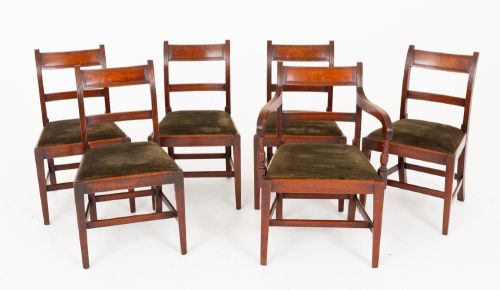
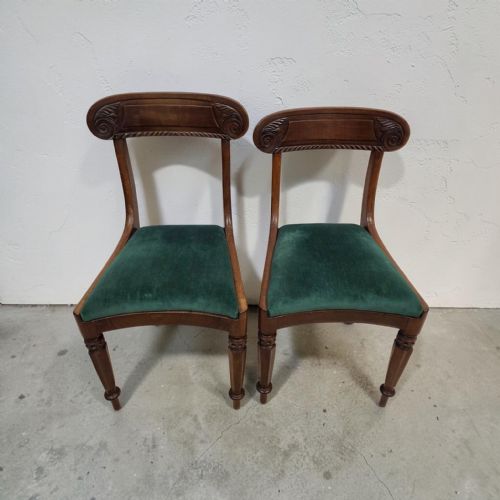
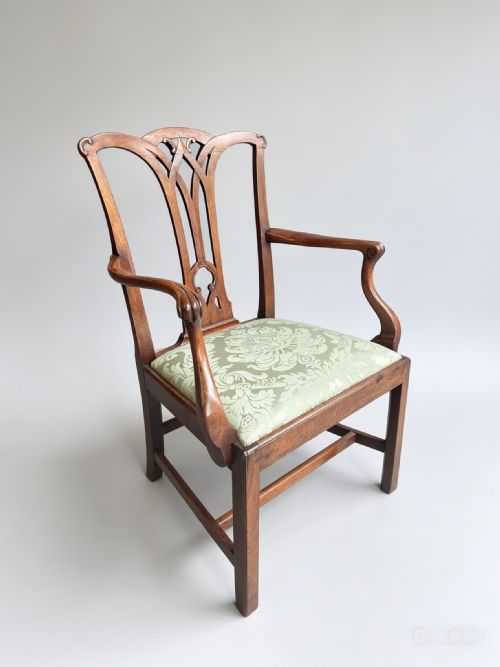
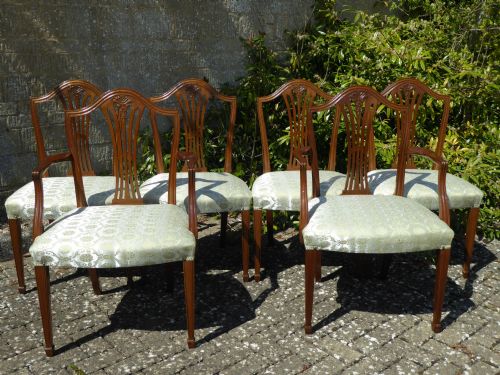


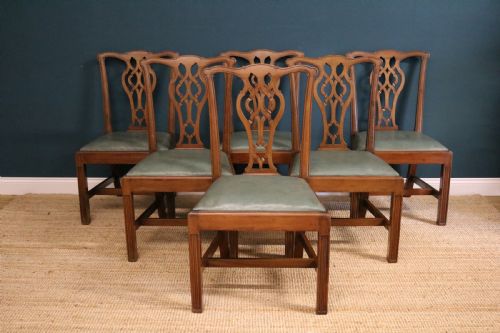


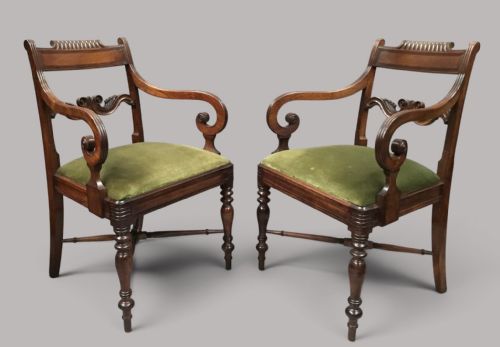


Brown Wood Green Chair
These brown wood green chair options bring together classic timbers and rich upholstery across dining, desk, and armchair forms.
Brown Wood Green Chair
A brown wood green chair unites dark timber frames in mahogany or walnut with verdant fabric coverings, drawing from Georgian, Regency, and Victorian periods. The selection spans dining chairs, elbow chairs, and library armchairs designed for formal and domestic rooms.
Most pieces date from the nineteenth century alongside eighteenth-century examples and later revival styles. Dining chairs frequently appear in matched sets while armchairs and carvers present individual character through carved details and varied seating forms.
Makers and workshops of the past constructed these forms for utility and display, resulting in sturdy frames wrapped in velvet, damask, tapestry, or modern upholstery fabric. Each piece reflects the dominant cabinet-making traditions of its era.
Materials and construction
Makers relied primarily on dense hardwoods such as mahogany and walnut to build durable frames capable of supporting intricate hand-carved motifs. These timbers provided the strength needed for slender reeded legs, bar backs, and substantial elbow supports.
Upholstery techniques involved securing fabrics like velvet, damask, leather, and tapestry over padded foundations using brass tacks or internal webbing. Frame joinery typically utilised traditional mortise and tenon methods to ensure longevity.
Brown Wood Green Chair Retail Price Guide 2026
Typical asking prices for brown wood green chair among the pieces listed under this phrase on Sellingantiques today, from the lower quarter to the upper quarter. They describe what is for sale here now, not the wider market.
Object types recorded across the site include armchairs, dining chairs, desk chairs, side chairs, and hall chairs.
Distinctions in quality
The sophistication of the timber carving and the crispness of details like reeding set finer examples apart from simpler utilitarian pieces. Superior workshop output shows deeper relief work on the wood and tighter joinery throughout the frame.
The choice and execution of the upholstery materials, from heavy patterned damask to fine velvet or leather, reflect the original intended status of the furniture. Original brass accents and balanced proportions further distinguish higher-tier examples.
George Bartholomew & Co.·Cooper & Holt
The Brown Wood Green Chair Glossary
- Carver
- An armchair, usually designed to sit at the head of a dining table or to match a set of smaller side chairs. These often feature decorative arms and wider proportions.
- Reeded
- A decorative moulding consisting of parallel convex strips resembling bundled reeds, commonly found on the legs of Regency chairs. This technique adds subtle texture to straight wooden supports.
- Bar back
- A chair back featuring a horizontal crossbar or splat, often curved to fit the sitter's back. This design is particularly associated with Regency dining chairs.
- Damask
- A reversible figured fabric woven on a jacquard loom, frequently utilised for historical upholstery. The pattern shows through contrasting warp and weft satin weaves.
Brown Wood Green Chair: Frequently Asked Questions
How do I date a mahogany dining chair?
Dating relies on identifying stylistic markers such as reeded legs, bar backs, or carved splats that align with Georgian, Regency, or Victorian design periods. Timber patination and construction joints also offer clues to the age of the piece.
Cabinet-making techniques evolved from eighteenth-century hand-cut joints to more standardised nineteenth-century methods, helping to narrow down the decade of production.
Can I mix these chairs with a modern table?
These wooden frames pair well with contemporary tables by providing a strong historical contrast through their dark timbers and textured upholstery. The natural warmth of mahogany and walnut bridges different design eras.
Ensuring the seat height matches your table clearance is the main practical consideration when combining antique chairs with modern furniture.
How do I care for antique wood and upholstery?
Protect the timber frames from direct sunlight and rapid humidity changes to prevent the mahogany or walnut from drying out or cracking. Periodic dusting with a soft cloth maintains the finish without harsh chemical polishes.
Upholstery care depends on the specific fabric used, whether velvet, damask, leather, or tapestry, and generally benefits from gentle professional cleaning when required.
What is the difference between a side chair and a carver?
Side chairs are built without arms to allow multiple seats to be tucked neatly around a dining table or placed against a wall. Their compact frames made them versatile additions to drawing rooms and dining spaces.
Carvers include supportive armrests and wider seats, historically reserved for the head of the household or used as standalone reading chairs.