


Brown Wood Corner Chair
These brown wood corner chair examples are ingenious timber seats designed to fit snugly into room angles, offering sturdy construction and period character.
Brown Wood Corner Chair
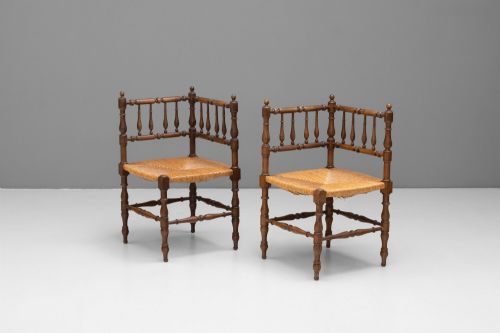
A brown wood corner chair occupies a distinct place in traditional seating, designed specifically to slot into the right angle of a room. The examples listed here draw from several distinct periods, most notably the Georgian era and the Edwardian period, along with nineteenth-century interpretations.
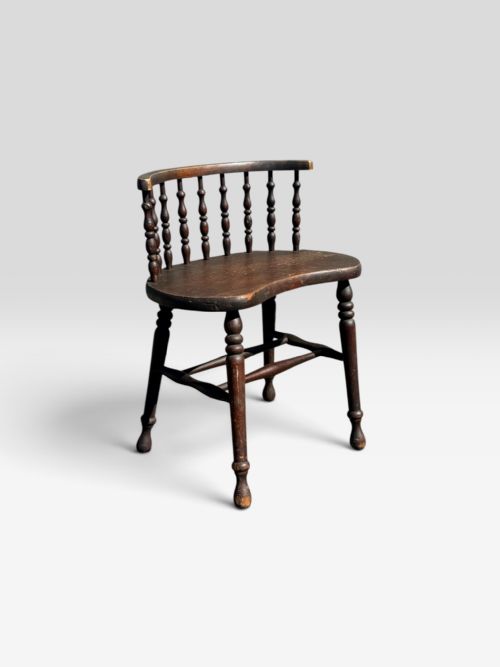
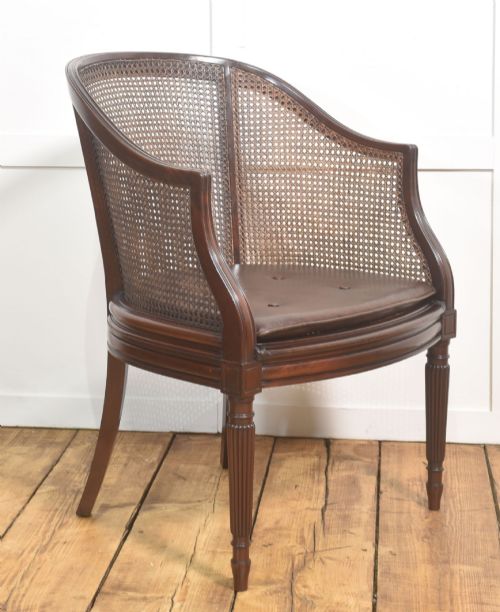
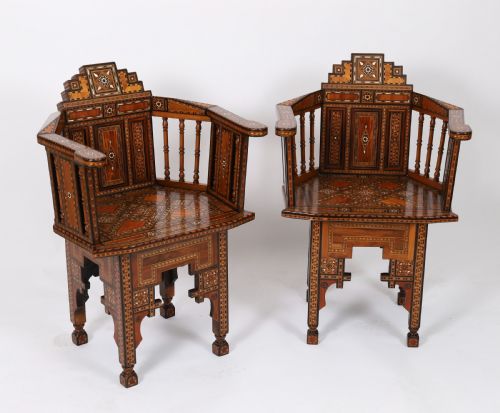
The primary forms found in this collection range from understated country elm and oak vernacular pieces to formal mahogany designs. Alongside traditional corner seating, the titles include related vernacular and occasional forms such as spinning chairs, tub armchairs, and parquetry inlaid armchairs.
Materials and construction
Cabinetmakers constructed these frames using sturdy timbers such as mahogany, oak, walnut, and elm, often incorporating decorative boxwood inlay to enhance the primary wood. The physical structure relies on robust joinery designed to support the unusual diagonal stance of the seat.
Surface decoration across the selection utilises carving, parquetry inlay, and turned elements. Some pieces incorporate woven rush or upholstered pads in fabric and leather to complete the seat.
Several chairs feature curved backs and spinning designs intended for domestic textile work.
Judging the execution
Quality in these timber seats rests upon the crispness of the carving, the selection of the wood grain, and the integrity of the frame. Finer examples display harmonious proportions and precise inlay work executed by skilled hands.
Simpler vernacular pieces rely on the character of the native timber, such as elm or oak, where the weight and honesty of the material dictate the merit of the object.
The Brown Wood Corner Chair Glossary
- Corner chair
- A chair designed to fit into the corner of a room, featuring a diagonal seat plan and a continuous curved armrest supported by multiple uprights.
- Vernacular
- Objects made by local artisans using regional traditions and native materials rather than adhering to high London fashion.
- Parquetry
- Geometric mosaic woodwork used for decorative surface inlay, seen on select inlaid armchairs.
- Turned
- Wood shaped on a lathe to create cylindrical or spindle components, characteristic of traditional chair legs and stretchers.
Brown Wood Corner Chair: Frequently Asked Questions
Where did people put corner chairs?
These seats found their place in the corner of a parlour, study, or bedroom where standard chairs wasted floor space. Their diagonal design allowed them to tuck neatly against two adjoining walls.
In period interiors, they also served as writing chairs or convenient resting spots near a hearth without blocking foot traffic.
How do I tell Georgian from Edwardian examples?
Georgian versions rely on architectural proportions, solid mahogany or oak construction, and restrained carving. They often exhibit structural honesty without heavy surface ornament.
Edwardian pieces frequently revive earlier styles, incorporating lighter mahogany frames, delicate boxwood stringing, and decorative inlay work typical of the nineteen-hundreds.
Are these chairs comfortable to sit in?
The seating experience depends heavily on the specific design and whether the piece incorporates a padded seat or traditional wood. Many feature wide curved backs that offer solid lumbar support.
Some variants are smaller occasional seats intended for brief periods of use rather than deep lounging.
What woods were used for these chairs?
Cabinetmakers utilised a wide selection of timber depending on the origin and period of the piece. Mahogany and walnut appear in more formal urban workshops.
Country makers favoured regional timbers such as oak and elm, valuing their durability and distinctive grain patterns.