





Brown Walnut Corner Unit
A brown walnut corner unit is a clever space-saving timber furnishing designed to house prized possessions or keep rooms tidy.
Brown Walnut Corner Unit
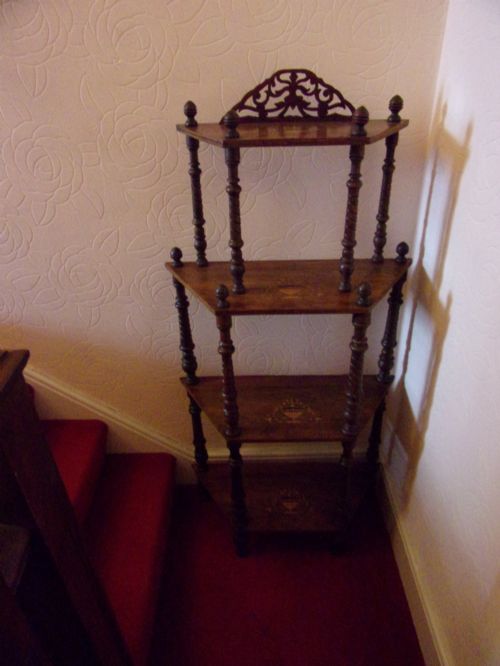
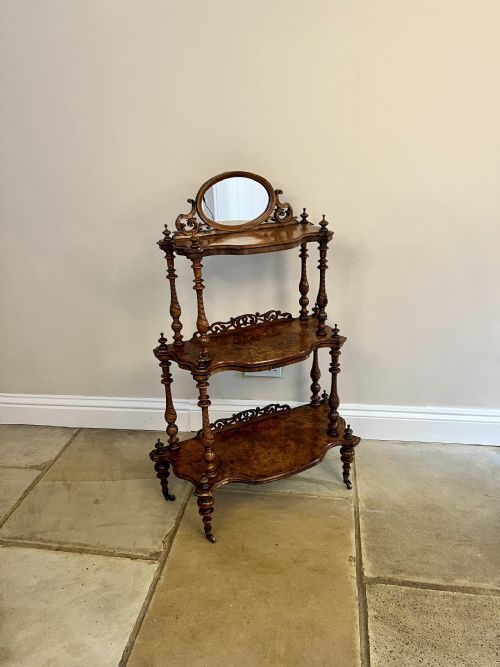
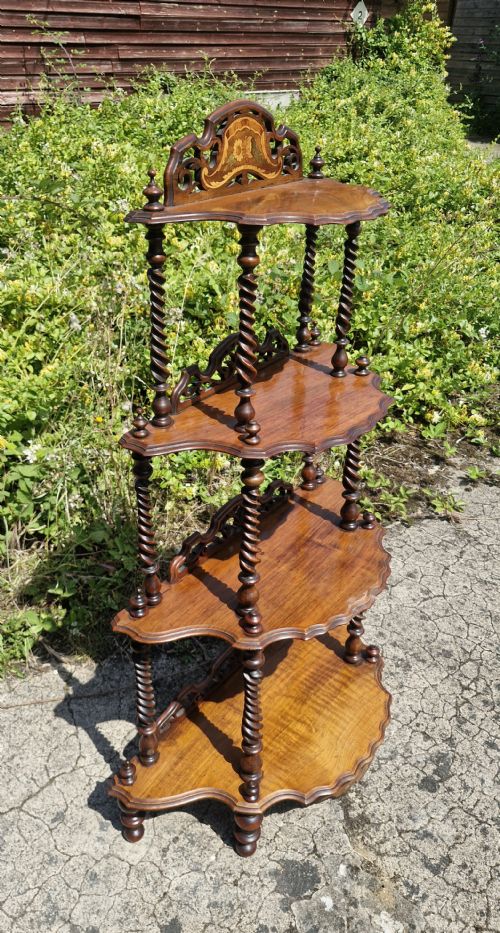
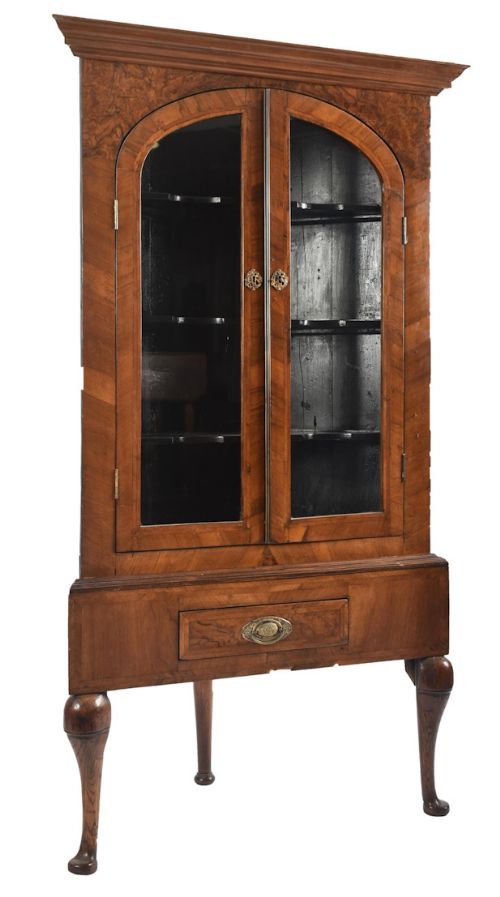
The materials and styles range widely across the periods, incorporating standard walnut alongside burr walnut, oak, and marquetry inlay. Pieces extend from Georgian and Queen Anne designs through to Victorian multi-tier shelving and Edwardian inlaid stands.
How they were made
The construction relies heavily on native and imported timbers, utilising solid walnut and striking burr walnut veneers over secondary woods like oak. Cabinetmakers employed traditional joinery techniques alongside decorative marquetry inlay to enrich the visible surfaces.
Hardware and secondary elements incorporate brass fittings, glass panels for display doors, and occasional mirror glass backings. Structural details such as barley twist columns and tiered shelving provide both physical support and visual rhythm.
Brown Walnut Corner Unit Retail Price Guide 2026
Typical asking prices for brown walnut corner unit among the pieces listed under this phrase on Sellingantiques today, from the lower quarter to the upper quarter. They describe what is for sale here now, not the wider market.
Object types recorded range from multi-tiered whatnots and etageres to glazed corner cupboards and display cabinets.
What varies in quality
The distinction between tiers of craftsmanship lies in the selection of timber figure, particularly the depth and richness of burr walnut veneers. Superior examples display meticulous attention to grain matching across panel doors and curved shelving fronts.
Execution of fine details, such as precise marquetry inlay and the stability of multi-tiered uprights, separates standard utilitarian pieces from exceptional cabinet work. Original hardware, glass integrity, and well-preserved surface polishes also elevate the standing of a piece.
Liberty & Co.
The Brown Walnut Corner Unit Glossary
- Burr walnut
- A figured timber harvested from walnut tree growths, prized for its swirling grain patterns. It is frequently sliced into thin veneers for cabinet fronts.
- Whatnot
- An open set of standing shelves designed for displaying ornaments and books. Victorian examples often feature multiple tiers supported by turned columns.
- Marquetry
- A decorative technique of applying pieces of veneer to a structure to form ornamental patterns. Floral and geometric designs are common on cabinet doors.
- Corner cupboard
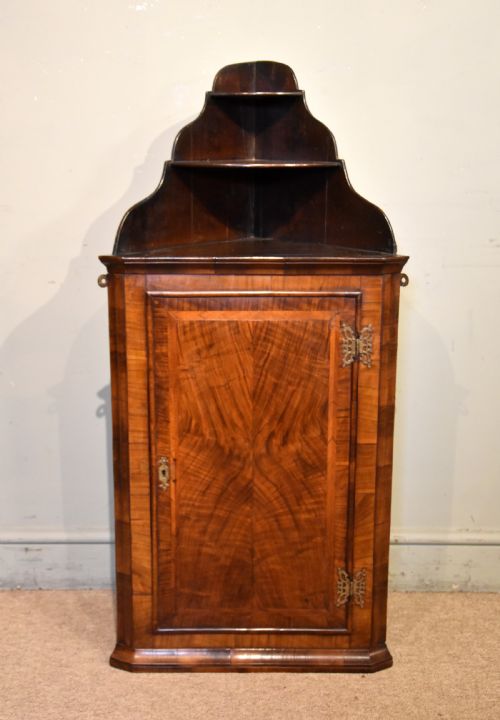
- A storage piece built with an angled footprint to slot directly into room corners. These range from hanging wall units to tall floor-standing display cabinets.
Brown Walnut Corner Unit: Frequently Asked Questions
What is a brown walnut corner unit?
A brown walnut corner unit is a functional furnishing built to occupy room corners efficiently. These pieces take the form of enclosed cupboards or open multi-tiered shelving stands.
They serve to utilise awkward spaces while displaying ceramics, glassware, and decorative objects. The rich brown tones of the walnut timber add warmth to traditional interiors.
Where should I place a corner cupboard?
Corner cupboards suit dining rooms, living spaces, and hallways where floor space is limited. Their angled backs allow them to anchor dead corners without obstructing foot traffic.
Positioning them away from direct sunlight protects the walnut finish and veneer. They work effectively either as standalone display pieces or matched with existing timber furniture.
How do I care for walnut furniture?
Maintaining walnut furniture involves keeping pieces away from extreme temperature shifts and moisture. Regular dusting with a soft, dry cloth prevents grime accumulation on carved and inlaid surfaces.
Occasional application of appropriate wax feeds the timber and preserves the natural lustre. Avoid placing damp items or hot objects directly onto the polished wood.
How do I identify a Victorian whatnot?
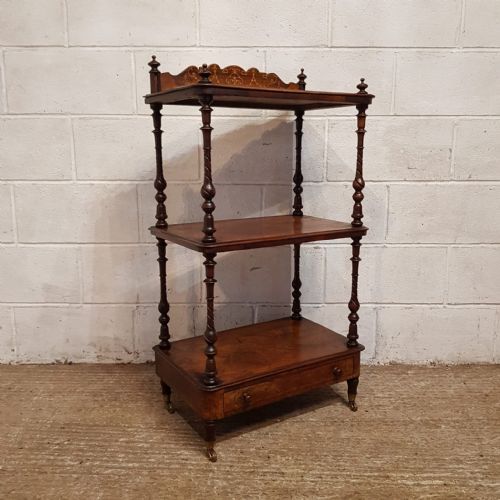
Victorian whatnots typically feature multiple open tiers supported by turned wooden columns or barley twist uprights. They were designed specifically for displaying ornaments in nineteenth-century drawing rooms.
Many examples incorporate marquetry inlay on the top shelf or include a small enclosed cupboard at the base. Their construction relies on walnut or burr walnut timbers.