

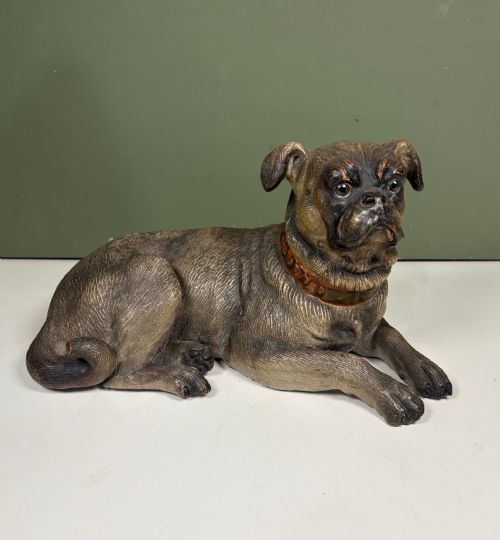


Brown Staffordshire Dogs
Brown staffordshire dogs are mantelpiece companions modelled in earthenware, prized for their rich glazes and expressive forms.
Brown Staffordshire Dogs
These brown staffordshire dogs cover various canine breeds modelled as decorative figures for the home, including pugs, greyhounds, King Charles spaniels and Toby jugs of spaniels. Most examples on this page date from the nineteenth century into the Edwardian era, spanning the Victorian period and beyond.
Buyers encounter single figures alongside matched pairs intended to sit facing each other on either end of a mantelpiece. The forms range from simple earthenware models to detailed depictions like the puppy seller.
Originating from Staffordshire potteries, these glazed ceramic objects served as domestic ornaments rather than toys. They capture the Victorian affection for household pets in enduring ceramic form.
How they were made
Potters shaped these figures from earthenware and terracotta before applying glaze to the ceramic body. Many pieces received additional detail through enamel paint brushed over the fired surface.
Makers occasionally incorporated inset glass eyes to bring a lifelike glint to the ceramic faces of larger spaniels. The combination of moulded pottery, glossy glaze and hand-painted enamel defined the Staffordshire output.
Brown Staffordshire Dogs Retail Price Guide 2026
Typical asking prices for brown staffordshire dogs among the pieces listed under this phrase on Sellingantiques today, from the lower quarter to the upper quarter. They describe what is for sale here now, not the wider market.
Certain large spaniels peer out from the mantelpiece with inserted glass eyes.
What varies in quality
Quality rests in the crispness of the moulding and the depth of the glaze, which separates finely detailed figures from softer, worn casts. Painted enamels and the inclusion of glass eyes introduce greater character and visual texture to superior examples.
Matched pairs command attention for their symmetry, where both figures match in scale, glaze tone and modelling detail. The presence of a known maker adds distinction to the ceramic form.
Wedgwood & Co. Ltd
The Brown Staffordshire Dogs Glossary
- Earthenware
- Porous pottery fired at lower temperatures, serving as the primary body for most nineteenth-century figures. It requires a protective glaze to hold liquids and create a smooth surface.
- Glaze
- A glassy coating fused to the ceramic body during firing, giving these figures their characteristic shine and sealing the porous clay beneath. It varies from clear finishes to rich coloured coats.
- Toby jug
- A pottery jug shaped as a seated figure, often depicting a character or animal such as a spaniel. These combine utility with figurative modelling.
Brown Staffordshire Dogs: Frequently Asked Questions
What animals do these figures represent?
The selections encompass pugs, greyhounds, and King Charles spaniels modelled as decorative figures.
Potters also produced Toby jugs shaped in the likeness of spaniels alongside specific narrative figures.
How were these dogs displayed?
Pairs were traditionally placed on mantelpieces facing inward toward each other.
Single figures and jugs served as decorative objects on sideboards and shelves within Victorian and Edwardian rooms.
What materials make up these pieces?
Potters utilised earthenware, terracotta, and ceramic bodies shaped into canine forms.
Glazes sealed the clay while enamel paint and glass eyes provided surface detail and expression.
How do dates span this selection?
The pieces range from nineteenth-century examples up to Edwardian productions from nineteen ten.
Victorian and Edwardian periods supply the core dates seen across the listed items.