



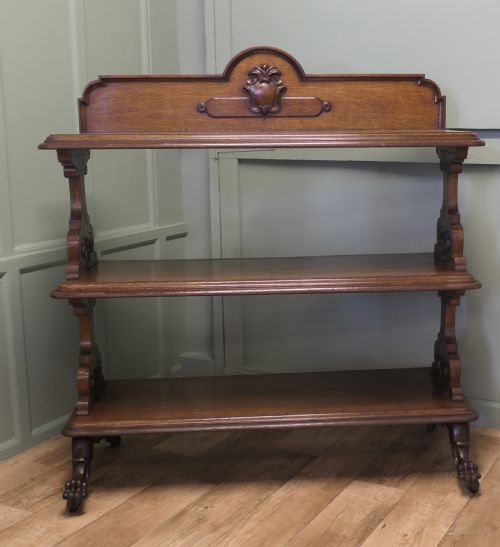
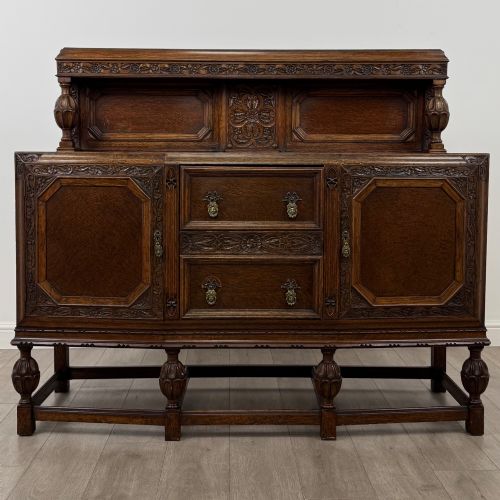
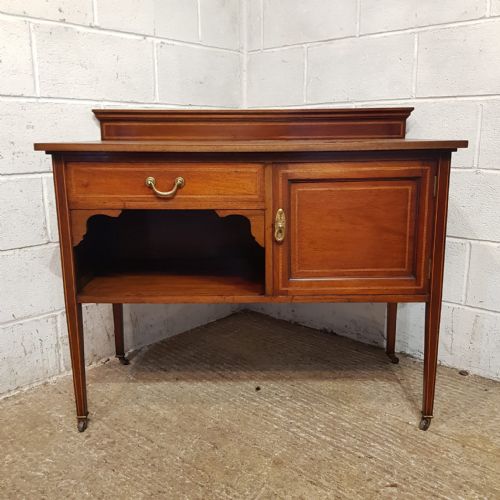
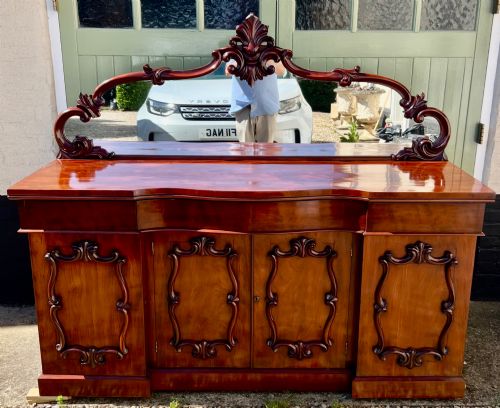
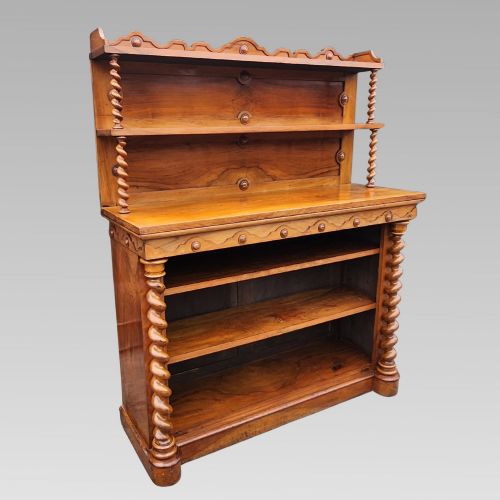
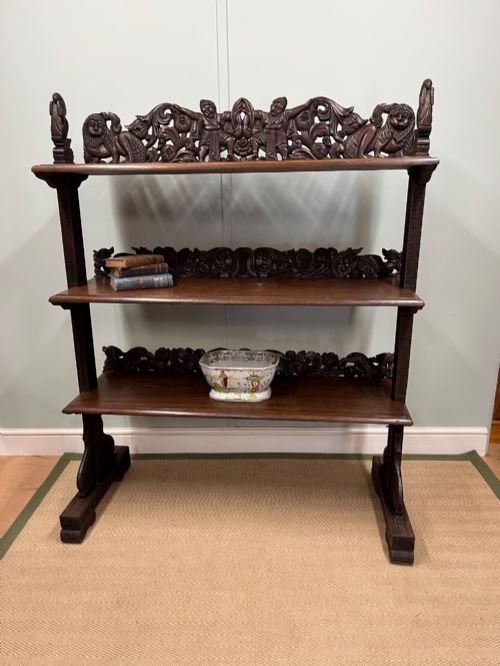


Brown Sideboard Unit
When you search for a brown sideboard unit, you are looking for a practical storage piece that brings deep timber tones and traditional utility to a room.
Brown Sideboard Unit
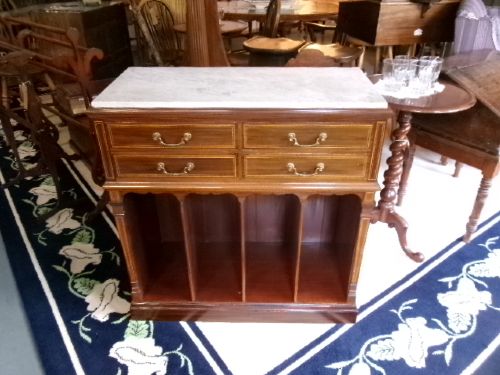
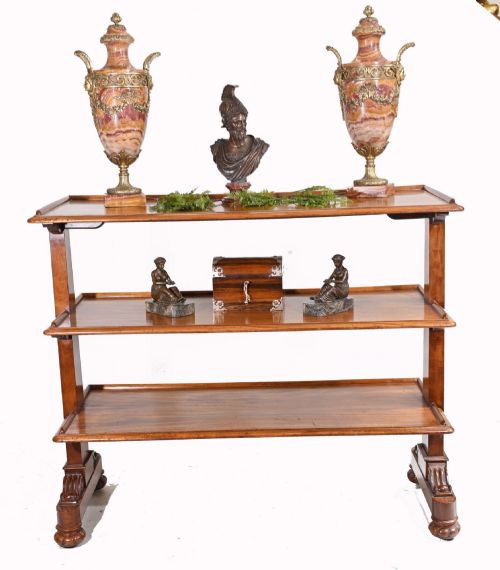
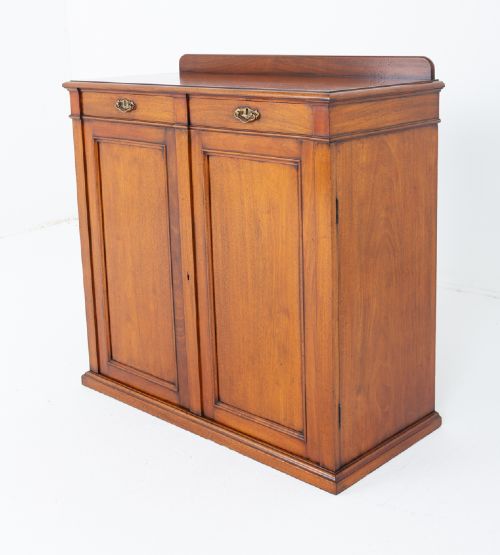
A brown sideboard unit encompasses a broad selection of antique and vintage timber storage furniture, ranging from Edwardian oak sideboards to Georgian mahogany chests of drawers and French provincial walnut buffets. These pieces serve as functional storage for dining rooms, hallways, and living spaces, offering cupboards, drawers, and sometimes plate racks or raised galleries.
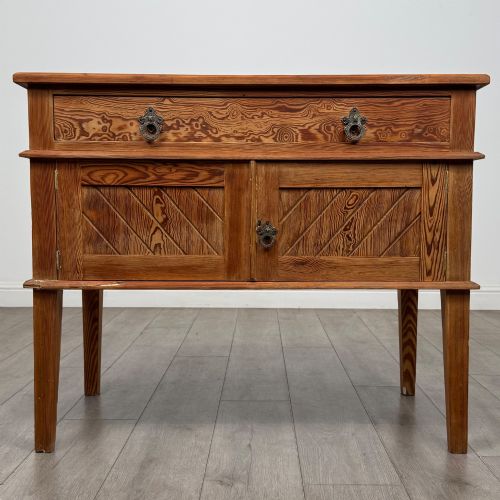
On this page, you are most likely to encounter oak and mahogany examples spanning the eighteenth, nineteenth, and early twentieth centuries. The selection includes regional items such as English country pine and Ipswich oak dressers, alongside side cabinets, chiffoniers, and carved oak buffets.
The form varies considerably according to period and regional workshop traditions, stretching from simple panelled cupboards to elaborate Arts and Crafts sideboards and inlaid satinwood washstands adapted for modern domestic use.
How they were made
Construction relies primarily on robust hardwoods such as oak, mahogany, walnut, and pitch pine, often complemented by secondary softwoods for internal framing and drawer linings. Carpenters utilised traditional joinery methods, including dovetailing for drawer construction and mortise and tenon joints for structural frames, ensuring lasting durability.
Surface ornamentation ranges from carved oak panels and satinwood inlay to polished marble tops, faux marble surfaces, and glass door panels. Metalwork components typically include brass handles, face handles, and hinges that reflect the prevailing style of each period, from Georgian restraint to Victorian and Edwardian elaboration.
Brown Sideboard Unit Retail Price Guide 2026
Typical asking prices for brown sideboard unit among the pieces listed under this phrase on Sellingantiques today, from the lower quarter to the upper quarter. They describe what is for sale here now, not the wider market.
Listings feature eighteenth-century oak pieces alongside nineteenth-century mahogany, Victorian walnut, and Edwardian sideboards fitted with brass handles and marble tops.
What varies in quality
Quality in these timber units is determined by the selection of figured grain, the crispness of hand-carved details, and the integrity of the original construction. Superior pieces demonstrate careful timber matching, robust internal framing, and well-executed joinery that has remained stable through centuries of use.
The degree of original hardware, the subtlety of inlay work, and the preservation of patination separate standard utility furniture from finer workshop pieces. Better examples retain their original brass handles, smooth-running drawers, and untouched surface finishes that reveal the depth of the oak, mahogany, or walnut.
Gillows·Whytock and Reid
The Brown Sideboard Unit Glossary
- Buffet
- A sideboard or low storage unit traditionally used for serving food and displaying dining ware. These pieces often feature tiered shelving or enclosed cupboards below.
- Chiffonier
- A low nineteenth-century cabinet equipped with cupboards enclosed by doors, frequently surmounted by a small shelf or open book shelves.
- Washstand
- A bedroom cabinet designed to hold a wash basin and pitcher, often fitted with a marble or tiled top and a raised wooden gallery.
- Dovetail
- A strong interlocking joint used by cabinet-makers to secure drawer corners together.
- Patina
- The surface sheen and mellowing of colour acquired by timber over decades and centuries of handling and exposure to light.
Brown Sideboard Unit: Frequently Asked Questions
What is the difference between a sideboard and a buffet?
A sideboard is generally a longer, lower piece designed primarily for dining room storage and serving, whilst a buffet often incorporates tiered shelving or additional upper display space.
Historically, the terms overlap depending on the period and the regional workshop that produced the item.
How do I care for an antique oak or mahogany sideboard?
Keep timber furniture away from direct heat sources and strong sunlight to prevent the wood from drying out or splitting. Apply natural beeswax periodically to maintain the lustre and protect the surface finish.
Avoid using modern silicone-based polishes, which can build up and dull the natural patina over time.
Can I use a marble top washstand in a modern bathroom?
Marble top washstands work wonderfully as vanity units or hallway storage pieces, provided the timber is protected from standing water. Many buyers adapt these pieces while retaining the original marble surface and ceramic fixtures.
Ensure any plumbing modifications are carried out carefully to preserve the structural integrity of the antique cabinet.
How can I tell a Georgian piece from a Victorian one?
Georgian furniture generally displays cleaner, more restrained classical lines with an emphasis on figured mahogany or oak timbers and subtle brass hardware. Victorian pieces often feature heavier proportions, more exuberant carved ornamentation, and darker finishes.
Examining the construction methods inside the drawers and the style of the handles will also help clarify the period.