




Brown Rustic Landscape Painting
These brown rustic landscape painting works capture rural life across the nineteenth and twentieth centuries through traditional oils and watercolours.
Brown Rustic Landscape Painting
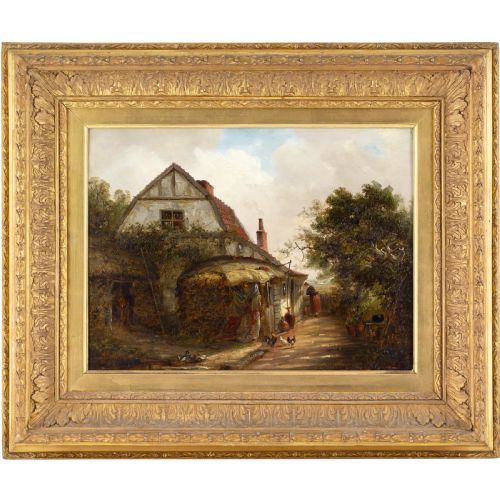
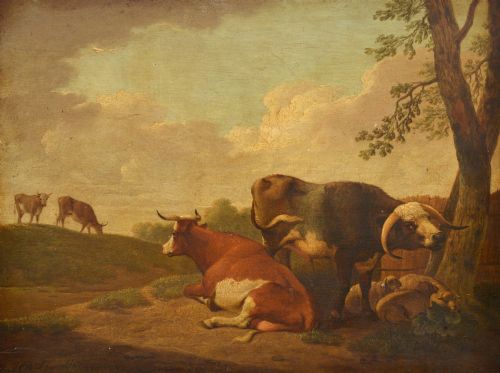
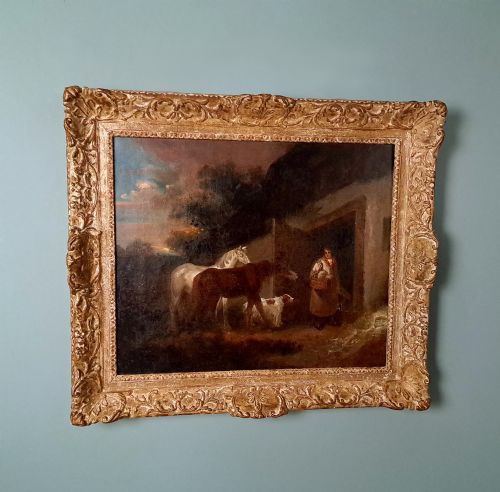
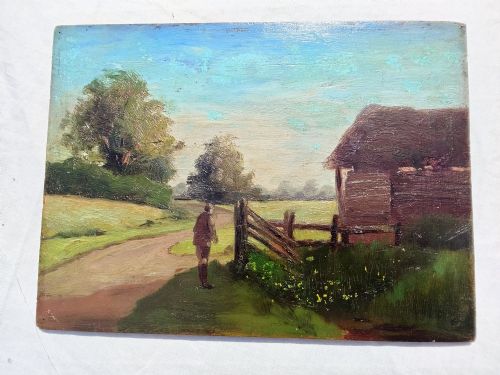
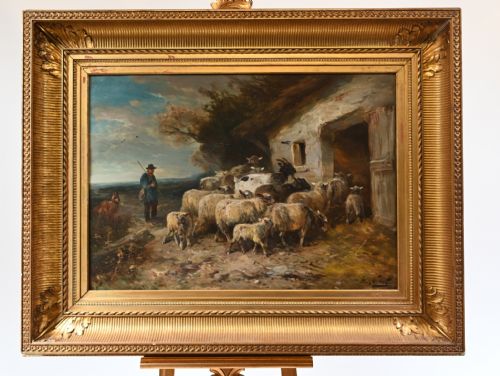
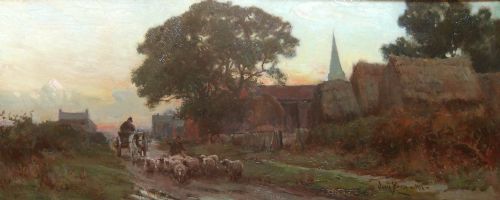
A brown rustic landscape painting typically portrays pastoral life, farmyards, cattle, and rural figures rendered in natural earth tones. These works span from the Georgian period through to the mid-twentieth century, capturing changing approaches to countryside subjects.
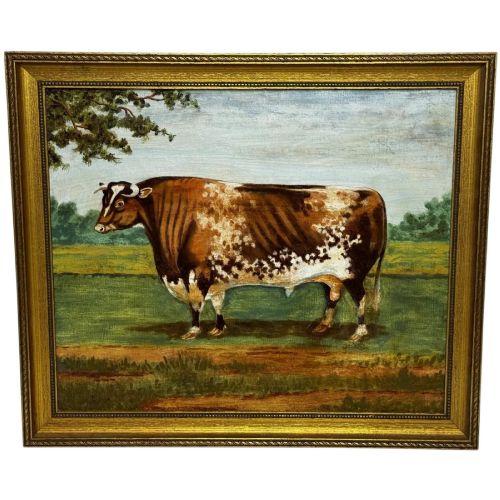
The most common examples on this page are nineteenth-century oil paintings and watercolours on canvas or paper, often framed in wood. They range from naive folk art depictions to structured British Impressionism and nineteenth-century realism.
Subjects frequently include cottages, rivers, sheep, horses, and agricultural labourers going about daily tasks. Their enduring appeal lies in this documentation of a quieter, agrarian past.
How They Were Made
Artists built these compositions primarily using oil paint on canvas, wooden boards, or paper, occasionally employing watercolour for lighter atmospheric effects. Ground pigments were bound with oil to create rich, durable finishes that aged into deep, muted patinas.
Canvases were stretched over wooden frames and sometimes later laid onto board for structural stability. Gilding was frequently applied to the wooden frames to complement the warm earth tones within the picture surface.
Brown Rustic Landscape Painting Retail Price Guide 2026
Typical asking prices for brown rustic landscape painting among the pieces listed under this phrase on Sellingantiques today, from the lower quarter to the upper quarter. They describe what is for sale here now, not the wider market.
Prizing cattle, sheep, and shire horses above all else, these artists ensured every farmyard beast received a proper portrait.
What Varies in Quality
Quality rests in the confidence of the brushwork and the artist's command of light, shadow, and anatomical proportion in figures and animals. Stronger works display subtle tonal gradations in the brown palette rather than flat, uniform washes of colour.
The harmony between the painting and its original wood or gilt frame heavily influences the overall cohesion of the piece. Superior examples maintain surface integrity without heavy overpainting or distracting structural repairs to the canvas and support.
Edward Robert Smythe·William Joseph Shayer Senior·Hendrik Willem Schweickhardt·Henry Schouten·Thomas Hicks·Owen Bowen·John Constable·John Atkinson·James William Booth·John Wright Oakes·Fred Stead·Paul Jones·John Syer Junior·Edward Killingworth Johnson·W E Millner·William Manners·George Hamilton Constantine·Frederick Tucker·Francis William Topham·William Greaves·Nora Munro Summers·Eugene Battaille·Fred C Jones·Frank Moss Bennett
The Brown Rustic Landscape Painting Glossary
- Canvas
- A heavy woven fabric stretched across a wooden frame to serve as a support for oil painting. It provides a textured surface that interacts with the applied pigment.
- Watercolour
- A paint consisting of pigment suspended in a water-soluble binder, typically applied to paper. It creates luminous, transparent washes ideal for atmospheric rural scenes.
- Gilt
- A thin layer of gold leaf or gold paint applied to wooden frames. It adds a reflective border that enhances the warmth of the artwork.
- Board
- A rigid wooden or pasteboard panel used as an alternative support to stretched canvas. Painters frequently utilised wooden boards for smaller, portable field studies.
Brown Rustic Landscape Painting: Frequently Asked Questions
What periods do these paintings cover?
The works span from the eighteenth and nineteenth centuries into the mid-twentieth century. Georgian and Victorian pieces sit alongside Edwardian and later examples.
This broad timeline shows the evolving ways artists interpreted rural subjects over two centuries.
Are these paintings executed in oil or watercolour?
Both mediums appear frequently across the selection. Many pieces utilise oil paint on canvas or wooden board, while others are watercolour on paper.
Each medium offers a distinct texture and depth suited to the pastoral subject matter.
How should I display an antique landscape?
Hang the painting away from direct sunlight and damp conditions to protect the canvas, paper, and wooden frame. Stable indoor humidity preserves both the paint layers and the wooden support.
Pairing the piece with appropriate wall space lets the earthy tones and natural framing stand out.
How can I tell different painting schools apart?
British Impressionism and nineteenth-century realism often feature looser brushwork and atmospheric light. Naive or folk art works lean towards simpler perspectives and direct detailing.
Examining the handling of foliage, animals, and light sources reveals much about the artist's school and period.