

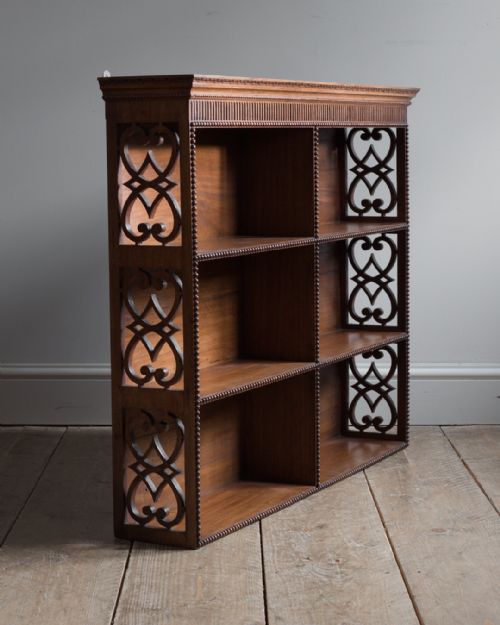
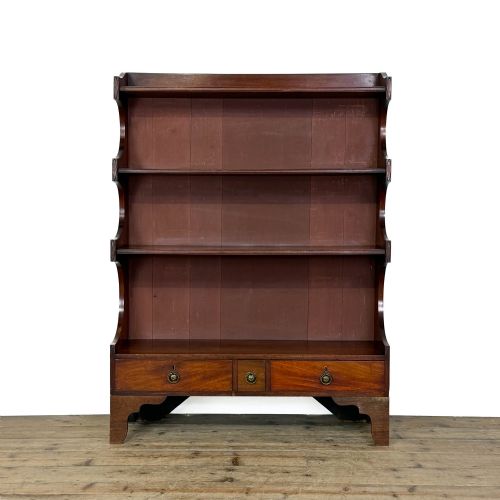
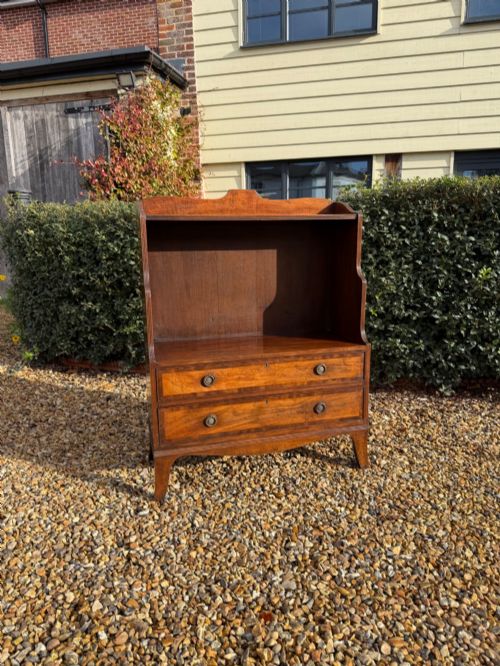
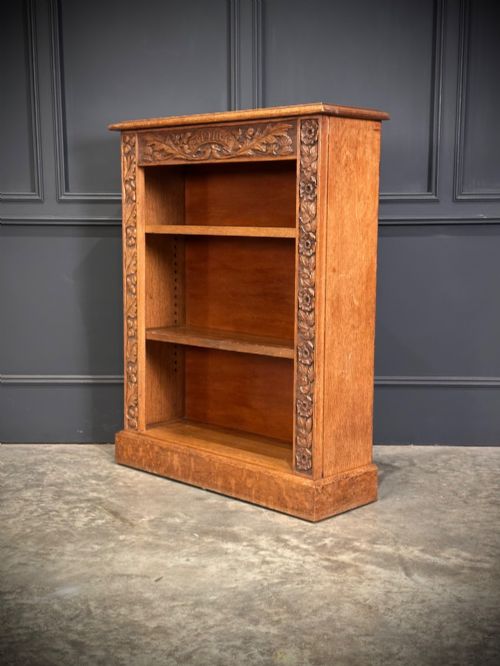
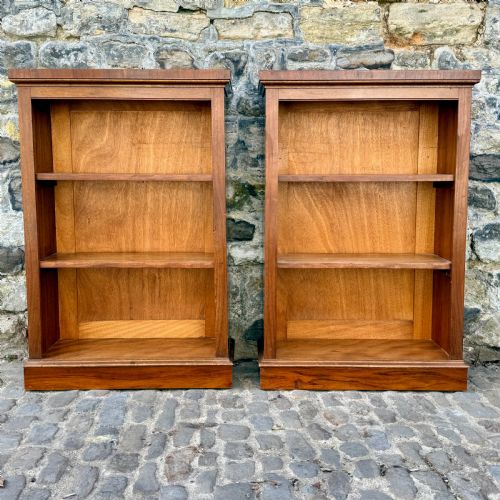
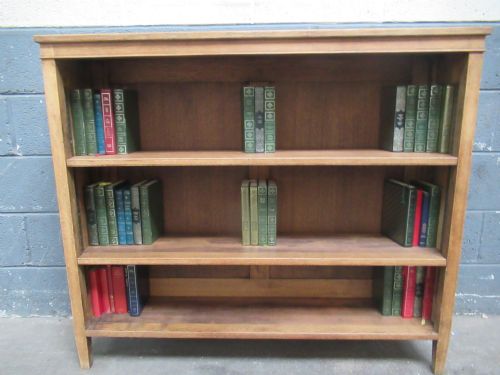
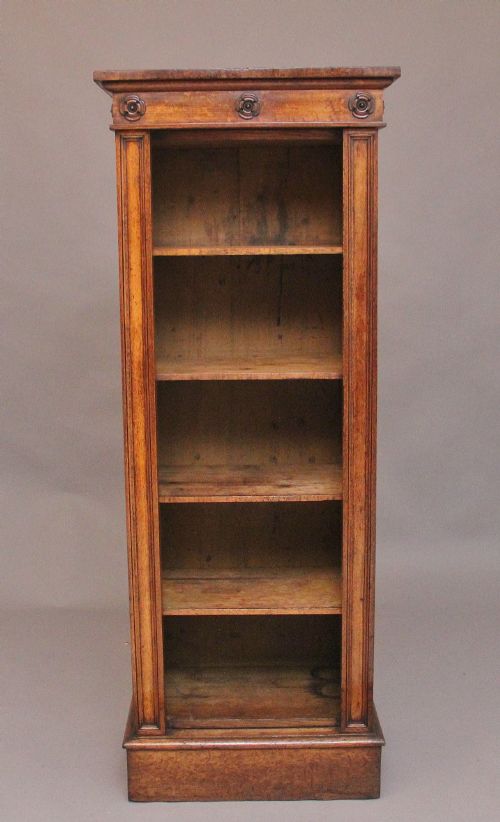
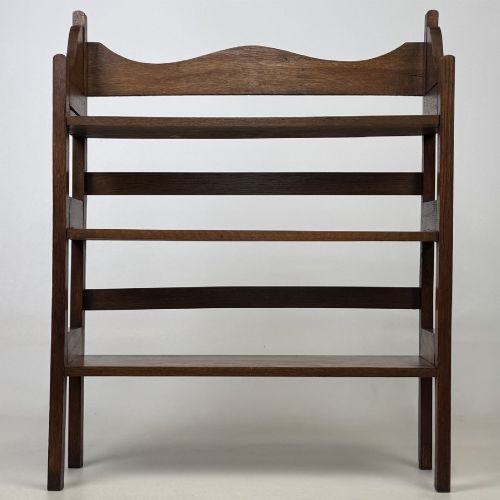
Brown Open Shelving
Brown open shelving brings together practical storage and display across periods from the Georgian era to the early twentieth century.
Brown Open Shelving
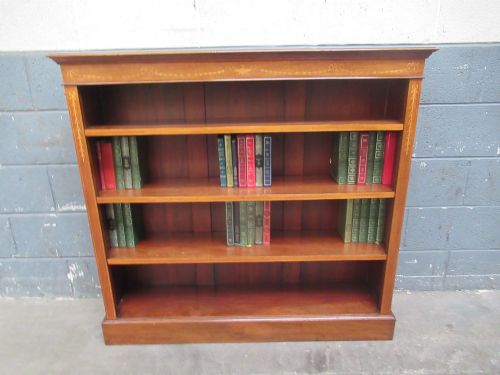
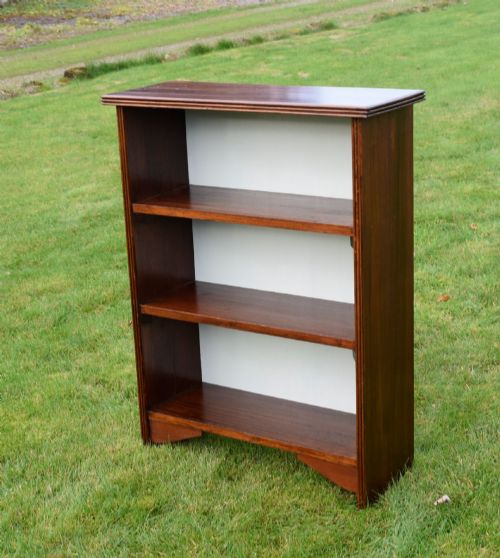
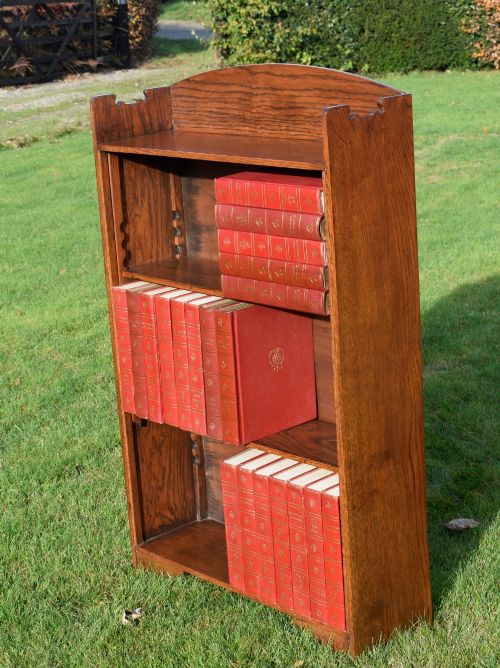
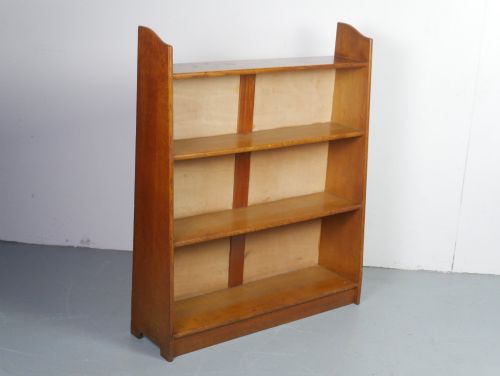
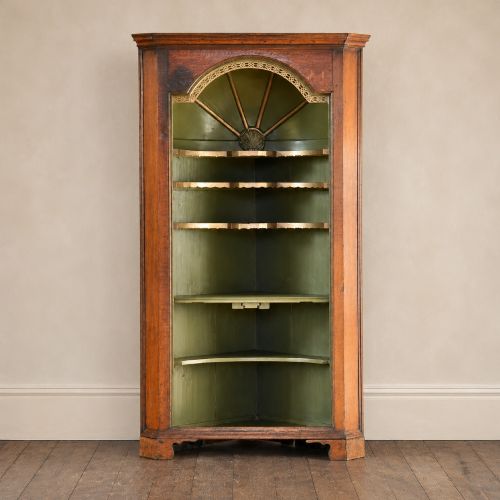
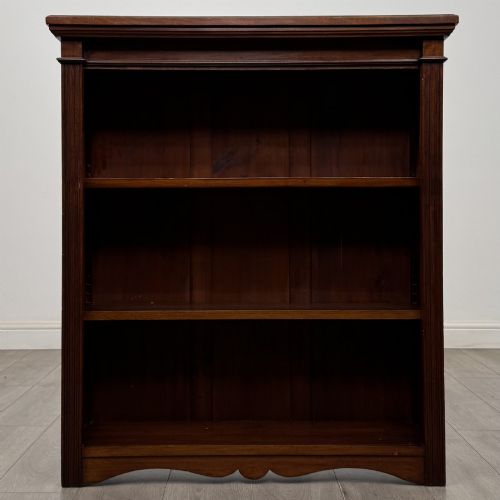
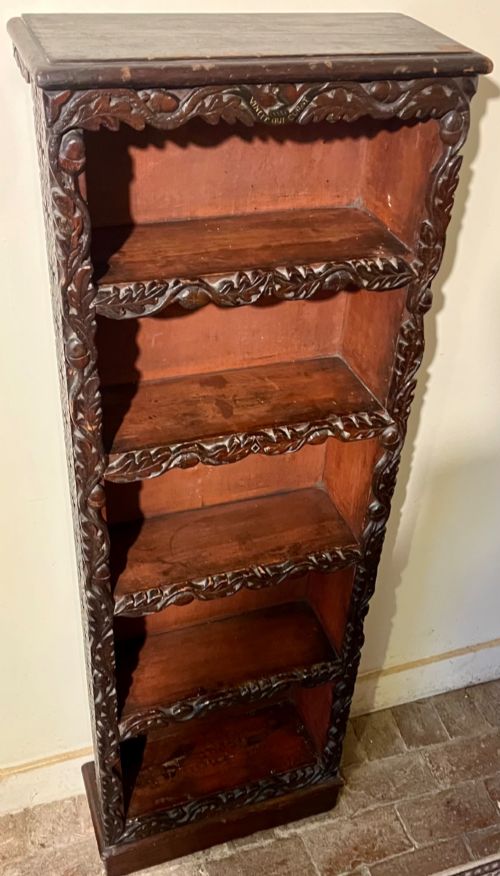
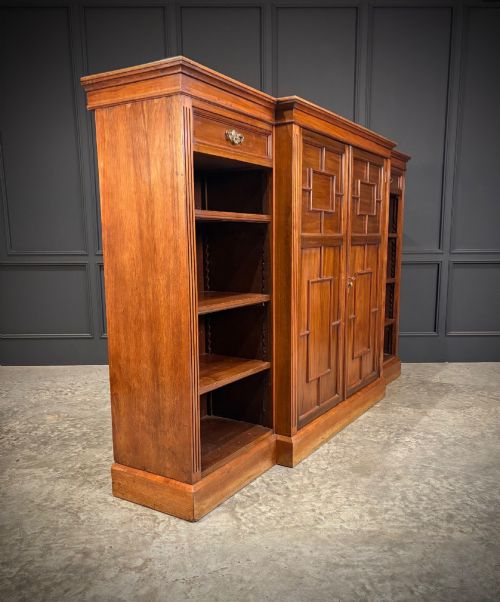
Brown open shelving primarily comprises open bookcases, whatnots, etageres, and wall shelves spanning the Victorian and Edwardian periods alongside earlier Georgian examples. These pieces serve to house book collections and display decorative objects within domestic interiors.
Bookcases form the majority of listings, appearing in formats from slim single bays to large breakfront configurations with adjustable shelves. Whatnots and etageres offer multi-tiered surfaces supported by uprights, while wall-mounting variants maximise vertical space.
Woods such as oak and mahogany predominate, complemented by walnut, burr walnut, and imported hardwoods. Makers utilise these timbers to construct functional furniture featuring galleries, shaped sides, and cornices.
Design and execution
Distinctions in quality rest upon the selection of timber grain, such as figured burr walnut or dense mahogany, and the precision of joinery like pegged connections. Finer examples display thoughtful proportions, balanced breakfront layouts, and refined carved details.
Versatility in use distinguishes standard production from superior pieces, particularly the inclusion of functional adjustable shelving systems. The integrity of original surface finishes and secondary woods further separates everyday utility furniture from notable examples.
Brown Open Shelving Retail Price Guide 2026
Typical asking prices for brown open shelving among the pieces listed under this phrase on Sellingantiques today, from the lower quarter to the upper quarter. They describe what is for sale here now, not the wider market.
Listings feature oak, mahogany, walnut, and pine across Victorian, Edwardian, and earlier nineteenth-century periods.
Bowman Brothers London·Liberty
The Brown Open Shelving Glossary
- Whatnot
- A piece of furniture with multiple open shelves for displaying small objects or books. These tier upwards and date frequently to the Victorian period.
- Breakfront
- A cabinet or bookcase whose central section projects forward from the flanking wings. This architectural arrangement creates depth and visual rhythm in larger rooms.
- Dentil
- A moulding pattern composed of small square blocks spaced evenly along a cornice. The style echoes classical architecture adapted for domestic bookcases.
- Gallery
- A raised raised border or railing running along the top edge of a shelf or whatnot. It prevents items from sliding off the surface.
- Pegged
- A method of joining wooden elements using wooden pins rather than solely metal fasteners. This technique appears frequently in Arts and Crafts furniture.
Brown Open Shelving: Frequently Asked Questions
How do I date a brown open bookcase?
Dating relies on stylistic markers, timber choice, and construction methods associated with specific eras like the Victorian or Edwardian periods. For instance, pegged joints and simpler lines often point towards Arts and Crafts production.
Details such as dentil cornices, inlay work, and adjustable shelf mechanisms help differentiate between Georgian origins and later revival pieces.
Where should I place an open whatnot?
An open whatnot suits corners or living spaces where multiple display tiers can hold small objects, ceramics, or books. Their open structure allows light to pass through, maintaining an airy feel in a room.
Placing them away from direct sunlight protects the timber finish and any veneered surfaces from fading over time.
Are shelves usually adjustable?
Many open bookcases and shelving units feature adjustable shelves to accommodate books of varying heights. This flexibility became increasingly common in nineteenth-century library furniture.
Fixed shelves typically indicate specific structural requirements or earlier periods of manufacture where vertical spacing was predetermined.