



Brown Oak Plinths
Brown oak plinths carry sculptural weight and dense timber grain, serving as sturdy elevations for display.
Brown Oak Plinths
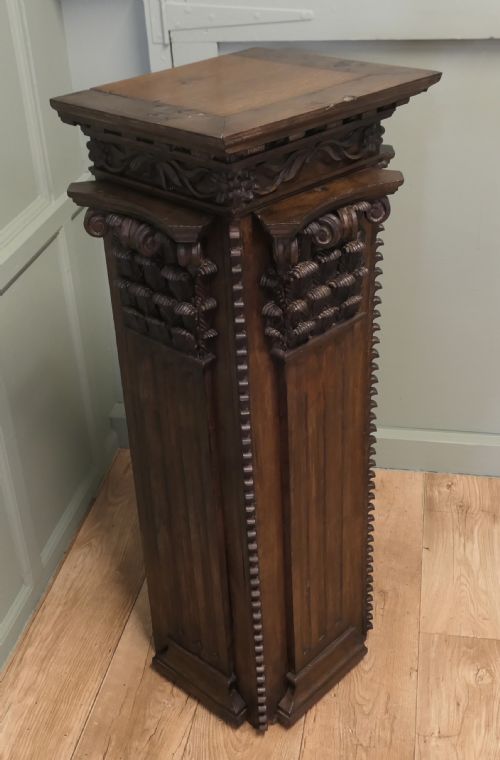
Brown oak plinths are solid timber supports and columns used to elevate decorative objects, sculptures, and architectural ornaments. These pieces span the eighteenth century, the Victorian era, and the early twentieth century, taking the form of pedestals, carved columns, and display stands.
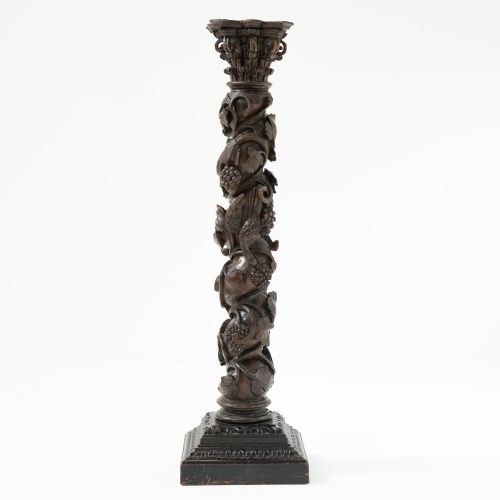
The version most commonly met on this page is the carved wooden pedestal or spiral column from the nineteenth century. These upright supports often feature twisting spiral pillars or detailed carved decoration suited to grand interiors.
Beyond straightforward columns, the selection includes related architectural furniture such as altar fragments, stools, and sculptural pairs of griffins or lions mounted on bases. They bring a heavy, structural presence to a room through dark timber and traditional joinery.
What varies in quality
Quality rests primarily in the depth and sharpness of the carving work, where crisp chisel marks on figures and foliage separate superior columns from softer, more mechanical production. The selection of the oak timber itself dictates visual weight, with denser grain patterns and uniform colour distribution commanding greater attention.
Proportion and structural integrity also define the better pieces, ensuring that tall spiral columns or paired display stands maintain balanced balance and solid footing under heavy sculptural loads.
Brown Oak Plinths Retail Price Guide 2026
Typical asking prices for brown oak plinths among the pieces listed under this phrase on Sellingantiques today, from the lower quarter to the upper quarter. They describe what is for sale here now, not the wider market.
Listings feature oak, carved wood, and brass across nineteenth-century and eighteenth-century periods.
Deighton And Dunthorne
The Brown Oak Plinths Glossary
- Solomonic
- A term describing a spiral or twisting column shaft that resembles a corkscrew. This helical form became popular during the Baroque period and returned in later revivals.
- Pedestal
- An upright architectural support or base used to elevate a statue, vase, or bust. It typically consists of a base, a central column shaft, and a flat top plate.
- Gothic Revival
- An architectural and decorative style drawing inspiration from medieval forms. Pieces in this style often feature pointed arches, heavy tracery, and dark carved oak.
- Grand Tour
- A period of European travel undertaken by the wealthy to collect art and antiquities. Associated objects often borrow heavily from classical neoclassical motifs.
- Plinth
- A heavy flat base or block upon which a statue, pillar, or piece of furniture rests. It provides a stable foundation and visually anchors the object above.
Brown Oak Plinths: Frequently Asked Questions
What were brown oak plinths used for originally?
These wooden supports served primarily to elevate sculptures, urns, and decorative art pieces within grand rooms and halls. By lifting objects to eye level, they allowed viewers to inspect fine details more easily.
In ecclesiastical or domestic settings, similar columns also functioned as architectural display stands or structural fragments within larger furnishing schemes.
How do I identify a Victorian column?
Victorian columns often display deep turning, spiral shafts, or heavy revival styles such as Gothic Revival and French Renaissance Revival. The timber is typically dark, dense oak shaped with nineteenth-century mechanical and manual woodworking techniques.
Checking the construction methods underneath or inside the base helps confirm the period manufacturing techniques used by the workshop.
How do I fit a tall pedestal into a modern room?
Tall wooden columns work well in corners or against blank walls where their vertical lines can add architectural interest. Pairing them with a simple sculpture or a green plant prevents the corner from feeling empty.
Because the timber is dark and visually heavy, surrounding them with lighter walls helps balance the overall space without making the room feel enclosed.