
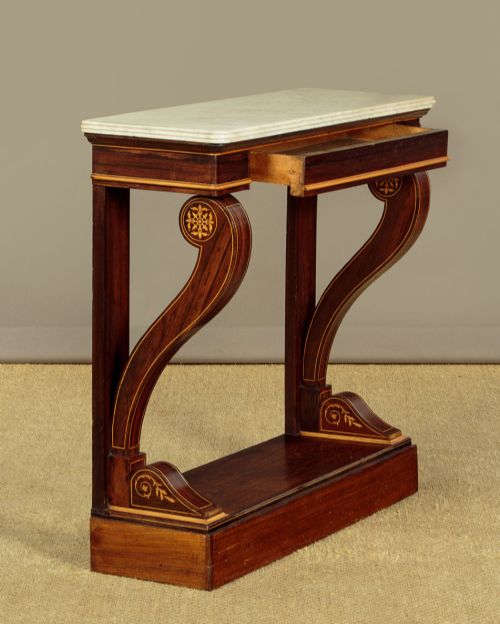
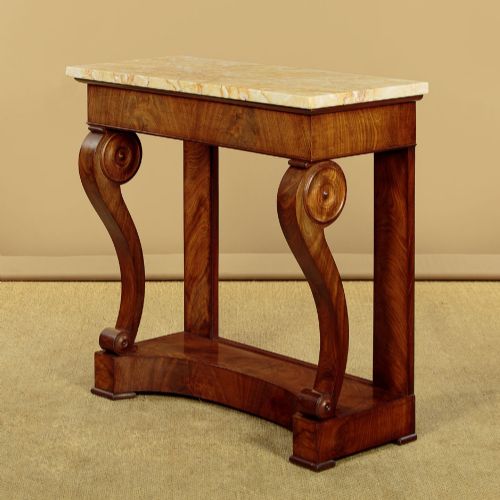
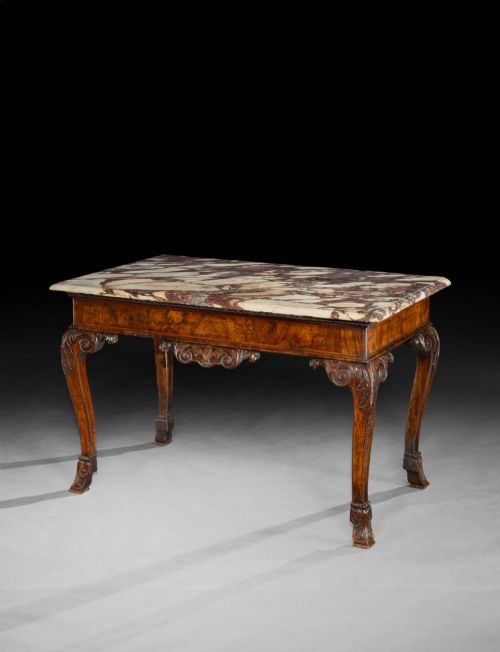
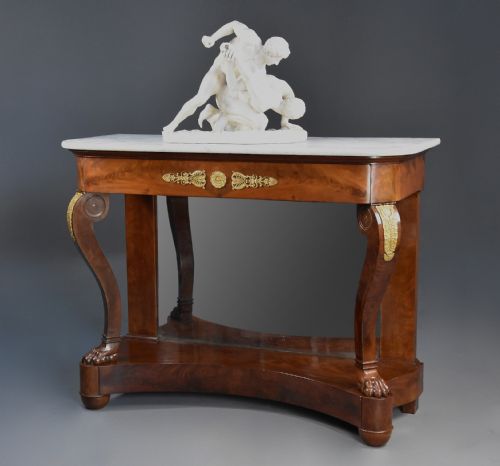
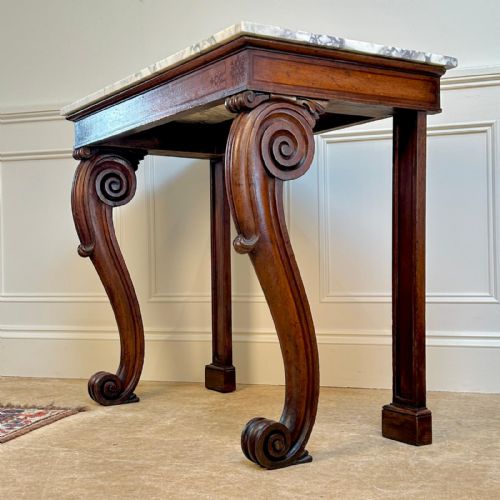
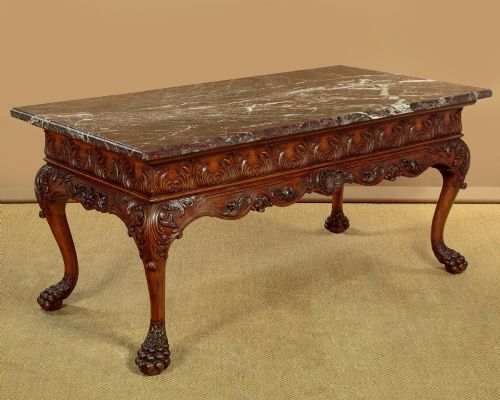
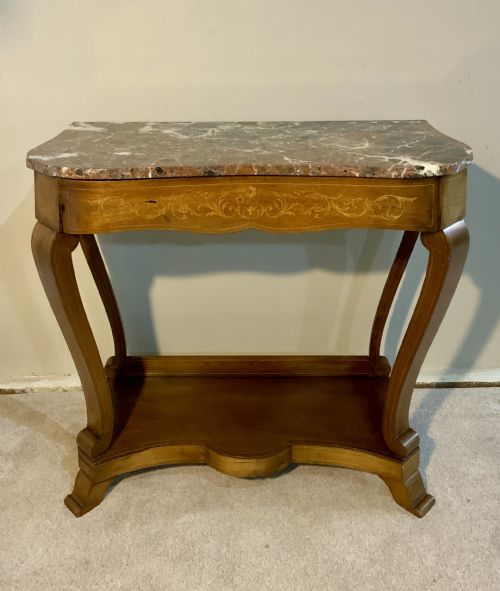
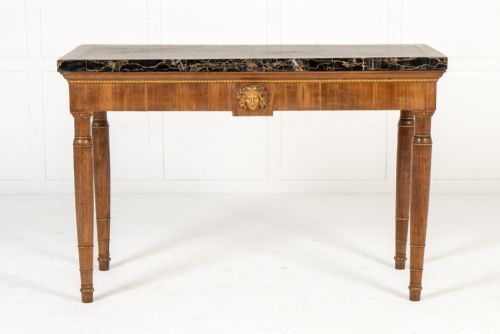


Brown Marble Pier Table
A brown marble pier table brings architectural weight and a cool stone surface to an interior, functioning as a grand console or side piece.
Brown Marble Pier Table
A brown marble pier table is fundamentally a console or side table designed to sit against a wall, frequently beneath a mirror. The pieces available here span from the eighteenth century through the early twentieth century, taking forms such as console tables, serving tables, and paired pier tables.
The nineteenth century yields a large proportion of the examples on this page, alongside earlier eighteenth century pieces and later revivals from the twentieth century. Makers and designers from various regions produced these tables, including Italian and French workshops working in styles like Rococo Revival, French Empire, and Grand Regency.
Buyers encounter timber frameworks constructed from mahogany, walnut, burr walnut, and oak, frequently paired with decorative elements such as ormolu and brass. The marble tops vary in shade, creating a robust surface supported by substantial woodwork.
Materials and construction
Cabinetmakers utilised dense hardwoods like mahogany, walnut, and oak to build the structural framework of each brown marble pier table. Figured veneers, burr walnut, and flame mahogany were frequently applied to flat surfaces to create visual movement and depth.
Heavy marble slabs were cut and polished to form the upper surface, resting securely upon the wooden bases. Metal mounts in ormolu and brass occasionally accented the timber structures, particularly on pieces influenced by French Empire and Rococo styles.
Current listings feature tables spanning from the eighteenth century to the 1930s, incorporating mahogany, walnut, oak, and marble.
Assessing quality and craftsmanship
The refinement of the timber carving and the selection of veneer define the upper tier of these tables. Finely figured mahogany, burr walnut, and intricate marquetry indicate a higher standard of cabinetmaking compared to plain timber surfaces.
The thickness and stone quality of the marble top also contribute to the distinction between standard production and exceptional work. Substantial bases designed with architectural proportion and paired elements demonstrate superior regional or stylistic execution.
The Brown Marble Pier Table Glossary
- Pier table
- A table designed specifically to stand against a wall, frequently positioned in the pier space between two windows. These pieces often matched architectural mirrors hung directly above them.
- Console table
- A table supported by wall brackets or console legs, functioning primarily as a decorative surface. They share many formal characteristics with pier tables.
- Ormolu
- Gilt bronze mounts applied to furniture for decorative effect. This technique was popular in French and revival styles.
- Marquetry
- Inlaid wood patterns arranged to form decorative designs on furniture surfaces. It appears on select walnut tables from the nineteenth century.
- Serpentine
- A gently curving contour resembling a snake's path, often seen on the front edge of table tops and frames. This shape requires precise woodworking skill.
Brown Marble Pier Table: Frequently Asked Questions
Where should I place a brown marble pier table?
These tables suit hallways, living rooms, and dining spaces where wall space allows for a substantial console. They anchor large rooms effectively when paired with a matching mirror.
Because the stone top adds considerable weight, positioning them securely against a wall is essential for stability.
How do I identify a nineteenth century piece?
Nineteenth century examples often display characteristic revival styles such as French Empire, Rococo, or Regency. Construction methods, timber choices like burr walnut, and distinct patination help separate them from earlier eighteenth century works or later twentieth century interpretations.
Examining the underside and joinery provides further clues regarding the period of manufacture.
What is the difference between a console and a pier table?
While the terms frequently overlap, a pier table historically stood in the architectural pier between windows, often accompanied by a matching wall mirror. A console table is a broader category of wall-fixed or bracket-supported furniture.
Both serve similar decorative and functional roles in traditional interiors.
Are marble tops original to the tables?
Many tables retain their original stone tops, fitted precisely to the wooden rails below. Careful inspection of the seating rebate and the underside of the marble helps confirm whether the stone matches the age of the base.
Replacement tops do occur in antique furniture due to historic breakage.